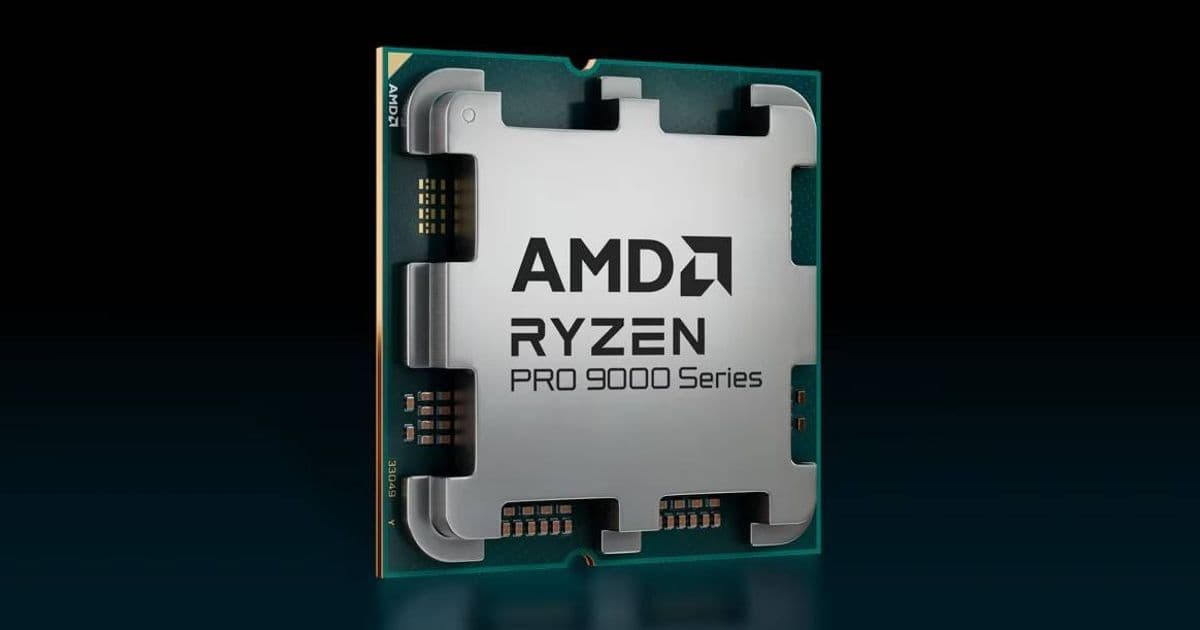
AMD brings its innovative 3D V-Cache technology to the professional workstation market with the Ryzen Pro 9000 series, offering unprecedented performance for content creators, developers, and engineers who demand high computing power for mobile app development, testing, and content creation workflows.
AMD has made a significant move by bringing its 3D V-Cache technology to the professional workstation market with the Ryzen Pro 9000 series. This transition marks an important evolution for developers and content creators who rely on powerful hardware for mobile app development, testing, and content creation workflows.
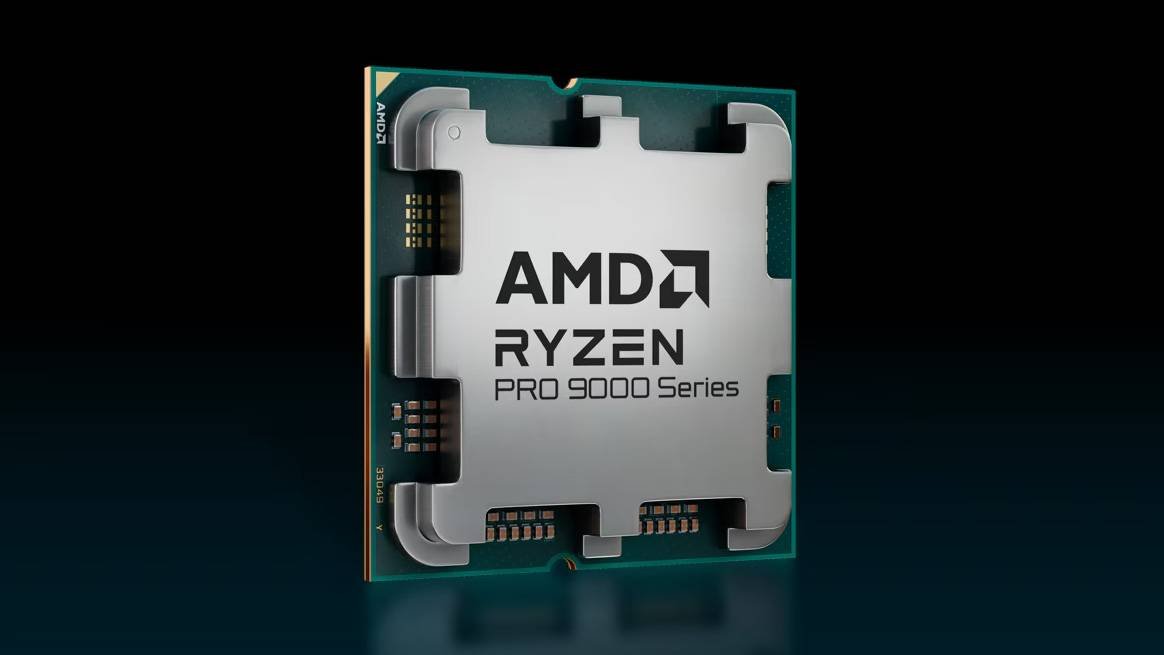
The top-tier model, the Ryzen 9 Pro 9965X3D, features 16 Zen 5 cores that can boost up to 5.5GHz, accompanied by a substantial 128MB of L3 cache thanks to the 3D V-Cache technology. Perhaps most notably, this is the first Ryzen Pro CPU to break past AMD's traditional 65W power limit, with a 170W TDP designed to handle sustained heavy workloads. There's also a standard version, the Ryzen 9 Pro 9965, with identical core configuration and boost speeds but limited to 64MB of L3 cache as it lacks the 3D V-Cache technology.
For those unfamiliar with 3D V-Cache, this technology represents a significant architectural innovation. Instead of expanding cache horizontally on the same die plane, AMD vertically stacks additional last-level cache (LLC) memory directly onto the processor die. This vertical stacking allows for a dramatic increase in cache capacity while maintaining the high-speed access that makes cache so valuable for performance-critical applications.
Technical Specifications and Platform Impact
The Ryzen Pro 9000 series spans a range of configurations from 6 to 16 cores, catering to different professional needs. For mobile developers and content creators, these processors offer several key advantages:
Enhanced multitasking capabilities: With up to 16 cores and high clock speeds, developers can run multiple resource-intensive applications simultaneously without performance degradation. This is particularly valuable when testing mobile apps on various emulators or physical devices while maintaining other development tools.
Faster compilation times: The high core count and clock speeds significantly reduce compilation times for large codebases, accelerating development cycles for mobile applications.
Improved virtualization performance: The increased cache and core count benefit developers working with virtual machines, containerized environments, or cloud development setups.
Better support for emulators and simulators: Mobile development often relies on emulators and simulators that can be resource-intensive. The Ryzen Pro 9000 series provides the necessary horsepower to run these tools alongside development environments smoothly.
Developer Workflow Implications
For mobile developers maintaining applications on both iOS and Android platforms, the Ryzen Pro 9000 series offers several workflow enhancements:
Faster build and test cycles: The combination of high core count and 3D V-Cache technology can dramatically reduce build times for complex mobile applications, especially those written in performance-sensitive languages like Swift or Kotlin.
Enhanced debugging capabilities: The additional cache and processing power allow for smoother operation of debugging tools and profilers, which are essential for optimizing mobile application performance.
Better support for continuous integration/continuous deployment (CI/CD) pipelines: The increased performance can handle more parallel build jobs, speeding up automated testing and deployment processes.
Improved emulation performance: For developers working on cross-platform frameworks like React Native or Flutter, the enhanced CPU performance can provide more responsive emulators during development and testing phases.
3D V-Cache Technology in Professional Contexts
While 3D V-Cache was initially developed for gaming applications to boost frame rates, its application in professional workstations opens new possibilities:
Faster rendering times: For developers creating 3D assets, UI components, or animations for mobile applications, the increased cache can significantly reduce rendering times.
Improved video encoding/decoding: Mobile app developers working with video content will benefit from faster encoding times when preparing assets for different platforms and resolutions.
Enhanced IDE performance: Integrated development environments (IDEs) like Android Studio, Xcode, and Visual Studio can leverage the increased cache for faster code completion, navigation, and analysis.
Platform Considerations and Migration
For development teams considering an upgrade to the Ryzen Pro 9000 series, several platform-specific considerations should be taken into account:
Operating system compatibility: These CPUs will support major development platforms including Windows, Linux, and macOS (through virtualization or future Apple silicon alternatives). Developers should verify specific compatibility requirements for their primary development environment.
SDK and toolchain optimization: Development toolchains may need updates to fully leverage the new CPU architecture. Mobile SDK providers will likely release optimizations specifically for Zen 5 cores and 3D V-Cache technology.
Thermal management: The increased TDP (170W) requires adequate cooling solutions. Development workstations will need proper thermal design to maintain sustained performance under heavy loads.
Power requirements: The higher power consumption means development setups will need robust power supplies and potentially higher electricity costs to consider in budget planning.
Market Availability and Adoption
AMD has announced that the Ryzen Pro 9000 series will be available in the second half of 2026, with Lenovo's ThinkStation P4 being the first workstation to feature these processors. For mobile development teams, this presents an opportunity to evaluate the new technology in a professional context.
The introduction of 3D V-Cache to the workstation market also signals a trend toward specialized processor architectures tailored for specific workloads. As mobile applications become increasingly sophisticated, the demand for specialized hardware acceleration will likely continue to grow.
For development teams managing both iOS and Android applications, the Ryzen Pro 9000 series offers a compelling combination of raw processing power and specialized cache technology that can accelerate development cycles and improve productivity. The increased performance particularly benefits resource-intensive tasks like building complex applications, testing across multiple devices, and creating high-fidelity content for mobile platforms.
As mobile development continues to evolve toward more demanding applications and cross-platform solutions, hardware innovations like AMD's 3D V-Cache technology may become increasingly important tools in the developer's arsenal. The Ryzen Pro 9000 series represents a significant step in bringing high-performance gaming technologies to professional workstations, potentially reshaping development workflows for mobile applications in the coming years.
Comments
Please log in or register to join the discussion