
Framework has pushed first shipments of its Panther Lake-powered Laptop 13 Pro from June to late July, citing a haptic touchpad electrical fault and a display initialization bug. The few-week slip reshuffles the entire pre-order batch schedule, but the company expects to recover its original cadence by September.
Framework Computer has notified pre-order customers that its new Framework Laptop 13 Pro will begin shipping in late July rather than the originally targeted end of June. Two defects surfaced during pre-production testing, and resolving them delayed the start of mass production by a few weeks.
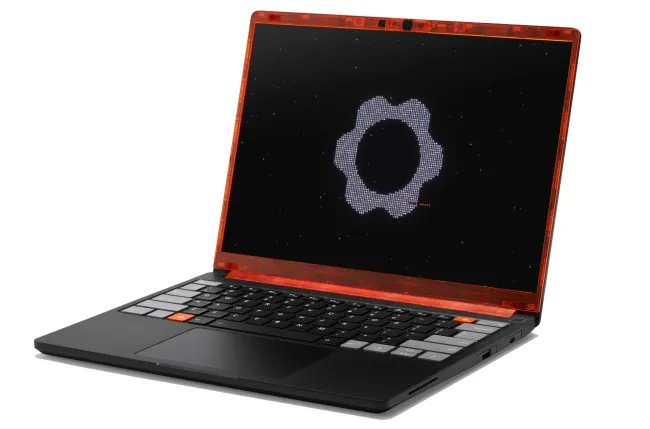
The Laptop 13 Pro, announced back in April, is not an incremental refresh. Framework describes it as a ground-up redesign of the Laptop 13, the modular, repairable notebook that built the company's reputation. The headline change is silicon: the Pro moves to Intel's Core Ultra Series 3, the Panther Lake generation. That puts the platform on Intel's 18A process node, the first high-volume node to combine RibbonFET gate-all-around transistors with PowerVia backside power delivery. Panther Lake is significant for Intel beyond any single laptop, since 18A represents the company's bid to close the manufacturing gap with TSMC's N2 and pull leading-edge production back onto domestic and Intel-operated fabs in Arizona.
Hardware specifications
Beyond the SoC, the Pro adopts LPCAMM2 memory in place of the SO-DIMM modules used on earlier Framework boards. LPCAMM2 matters for a machine that markets repairability and upgradeability. Soldered LPDDR5X delivers the best signal integrity and power numbers but cannot be replaced, while traditional SO-DIMMs are user-serviceable but cap achievable transfer rates. LPCAMM2 splits the difference, offering a compression-attached module that supports LPDDR5X speeds while remaining removable. For a vendor whose entire pitch rests on letting owners upgrade rather than discard, that compromise is close to a requirement.
The chassis also changes materially. Framework is moving to a full-CNC aluminum enclosure, alongside a larger battery, an improved display, and a haptic touchpad. The battery and chassis revisions push toward parity with the premium thin-and-light machines that Panther Lake is meant to compete against, where Apple's M-series and Qualcomm's Snapdragon X parts have set aggressive efficiency baselines.
What caused the delay
Two issues drove the schedule change. The first was intermittent bugs in some haptic touchpads. Framework traced these to an electrical fault and is responding on two fronts: a new PCB spin to fix the root cause, plus a firmware update to mitigate the problem on the existing PCB design. The dual approach suggests units already built on the original board are recoverable in software while later production moves to the corrected layout.
The second issue involved a display panel that failed to initialize correctly. Framework worked with the panel manufacturer on updated display firmware to prevent the condition from reaching customer hardware. Panel initialization faults of this kind typically trace to timing or power-sequencing problems in the firmware that brings the display up at boot, and they are exactly the class of defect that shows up only at production scale across many panel lots.
{{IMAGE:2}}
Market implications
The knock-on effect for buyers is a sliding batch schedule. June pre-orders move to late July, July batches likely shift to August, and late-August batches may slip into September. Framework expects to be caught up with its original batching targets by September, which contains the damage to a one-batch ripple rather than a compounding backlog.
For Intel, every Panther Lake design win that actually ships is a data point on 18A yield and availability. Framework is a small-volume customer relative to the Dell and HP allocations that dominate Intel's mobile shipments, but a clean launch on a serviceable, enthusiast-focused platform carries outsized reputational weight. A few weeks spent fixing a touchpad PCB and a display firmware bug is a far cheaper outcome than shipping defective units into a customer base that opens its laptops and reads the schematics. The transparency Framework offered into both root causes fits that audience, and the cost is modest: a short slip in exchange for hardware that meets the quality bar. More detail on the platform is available at frame.work.
Comments
Please log in or register to join the discussion