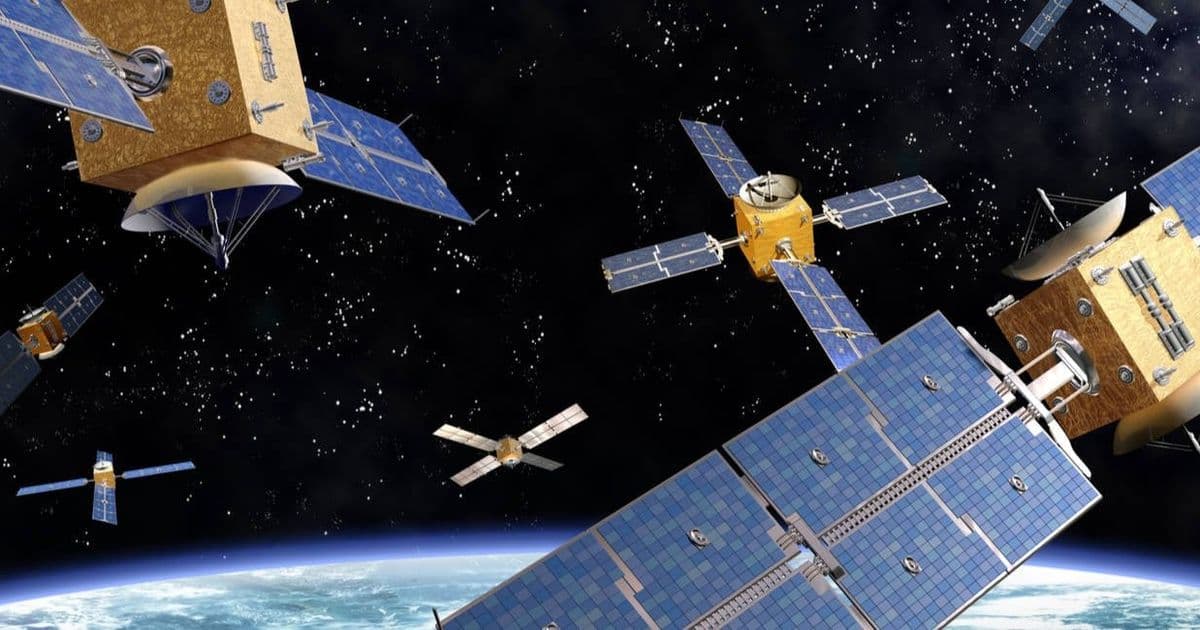
Gartner's Bill Ray says orbiting datacenters face prohibitive costs, extreme temperature challenges, and cooling difficulties that make them economically unviable for Earth-based computing needs for decades, if ever.
Gartner has declared that the concept of orbital datacenters has reached "peak insanity," with analyst Bill Ray warning that companies are wasting money pursuing space-based server farms that cannot economically serve terrestrial computing needs.
In a report titled "Orbital Datacenters Won't Serve Terrestrial Needs, So Focus on Earth," Ray argues that despite growing hype around space-based computing infrastructure, the economics simply don't work. The analyst points to prohibitive launch costs and the immense technical challenges of cooling datacenters in the vacuum of space as primary barriers.
Ray highlights the extreme temperature variations that orbital datacenters would face, ranging from 100 degrees Kelvin to 400 degrees Kelvin. This would require specialized components like solar panels that cost roughly 1,000 times more than their terrestrial counterparts. The cooling challenge is particularly daunting - Ray suggests that ammonia piping systems similar to those used on the International Space Station would be necessary to shift heat from computers to radiators.
The maintenance requirements present another significant hurdle. "Maintaining such complex infrastructure would require a fundamental shift from sending astronauts into space to sending engineers to perform necessary maintenance, a capability that does not currently exist," Ray wrote. This would transform datacenter operations from routine on-site maintenance to expensive space missions.
Data transmission via laser from orbit also faces practical limitations. Ray notes that actual clouds disrupt laser transmissions, creating inconsistent data transfer speeds that would be unacceptable for most Earth-based applications.
Despite his skepticism about Earth-serving orbital datacenters, Ray doesn't entirely dismiss the concept. He predicts that space-based datacenters could eventually serve niche applications such as processing satellite imagery to remove cloud cover before transmission or managing complex mesh routing for communications. He also suggests that research into space datacenter technology could yield benefits for terrestrial facilities.
For companies seeking additional datacenter capacity in the near term, Ray recommends focusing on Earth-based alternatives. He points to Microsoft's underwater datacenter technology, Arctic facilities, Icelandic datacenters, and desert locations in Saudi Arabia as more practical options.
The analyst warns that the current "bubble" of space datacenter hype could lead to underbuilt terrestrial capacity if companies divert resources away from practical solutions for several years.
Ray's assessment comes amid growing interest in orbital computing infrastructure from various players. SpaceX has expressed interest in filling Earth orbit with a million datacenter satellites, while startup Aetherflux has pledged to launch a "Galactic Brain" space datacenter by 2027. Amazon founder Jeff Bezos has also proposed solar-powered datacenters in space.
However, the technical challenges remain formidable. Orbital datacenters would be subject to launch stress, space weather, and expensive maintenance requirements. The combination of extreme temperatures, vacuum conditions, and the need for radiation-hardened components creates a complex engineering challenge that current technology struggles to address economically.
Ray's analysis suggests that while space-based computing may eventually find specialized applications in orbit, the vision of space datacenters replacing or significantly supplementing terrestrial infrastructure remains firmly in the realm of science fiction for the foreseeable future. Companies pursuing orbital datacenter concepts may find themselves investing in technology that, while potentially advancing space computing capabilities, offers little practical benefit for Earth-based computing needs in the coming decades.
The report serves as a reality check for organizations considering investments in orbital datacenter technology, emphasizing that proven terrestrial solutions remain the most practical path for meeting current and near-term computing demands.
Comments
Please log in or register to join the discussion