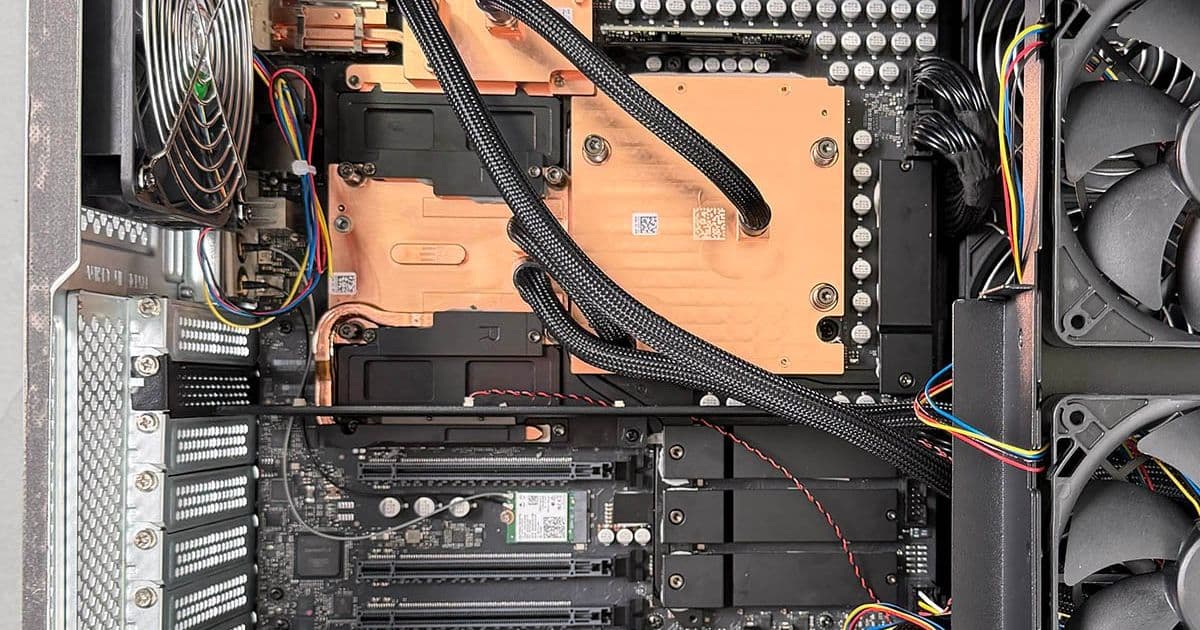
Gigabyte's W775-V10-L1 workstation, built around NVIDIA GB300 and ConnectX-8 NIC, showcases two notable features: a leak detection system for liquid cooling and PCIe Gen6 M.2 slots, highlighting the convergence of AI server technology with high-end workstation design.
This week in Taipei, Taiwan, I had the opportunity to examine a working Gigabyte W775-V10-L1 workstation, a system that represents the cutting edge of high-performance computing hardware. Built around the NVIDIA GB300 and featuring a ConnectX-8 NIC, this workstation delivers exceptional performance within a 1.6kW power envelope. While examining the system, our team discovered two particularly noteworthy features that demonstrate how AI server technology is influencing workstation design.
Leak Detection System: A Safety Innovation
The first feature that caught our attention was a slender black metal tray positioned beneath the liquid-cooling connectors. At first glance, one might mistake this for a single-slot GPU in one of the I/O slots, but upon closer inspection, it became clear this was something entirely different.
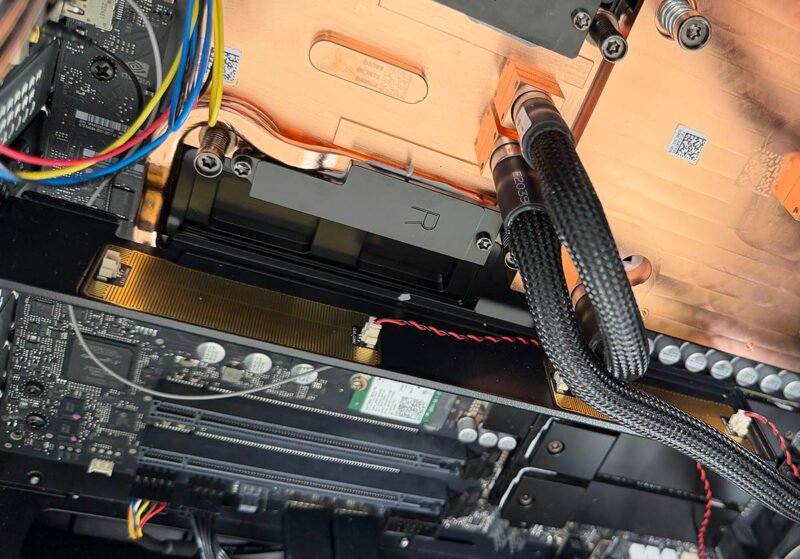
This leak detection tray is strategically positioned to catch any liquid that might escape from the cooling system. The tray contains sensors that can detect even small amounts of liquid, triggering automated system shutdowns to prevent damage to expensive components. This type of safety feature is becoming increasingly common in high-end AI servers, particularly those using liquid cooling for GPUs and CPUs.
What makes this particularly interesting is that while leak detection systems are standard in enterprise AI infrastructure, they're relatively uncommon in DIY workstation liquid-cooling setups. The W775-V10-L1 represents a bridge between these worlds, bringing enterprise-grade safety features to the workstation market.
PCIe Gen6 M.2 Slots: Future-Proof Storage
The second notable feature is the inclusion of two PCIe Gen6 M.2 slots, making this the first workstation we've seen with this capability. The system also includes two PCIe Gen5 M.2 slots, providing a total of four M.2 storage options.
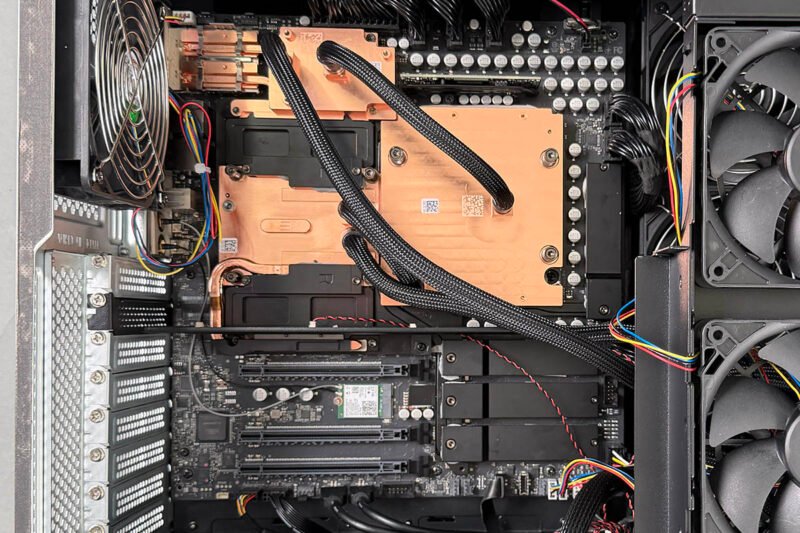
While PCIe Gen6 M.2 SSDs aren't yet available on the market, Gigabyte is clearly future-proofing this workstation. The presence of these slots suggests that storage technology is rapidly evolving, and workstation manufacturers are preparing for the next generation of high-speed storage solutions.
System Architecture and Configuration Options
The W775-V10-L1 is designed with flexibility in mind, capable of operating in either server-like or workstation-like modes. For server-style operation, it uses the P3809 BMC (Baseboard Management Controller), similar to what you'd find in GB200 NVL72 systems. This provides robust remote management capabilities suitable for data center deployment.
Alternatively, the system can be configured more like a traditional workstation, supporting up to high-end NVIDIA RTX Pro 6000 Blackwell Edition GPUs. This dual-mode capability makes the W775-V10-L1 versatile enough for both enterprise AI workloads and professional creative applications.
Technical Specifications
The system's architecture centers around several key components:
- NVIDIA GB300 GPU: The centerpiece of the system, featuring Blackwell Ultra architecture
- NVIDIA Grace CPU: Positioned beneath the GPU's copper coldplate for efficient thermal management
- ConnectX-8 NIC: Providing high-speed networking capabilities
- QSFP112 cages: Located on the top of the system for optical networking
- SOCAMM memory: The memory configuration for the Grace CPU
Industry Implications
The inclusion of these features in a workstation has broader implications for the industry. As AI workloads become more prevalent in professional environments, the line between workstations and servers continues to blur. Features that were once exclusive to data center hardware are now making their way into desktop systems.
This trend reflects the growing demand for AI-capable hardware at all levels of the computing stack. Professionals working with large language models, complex simulations, or high-resolution media production need the same kind of computational power that was previously only available in specialized server environments.
Looking Forward
The leak detection system in particular represents an interesting development. As liquid cooling becomes more common in high-performance systems, safety features like this will likely become standard. The fact that Gigabyte has incorporated this into a workstation suggests that we may see similar features in consumer-grade liquid cooling solutions in the future.
Similarly, the inclusion of PCIe Gen6 M.2 slots, even before compatible storage devices are available, demonstrates a commitment to forward compatibility. This approach ensures that when next-generation storage becomes available, systems like the W775-V10-L1 will be ready to take advantage of it.
Conclusion
The Gigabyte W775-V10-L1 represents a significant step forward in workstation design, incorporating features that bridge the gap between traditional workstations and modern AI servers. The leak detection system brings enterprise-grade safety to liquid cooling, while the PCIe Gen6 M.2 slots prepare the system for future storage technologies.
As AI continues to transform professional computing, we can expect to see more features from the data center making their way into desktop systems. The W775-V10-L1 is a clear example of this trend, offering workstation users access to technology that was previously only available in specialized server environments.
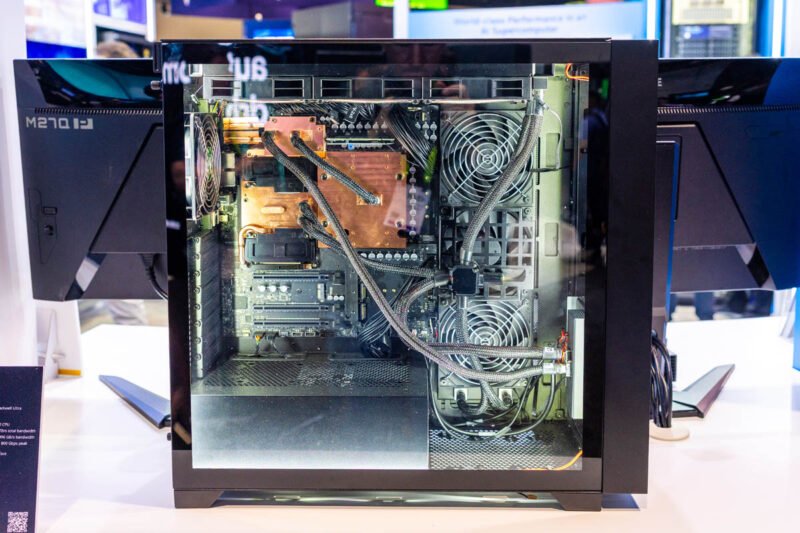
For professionals working with demanding AI workloads or requiring maximum performance for creative applications, systems like the W775-V10-L1 represent the future of high-performance computing. The integration of advanced features like leak detection and next-generation connectivity options ensures that these systems will remain relevant and capable as technology continues to evolve.
Comments
Please log in or register to join the discussion