
GNOME's 50 Alpha release eliminates X11 session support entirely, completing a multi-year transition to Wayland while maintaining XWayland compatibility for legacy applications.
The GNOME Project has released the alpha version of GNOME 50, signaling a fundamental architectural shift for the Linux desktop environment. Most notably, this release completely removes X11 session support from core components including Mutter (GNOME's window manager) and GDM (GNOME Display Manager). This architectural change completes a transition that began over a decade ago when Wayland development started.
Technical Implementation
- Mutter 50.alpha has eliminated its X11 backend entirely, retaining only Wayland session support. X11 applications remain supported through XWayland, which translates X11 protocol calls to Wayland.
- GDM 50.alpha similarly removed all X11 code, while introducing a new
[email protected]to facilitate headless graphical sessions for remote access scenarios. - Performance optimizations include reduced memory consumption in Nautilus file manager (up to 15% in early benchmarks), accelerated SVG rendering via GtkSvg in GTK 4.21.4, and fixes for dozens of memory leaks across core applications.
Ecosystem Impact
This transition reflects broader industry momentum toward Wayland, with major distributions like Fedora and Ubuntu having defaulted to Wayland sessions since 2021. The removal eliminates approximately 25,000 lines of legacy X11-specific code from Mutter alone, reducing maintenance overhead. Hardware compatibility considerations remain for NVIDIA users, though proprietary driver support for Wayland has significantly improved in recent kernel versions.
Complementary Enhancements
- Security: GNOME Initial Setup now prioritizes
run0overpkexecfor privilege elevation where available - Media Handling: Glycin image library adds XBM/XPM support and SVGZ decompression
- Development: GNOME Foundry debuts complete debugger implementation for IDE workflows
- Accessibility: at-spi2-core defaults to dbus-broker for improved assistive technology performance
The architectural shift coincides with visual refinements including improved dark theme styling in Text Editor and enhanced animation fluidity throughout the shell. With Wayland now established as GNOME's exclusive display protocol, development focus shifts to optimizing the XWayland compatibility layer and leveraging Wayland-specific capabilities like fractional scaling and HDR.
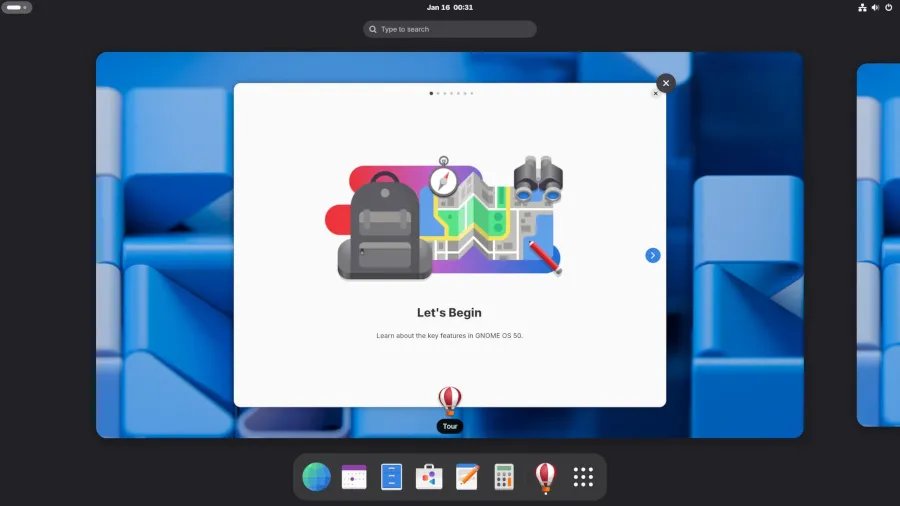
Final release is scheduled for March 2026, with the alpha available for testing via GNOME OS builds.
Comments
Please log in or register to join the discussion