
The GNOME project has taken its most decisive step yet in the Wayland transition, with Mutter 50 Alpha removing the X11 backend entirely after 20+ years of X11 support. This marks a fundamental architectural shift that will affect every Linux desktop user running GNOME 50.
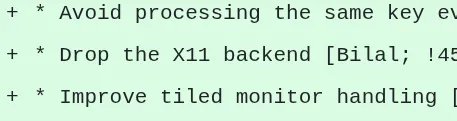
The GNOME project has officially tagged Mutter 50 Alpha, and the release notes contain a sentence that will be remembered as a watershed moment in Linux desktop history: "completely drops the whole X11 back-end."
This isn't just another incremental change in the Wayland migration. After 20+ years of X11 support, GNOME is making the X11 session completely unavailable for Mutter 50. The decision comes after extensive testing in GNOME 49, where the Wayland session matured enough that the development team felt confident removing the legacy backend entirely.
What This Actually Means
When we say "removed," we mean it. There's no hidden flag to re-enable it, no fallback mode. Mutter 50 will only speak Wayland protocol natively. The only concession to the old world is XWayland support, which remains available for running legacy X11 applications and games. But the compositor itself is now Wayland-only.
This architectural decision has been years in the making. GNOME has been running Wayland sessions by default since 2016, but always kept the X11 backend as a safety net. That safety net is now gone.
The Technical Reality Check
The Mutter 50.alpha release brings several critical improvements that make this possible:
- Improved tiled monitor handling: Better multi-monitor support, particularly for tiling window manager workflows
- Sticky keys handling: Accessibility improvements that were harder to implement in the X11 compatibility layer
- XWayland fixes: Specifically addressing scaling issues for legacy applications
- External window constraints: Better handling of application window positioning and size limits
These aren't just bug fixes—they're the kinds of features that required deep compositor integration, which was difficult to maintain across two different backends.
The Ripple Effects
This change affects the entire GNOME ecosystem. The GNOME Shell 50.alpha release shows the downstream impact:
- On-screen keyboard layouts expanded for German and Austrian users
- Brightness change OSD now displays for all adjustment methods
- Extension support for the GNOME Shell test-tool (critical for developers)
- Week-start-day setting support (regional calendar preferences)
- Improved readability of insensitive text (UI polish)
All of these changes assume Wayland as the native environment.
The Broader Linux Desktop Impact
GNOME 50 will power Ubuntu 26.04 LTS and Fedora Workstation 44, both releasing in 2026. This means:
For Ubuntu users: The default Ubuntu desktop will be Wayland-only for the first time. Users who absolutely need X11 will need to seek alternative desktop environments or stay on Ubuntu 24.04 LTS.
For Fedora users: Fedora has been Wayland-first for years, but always offered X11 as a selectable session. That option disappears in Fedora 44.
For enterprise deployments: Organizations standardized on GNOME with X11 compatibility will need to re-evaluate their desktop strategy or plan migration timelines.
The Gaming Question
The biggest concern for many users is gaming. While XWayland handles X11 games, there are still performance and compatibility questions:
- Input latency: Wayland's input model differs from X11, and some competitive gamers report noticeable differences
- Fullscreen handling: Some games expect direct X11 fullscreen access that doesn't translate perfectly
- Multi-monitor: Game behavior across multiple monitors can be unpredictable
However, the improvements in Mutter 50's XWayland scaling and window handling suggest the GNOME team is actively addressing these concerns.
The Hardware Compatibility Angle
For homelab builders and system administrators managing diverse hardware:
- Older GPUs: NVIDIA users on older cards may face challenges, though recent NVIDIA drivers have improved Wayland support significantly
- Remote desktop: X11 forwarding over SSH was a standard tool. Wayland's security model makes this more complex, though solutions like RDP and VNC remain viable
- Embedded systems: Headless systems that relied on X11 virtual displays will need alternative approaches
The Developer Perspective
For developers building applications for GNOME 50:
- X11-specific code: Any application with X11-specific window management or display code will need updates
- Testing: The removal of X11 backend means testing must happen on Wayland-only systems
- Debugging: Traditional X11 debugging tools like
xpropandxwininfowon't work. Wayland equivalents exist but have different workflows
The Timeline
GNOME 50 is scheduled for official release on March 18, 2026. The alpha release on January 14 marks the beginning of the stabilization period. Beta releases will follow, with feature freeze already in effect.
The Point of No Return
This decision represents more than just code cleanup. It's a statement that the Linux desktop community is ready to move forward without looking back. X11 served admirably for decades, but its architecture shows its age. Security models, display composition, input handling—all needed fundamental rethinking that X11 couldn't accommodate.
The question is no longer "Should we move to Wayland?" but "How do we adapt to a Wayland-only world?"
For the homelab builder who measures everything, this means new tools, new workflows, and new optimization opportunities. The X11 performance metrics we've relied on for years are now historical data. New baselines need to be established.
The removal of the X11 backend from Mutter 50 Alpha isn't just a commit in a repository—it's the end of an era and the beginning of a new, Wayland-native Linux desktop.
Related Links:
Comments
Please log in or register to join the discussion