
Google's new Pixel 10a offers incremental upgrades like 30W charging and satellite messaging but retains last year's Tensor G4 processor and camera hardware at $500.
Google has launched the Pixel 10a, its latest mid-range smartphone, maintaining the $500/£500/€550/₹50,000 starting price of its predecessor. Available from March 6, the device targets budget-conscious buyers seeking Google's software experience with minor hardware refinements.
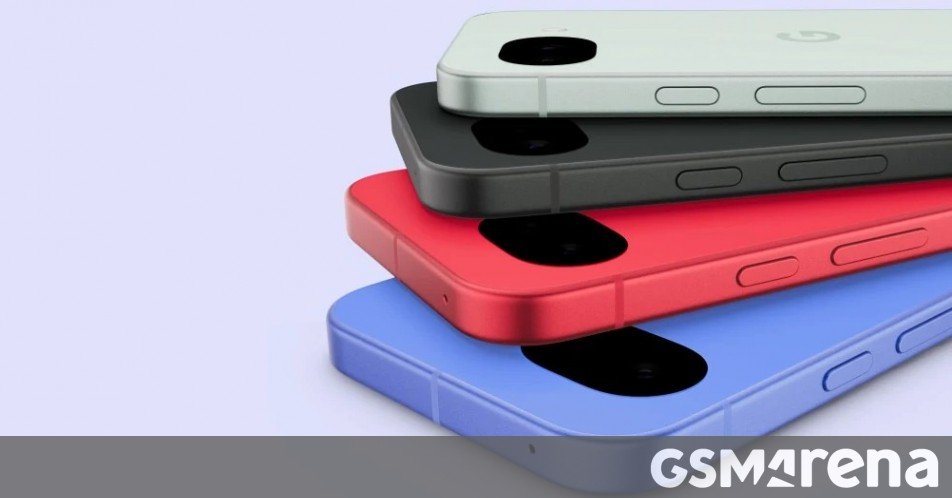
The Pixel 10a's most significant upgrades focus on durability and charging. It features Gorilla Glass 7i protection, replacing the Pixel 9a's Gorilla Glass 3, while keeping the IP68 water resistance rating. Charging speeds see meaningful improvements: wired charging jumps to 30W (from 23W) and wireless charging reaches 10W (up from 7.5W), though the battery capacity remains unchanged at 5,100mAh.
The 6.3-inch OLED display now peaks at 3,000 nits brightness, a 300-nit increase over the 9a. Despite this enhancement, it retains an LTPS panel with optical fingerprint recognition. New satellite-based SOS messaging support enables emergency communication in areas without cellular coverage, though this feature remains region-limited.
Key components remain identical to the Pixel 9a: Samsung's Tensor G4 processor powers the device, paired with 8GB RAM and 128GB/256GB storage options. The camera system shows no changes, combining a 48MP main sensor with a 13MP ultra-wide lens and 13MP front camera. Google's Gemini AI integration handles computational photography and voice assistance.
Software support extends to seven years of updates, launching with Android 16. While this outlasts the Pixel 9a's support window by one year, hardware limitations may challenge future Android 23 compatibility. The aluminum frame and plastic back construction continues, omitting the magnetic Pixelsnap feature found in premium Pixel 10 models.
For existing Pixel 9a owners, the upgrades appear insufficient to justify upgrading. Those with older devices like the Pixel 8a may find value in the extended software support and charging improvements, though competitors offer newer chipsets at similar prices. The Pixel 10a exemplifies Google's iterative approach to its budget lineup, prioritizing ecosystem continuity over hardware innovation.
Comments
Please log in or register to join the discussion