
Google has integrated free SAT preparation tools directly into Gemini, built on the College Board's official question bank. For developers building educational apps, this signals a shift in how AI assistants are becoming platforms for specialized learning workflows.
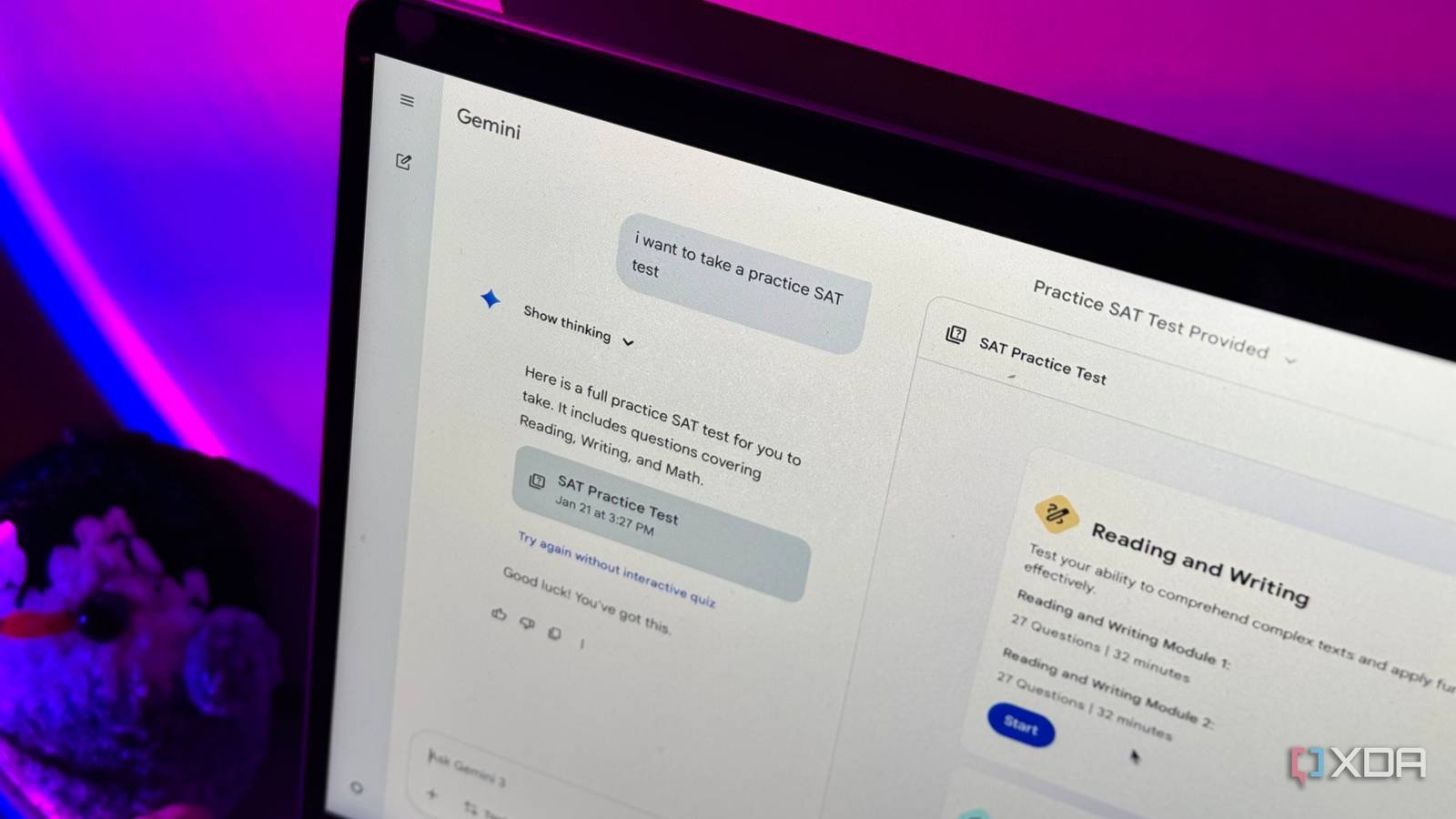
Google announced today that Gemini now includes a dedicated SAT preparation mode, offering students free access to practice questions, step-by-step explanations, and personalized study plans. The feature leverages official content from the College Board, the organization that administers the SAT, and represents Google's continued push to embed AI directly into educational workflows.
The Technical Implementation
The SAT prep feature runs entirely within Gemini's existing interface, using the same underlying large language model infrastructure that powers the assistant's other capabilities. Google has partnered with the College Board to integrate their official question bank, which includes thousands of previously administered SAT questions across math, reading, and writing sections.
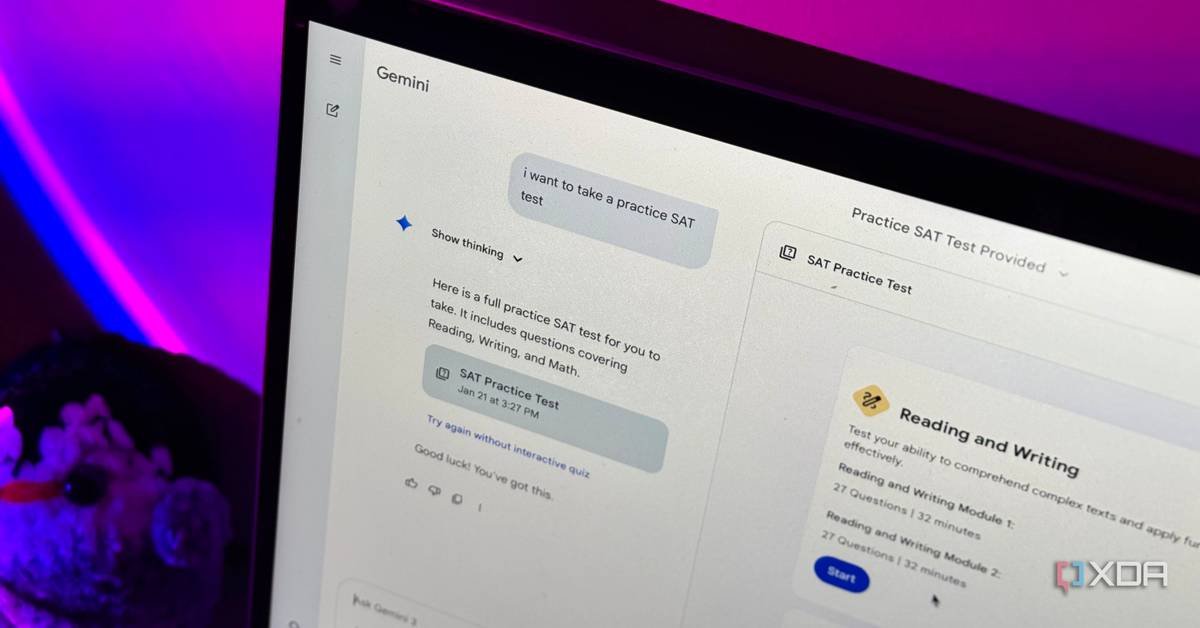
When a student asks Gemini to help with SAT prep, the system generates practice problems on demand or creates structured study sessions based on specific topics. The AI provides detailed explanations for each answer, breaking down complex mathematical concepts or analyzing reading comprehension passages. Students can request variations of problems, ask for clarification on specific steps, or drill into weak areas identified through practice sessions.
From a mobile development perspective, this feature demonstrates how cloud-based AI services can deliver specialized educational content without requiring dedicated app updates. The functionality appears as a conversational interface within the existing Gemini app on both iOS and Android, showing how cross-platform AI assistants can rapidly deploy new capabilities.
Why This Matters for Educational App Developers
This release directly impacts developers building competitive test-prep applications. Traditional SAT prep apps like Khan Academy, Magoosh, or The Princeton Review's offerings now face competition from a free, AI-powered alternative that can generate unlimited practice content dynamically.
The key differentiator is personalization at scale. While conventional apps rely on pre-built question banks and fixed learning paths, Gemini can adapt problems in real-time based on a student's responses. If a student struggles with quadratic equations, the AI can generate progressively easier variations or present the same concept through different problem types. This level of adaptive learning typically requires sophisticated backend infrastructure that many independent developers cannot easily replicate.
For developers, this signals that AI-native educational tools are becoming table stakes. The barrier to entry for creating adaptive learning experiences has dropped significantly when a free assistant can handle the core functionality. Apps that succeed will need to differentiate through features AI cannot easily replicate: structured curricula from certified instructors, community features, progress tracking across multiple standardized tests, or integration with official score reporting systems.
Platform-Specific Considerations
On iOS, the Gemini app must navigate Apple's restrictions around background AI processing and app store guidelines for educational content. The SAT prep feature works within Gemini's existing app framework, avoiding the need for separate app review processes that test-prep developers face when updating question banks or algorithms.
Android developers have more flexibility with background services and deeper system integration. However, the SAT prep mode demonstrates how Google is using its AI advantage to compete directly with third-party educational apps on its own platform. Independent developers building Android-first test prep solutions may find their value proposition diminished when Google offers similar functionality for free.
Cross-platform developers should note that the SAT prep feature requires an internet connection and uses Google's cloud infrastructure. This creates opportunities for apps that can offer offline-first experiences or specialized content that doesn't require real-time AI generation.
Migration Path for Existing Apps
Developers currently building SAT prep applications should consider several strategic pivots:
Focus on structured learning: While Gemini can generate practice problems, it cannot replace a comprehensive curriculum designed by test prep experts. Apps that offer systematic skill progression, official practice tests, and score guarantees remain valuable.
Add human elements: Features like live tutoring, peer study groups, or instructor feedback create value beyond AI-generated content. Consider integrating community features or connecting students with certified tutors.
Specialize beyond SAT: Many test prep apps can expand to cover ACT, AP exams, or college application assistance. The SAT prep feature doesn't address these adjacent markets.
Leverage platform advantages: On iOS, integrate with Apple Pencil for math work, use iCloud for cross-device sync, or implement Share Sheet extensions. On Android, use Material Design components, deep linking, and Google Play Games integration for achievements.
Technical Trade-offs and Limitations
The Gemini SAT prep feature has clear limitations that create opportunities for specialized apps:
Content authenticity: While the questions come from College Board's bank, the AI explanations may not match official College Board teaching methods. Students seeking the exact approach used in official materials may prefer dedicated apps.
Progress tracking: Gemini's conversational interface lacks sophisticated progress tracking, analytics, and performance dashboards that serious students need. Traditional apps can offer detailed metrics, predictive scoring, and study plan adjustments based on performance data.
Motivation and engagement: AI chat interfaces don't provide the gamification, streaks, badges, and social accountability features that keep students engaged. Educational psychology research shows these elements significantly impact learning outcomes.
Privacy considerations: Using Gemini requires sharing queries and performance data with Google. Students concerned about data privacy or those in schools with restrictions on Google services may prefer alternatives.
Looking Ahead
This move by Google reflects a broader pattern where major AI platforms are embedding specialized educational tools directly into their assistants. We've seen similar moves with coding assistance, language learning, and research capabilities. For mobile developers, the message is clear: AI is becoming infrastructure, not just a feature.
The winners in this new landscape will be developers who understand that AI assistants handle the commodity features while they focus on specialized value. Building the next SAT prep app means asking what students need that an AI chatbot cannot provide, then delivering that through thoughtful mobile design, structured content, and human connection.
Google's SAT prep mode is available now in the Gemini app on both iOS and Android, free for all users with a Google account. For developers, it's a case study in how quickly AI can transform established markets—and a call to build more thoughtfully in response.
Comments
Please log in or register to join the discussion