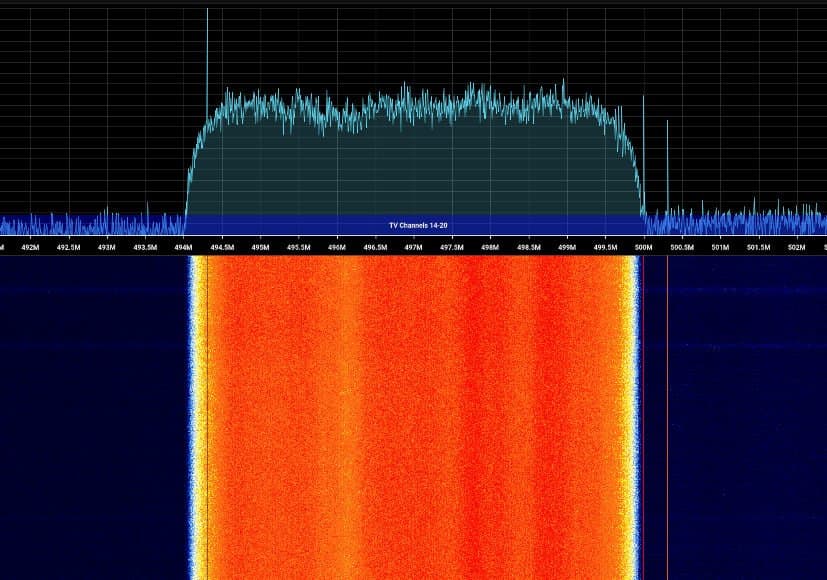
Researchers demonstrate that ATSC television broadcasts create measurable interference patterns that can track human movement and calculate walking speed using basic radio equipment.
A surprising experiment reveals that ordinary digital television signals can detect human movement through walls and calculate walking speed. This phenomenon leverages radio wave interference patterns created when people move in environments with reflective surfaces.
When recording an ATSC digital TV signal using an indoor dipole antenna and software-defined radio (Ettus USRP B200), the baseline signal appears stable. 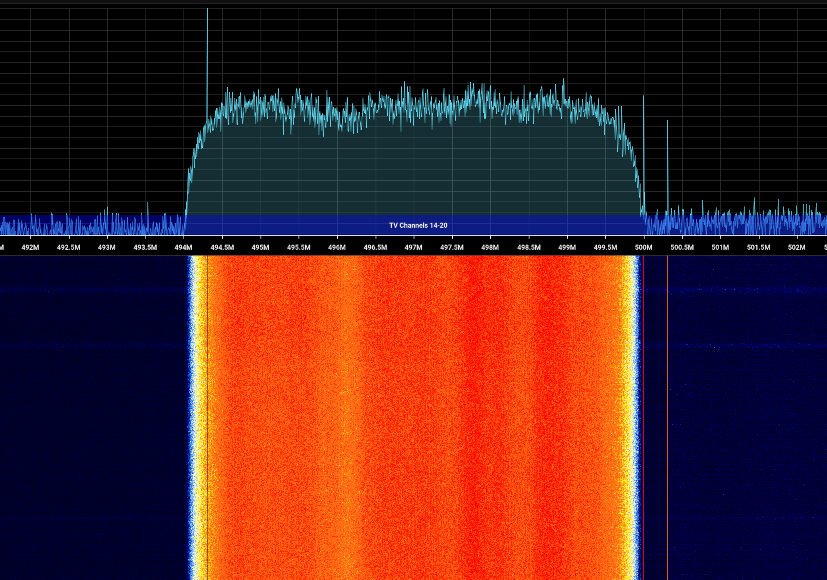 shows this undisturbed spectrogram. However, walking directly between the receiver and transmitter introduces minor disruptions.
 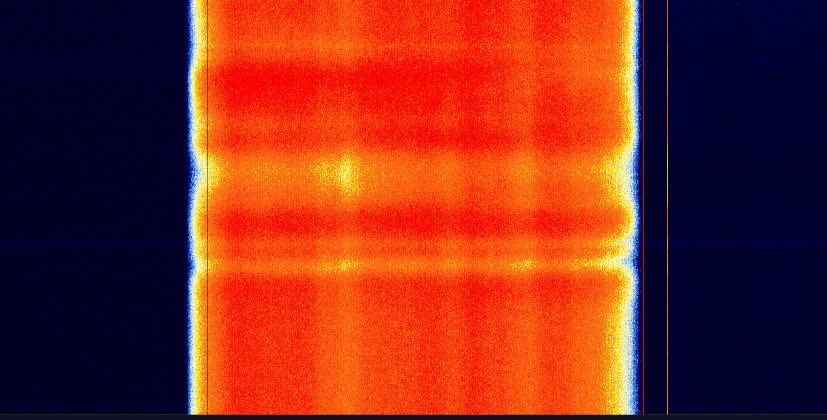 illustrates this slight disturbance during movement.
The critical discovery emerges when repositioning the antenna slightly, creating a phenomenon called selective fading. Here, the direct signal cancels out with reflected waves, nullifying reception across specific frequencies. 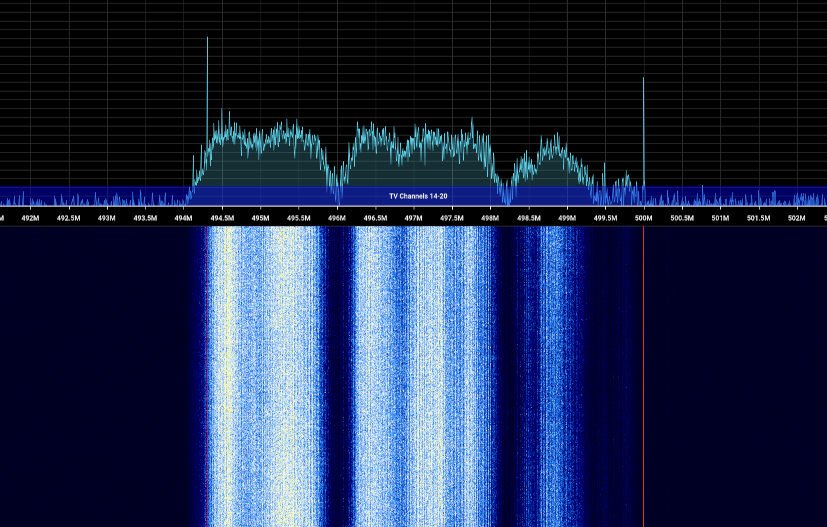 demonstrates this complete signal loss. Because the cancellation depends on wavelength, different frequencies fade at different locations.
This cancellation state becomes extraordinarily sensitive to movement. When rising from a chair, distinct striped patterns appear in the spectrogram. 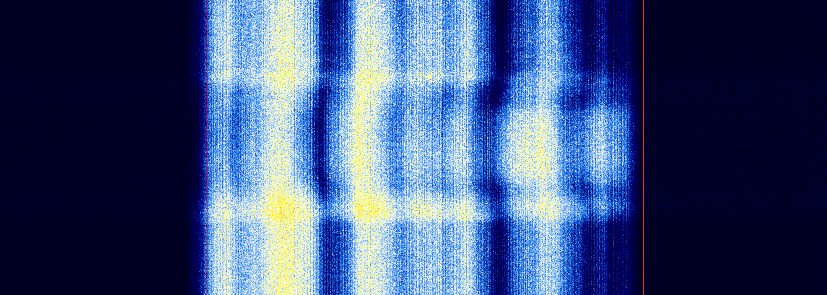 captures these stripes during minor motion. Walking in an adjacent room produces even clearer patterns, shown in
 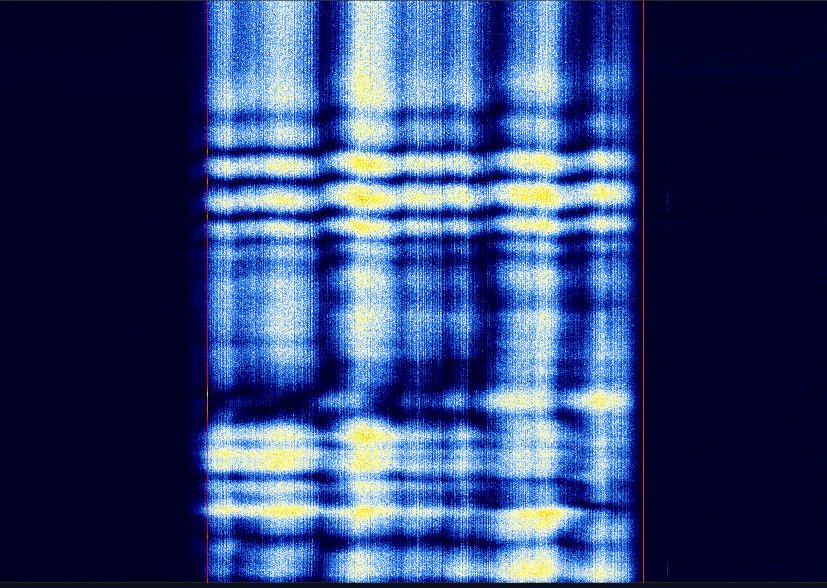 . Each stripe gap corresponds to the path length changing by one wavelength (approximately 0.6 meters for 490 MHz signals).
By analyzing these stripes, researchers calculated walking speed:
- Gap between stripes: 70 pixels
- Waterfall update rate: 150 Hz
- Pixel time conversion: 70 / 150 = 0.47 seconds per gap
- Frequency shift: 1 / 0.47s ≈ 2.1 Hz
- Speed calculation: (Speed of light / Carrier frequency) × Frequency shift = (3e8 m/s / 490e6 Hz) × 2.1 Hz ≈ 1.3 m/s (4.6 km/h)
This speed measurement required no geometric adjustments since motion occurred perpendicular to the signal path. While ATSC TV provides the clearest visualization due to its consistent signal structure, the same physics applies to WiFi, LTE, and other wideband radio signals. Potential applications include passive motion sensing for security or smart environments, though privacy implications warrant discussion. The experiment underscores how ambient radio waves permeating our spaces create unintentional detection systems using affordable hardware.
Comments
Please log in or register to join the discussion