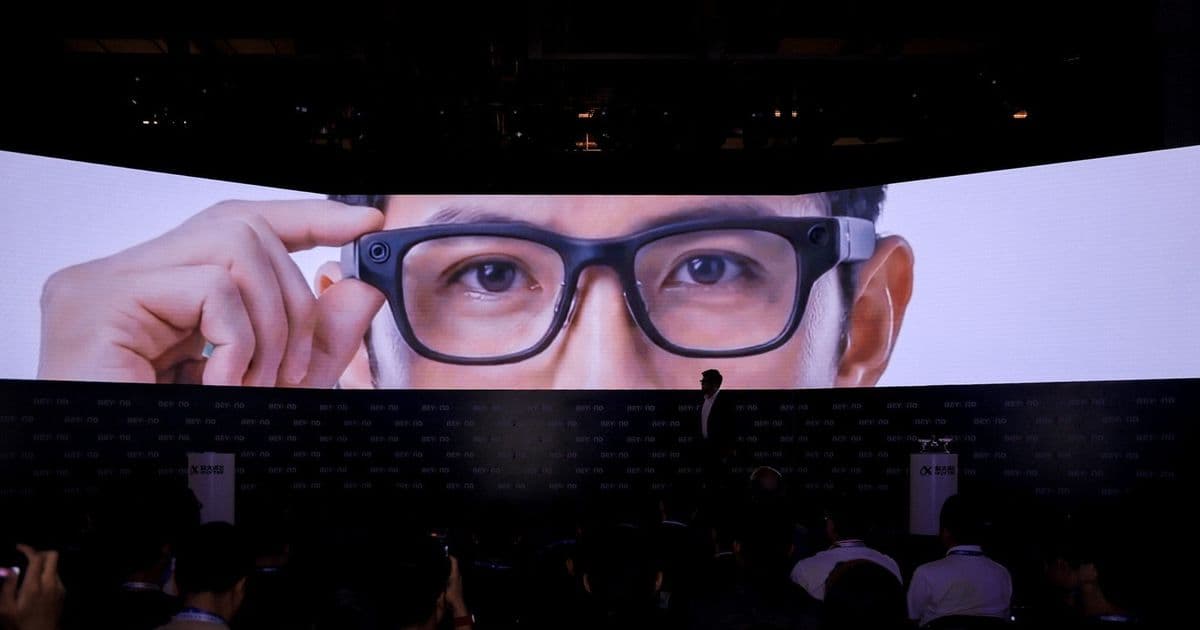
Chinese tech giant iFlytek has launched lightweight AI glasses featuring advanced translation capabilities, noise recognition, and an AI assistant, positioning them as productivity tools rather than just gadgets. The 40g device aims to solve the smart glasses' struggle for mainstream adoption by focusing on practical, high-frequency use cases.
At BEYOND Expo 2026 in Macau, iFlytek unveiled its latest innovation in AI-powered wearables: a pair of smart glasses weighing just 40 grams. The company, known for its work in speech recognition and AI translation, is positioning this new device as more than just another tech gadget—instead, they're aiming to transform smart glasses into essential productivity tools that solve real-world problems.
Lin Huijie, General Manager of iFlytek's Wearable Devices Business Department, addressed a fundamental question that has plagued the smart glasses industry for nearly a decade: why do smart glasses truly matter? In his presentation, Lin traced the evolution of smart glasses from early attempts focused on futuristic designs to later efforts that merely transferred smartphone functions onto eyewear. Many products, he noted, resembled smartphones worn on the head or limited-function accessories rather than devices with truly independent and high-frequency use cases.
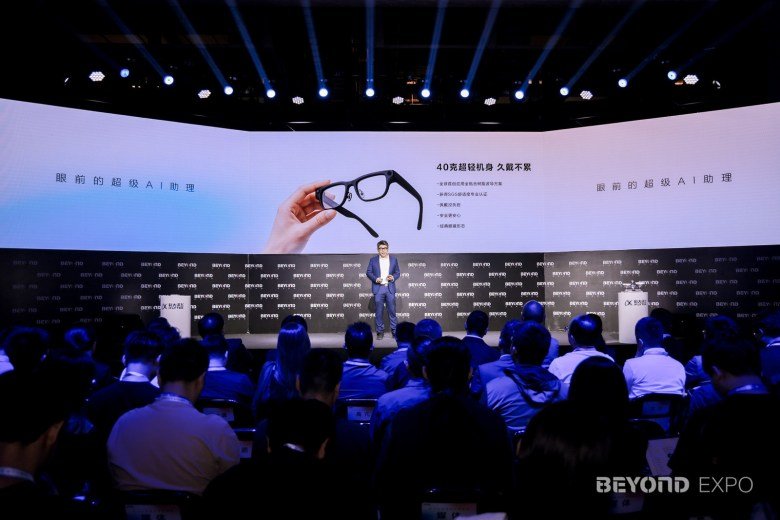
"With rapid breakthroughs in AI technologies, especially multimodal large models, iFlytek believes smart glasses have finally entered a new stage of opportunity," Lin explained. Unlike smartphones, glasses serve as a more natural human interface that can be worn for extended periods while continuously perceiving what users see, hear, and communicate. The company positions its AI glasses as a "super AI assistant before your eyes" and even "a second brain for users."
The newly launched iFlytek AI glasses focus on four major areas: translation, interaction, office productivity, and wearing comfort. Translation capabilities stand out as a primary feature, with support for real-time translation across 122 languages, accents, and dialects. The device covers face-to-face translation, phone-call translation, online meeting interpretation, and AR visual translation. It can also recognize and translate text from menus, road signs, and presentation slides in real time, addressing practical needs for travelers, business professionals, and students.
A particularly innovative feature is iFlytek's self-developed lip-motion recognition multimodal noise reduction system. By combining a 5+1 microphone array, cameras, and bone-conduction technology, the AI glasses can identify a target speaker based on the user's line of sight and the speaker's lip movements. This enables a "hear who you look at" experience designed for complex public environments such as exhibitions, high-speed rail stations, and airports. The feature tackles the longstanding challenge of speech recognition in multi-speaker scenarios where background noise often interferes with voice capture.
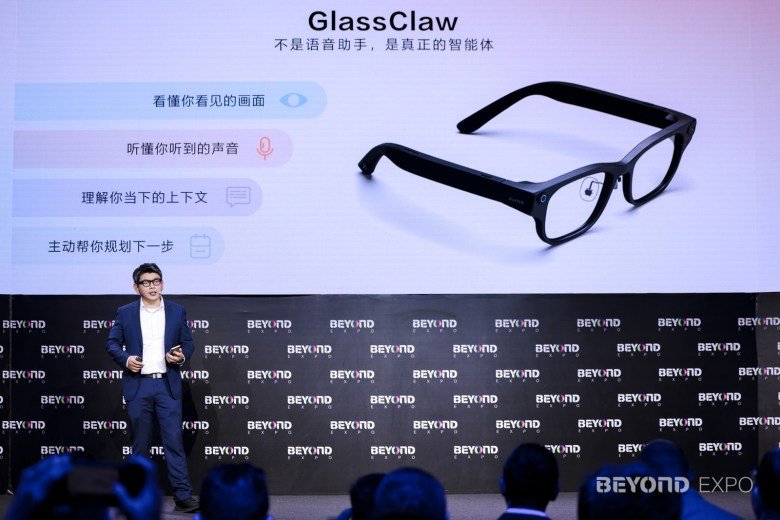
Beyond translation, iFlytek demonstrated the AI glasses' applications in business and office scenarios through its GlassClaw AI agent. This assistant supports meeting transcription, information organization, email sending, and complex workflow execution. During the demonstration, Lin showed how users could issue voice commands to let the AI automatically generate partnership proposals, organize travel plans, and send emails without relying on a smartphone or computer. The glasses also feature an intelligent teleprompter that automatically scrolls content based on speaking pace, helping users deliver speeches, interviews, and presentations more naturally.
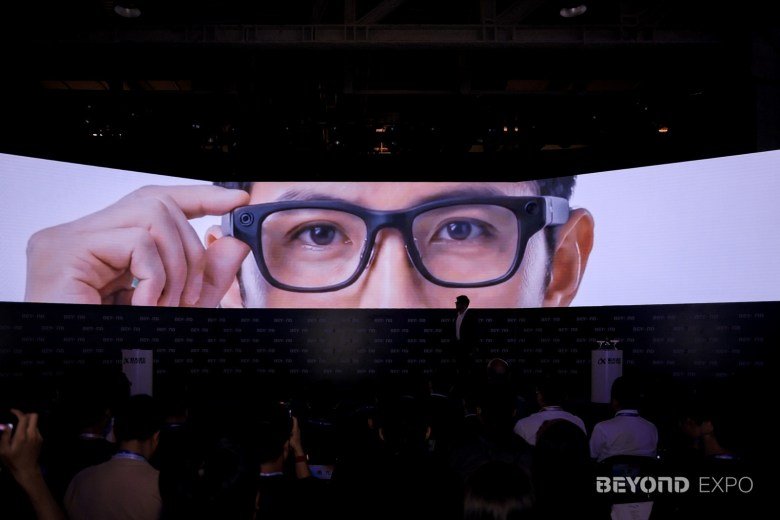
From a hardware perspective, the new iFlytek AI glasses feature an aerospace-grade magnesium-aluminum alloy frame, a resin waveguide display solution, and a customized micro-optical module. These design choices contribute to the device's remarkably light weight of around 40 grams—roughly 20% lighter than comparable products on the market. The company stated that the device has passed a 1.7-meter drop test and supports up to eight hours of battery life with multiple charging options. The development team also carried out extensive ergonomic adjustments tailored to Asian facial structures to improve long-term wearing comfort.
iFlytek is pricing the AI glasses at 4,299 yuan (approximately $635), positioning them as premium productivity tools rather than budget consumer electronics. The device will go on presale starting June 15, indicating the company's confidence in market reception.
Alongside the product launch, iFlytek organized an AI glasses ecosystem partner forum with industry leaders including Sunny Optical, Wanxin Optical, and Conant Optics. During this forum, participants discussed key standards including weight, comfort, and intelligence for next-generation smart glasses. This collaborative approach suggests iFlytek's strategy of building an ecosystem around its wearable AI devices rather than operating in isolation.
The launch represents iFlytek's broader ambition to transform smart glasses from tech novelties into high-frequency productivity tools and establish them as a key entry point for the next generation of AI-powered devices. As AI technologies continue to evolve, the company aims to address the fundamental question that has limited smart glasses adoption: why do users need another device when smartphones already handle most tasks? By focusing on practical applications where glasses offer natural advantages—continuous wear, hands-free operation, and contextual awareness—iFlytek may be positioning itself at the forefront of the next wave of wearable computing.
Comments
Please log in or register to join the discussion