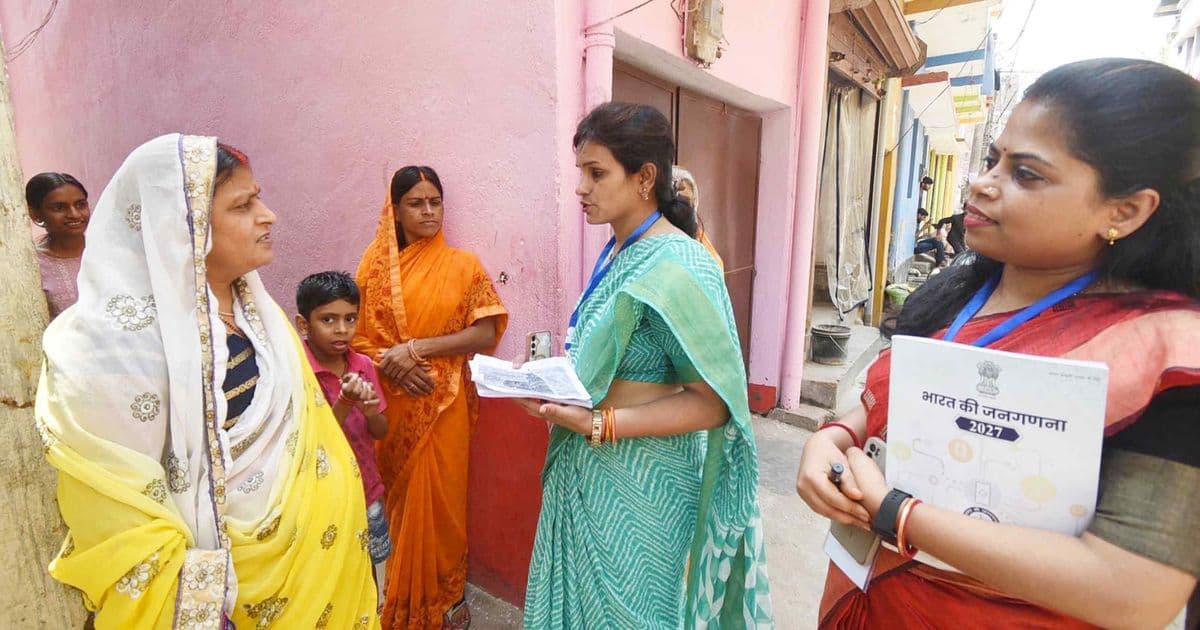
India’s population count will redraw the data map behind welfare, infrastructure, fintech, telecom and consumer internet strategy in one of the world’s largest growth markets.
Business News
India is finally moving to refresh the most basic dataset behind its economy: how many people live there, where they live, what services they can access and how household conditions have changed since the last full census in 2011. The question in Nikkei Asia’s framing, whether India is really home to 1.4 billion people, is not just demographic housekeeping. For technology companies, lenders, telecom operators, cloud providers and consumer platforms, it is a market-sizing problem with real capital allocation consequences.
India’s official census infrastructure sits with the Office of the Registrar General and Census Commissioner. The delay matters because the country has spent more than a decade building business, welfare and digital infrastructure on a demographic base that predates mass 4G adoption, UPI payments, the acceleration of Aadhaar-linked services, the pandemic migration shock and the post-2020 boom in digital commerce.
The last census counted about 1.21 billion people in 2011. Current international estimates place India well above 1.4 billion, with the World Bank’s India data and UN population datasets both pointing to India as the world’s most populous country. But estimates are not the same as a street-level count. A census gives policymakers and businesses granular information by district, town, ward and village. That is the difference between a national market story and an operating map.
For a tech analyst, the most valuable part of the census is not the headline population number. It is the cross-section of household access: electricity, drinking water, sanitation, dwelling conditions, mobile phone availability, internet access, vehicles and other indicators that shape demand for digital payments, edtech, telemedicine, e-commerce, logistics and financial services. A country can have 1.4 billion people and still contain hundreds of different addressable markets, each with different income, connectivity and infrastructure constraints.
That is why the delayed count is a business event. India’s digital economy has grown faster than its statistical base. The country now has one of the world’s largest real-time payments systems through UPI, a broad identity layer through Aadhaar, and a policy push around public digital infrastructure often grouped under India Stack. Yet companies still need reliable denominator data: users as a share of households, payment frequency by income cluster, broadband penetration by district, urban expansion by periphery and welfare eligibility by family composition.
Market Context
India’s macro story is unusually attractive for global technology capital. The economy is roughly a $4 trillion nominal GDP market, depending on the exchange rate and source, with the IMF World Economic Outlook database continuing to place India among the fastest-growing large economies. Private consumption remains a major component of GDP, and the country’s scale gives even low per-capita spending categories enormous aggregate value.
That scale is exactly why a delayed census creates distortion. If a fintech company models credit demand using outdated household location data, it can overbuild in saturated urban corridors and underinvest in fast-growing peri-urban districts. If a cloud or telecom provider uses stale density assumptions, network capex can miss the next demand cluster. If an e-commerce platform assumes migration patterns from 2011 still hold, warehouse placement, delivery promise times and customer acquisition budgets become less precise.
The financial figures around digital adoption show why the stakes are high. UPI has become the transaction rail for everyday digital commerce, with May 2026 reported as a record month at more than Rs 29.90 lakh crore in transaction value. That figure is not just a payments milestone. It signals that India’s consumer internet economy is increasingly measured in high-frequency financial activity rather than only app downloads or monthly active users.
The distinction matters for investors. UPI transaction value is enormous, but much of the volume is small-ticket payments. That supports commerce density and merchant digitization, while not automatically translating into high-margin revenue for payment apps. The profit pools often sit around credit, merchant services, software, advertising, logistics, wealth products and data-driven underwriting. Better census data helps identify where those second-order revenue pools can form.
India’s market is also becoming harder to analyze through the simple urban-rural split. The next layer of growth is likely to come from district headquarters, tier-2 cities, industrial corridors, satellite towns and dense rural clusters with rising smartphone access. A refreshed census can show where population growth, household formation and infrastructure access have diverged from the 2011 map. That is valuable for companies selling everything from low-cost smartphones and broadband plans to SaaS for small businesses.
The timing also intersects with public spending. Census data affects welfare targeting, infrastructure planning, school and hospital capacity, housing programs and food distribution. Those categories influence private-sector demand because public investment lowers the cost of serving marginal consumers. Better roads improve delivery economics. Electricity reliability improves digital device usage. Household sanitation and water data shape healthtech and insurance assumptions. School-age population data shapes edtech demand, not as a national slogan, but as district-level customer acquisition math.
For global tech companies, the updated count may also sharpen the India thesis in AI. India has a large English-speaking and multilingual internet base, a deep software services industry, a large developer community and a government that has promoted digital public infrastructure. But AI adoption depends on compute access, data-center capacity, enterprise digitization, language coverage and affordability. Census-linked indicators can help estimate which regions are ready for AI-enabled public services, voice interfaces, local-language commerce and automated financial products.
The census also matters for data-center and cloud strategy. India’s cloud market has been driven by banking, IT services, consumer internet, public-sector digitization and multinational demand. But the next phase depends on workloads generated by domestic enterprises, AI inference, public digital services and local data processing. Population density, urbanization and enterprise formation do not directly dictate cloud demand, but they correlate with where digital services become economically viable.
What It Means
The main strategic implication is that India’s total addressable market is likely to become more precise and more uneven at the same time. A higher confirmed population number may flatter top-down market slides, but the detailed data could force companies to revise assumptions about where the profitable users are. Some regions may prove larger, younger or more digitally reachable than expected. Others may show infrastructure gaps that push monetization further out.
For consumer internet businesses, the census can reset acquisition models. India has often been described as a massive user market with thin monetization. That remains broadly true, but a granular count can separate high-engagement, low-income users from households with rising discretionary spend. Streaming, gaming, commerce, education and financial apps will be able to refine regional pricing, language strategy and offline distribution partnerships with better demographic backing.
For fintech, the update could be even more consequential. Credit models require income proxies, location stability, employment signals and household structure. Formal income data remains limited for large parts of India’s workforce, so lenders use alternative data, transaction histories and local economic indicators. New census data can improve risk segmentation, especially when paired with UPI activity, GST-linked merchant data and account aggregator flows. That can expand access, but it also raises questions about privacy, consent and bias in automated lending.
For telecom operators, the census is a capex planning tool. India already has cheap mobile data by global standards, but 5G monetization remains a challenge when consumer willingness to pay is constrained. Operators need to know where household density, device ownership, enterprise clusters and data consumption can support network investment. A refreshed census gives the telecom sector a stronger foundation for deciding where fixed wireless access, fiber and 5G capacity upgrades make commercial sense.
For SaaS and cloud vendors, the census helps validate the small-business digitization story. India’s long tail of merchants, workshops, clinics, schools and logistics providers is often cited as a huge software opportunity. The hard part is distribution and price discipline. Updated urbanization and household data can point to local economies where digital payments, smartphone usage and rising consumption create demand for inventory software, accounting tools, customer messaging, lending products and workflow automation.
For policymakers, the business issue is credibility. India’s growth narrative is strongest when investors can trust the underlying data. A delayed census creates a gap between market momentum and measurement. Closing that gap supports better fiscal planning, more credible welfare allocation and clearer infrastructure priorities. It also gives private companies fewer excuses for lazy market assumptions.
The risk is that the new numbers may complicate the story. If the count shows deeper regional inequality, slower household income improvement or weaker digital access than headline indicators suggest, some market forecasts will need to come down. If it shows faster urban growth and wider internet access, capital may shift more aggressively into logistics, credit, local-language AI and regional commerce. Either way, uncertainty falls, and that is valuable.
India’s census is therefore not only a question of whether the country has 1.4 billion people. It is a question of where the next 100 million commercially reachable users actually are, what infrastructure they lack, how they transact and which companies can serve them profitably. In a market this large, better counting is not administrative trivia. It is the data layer beneath the next investment cycle.
Comments
Please log in or register to join the discussion