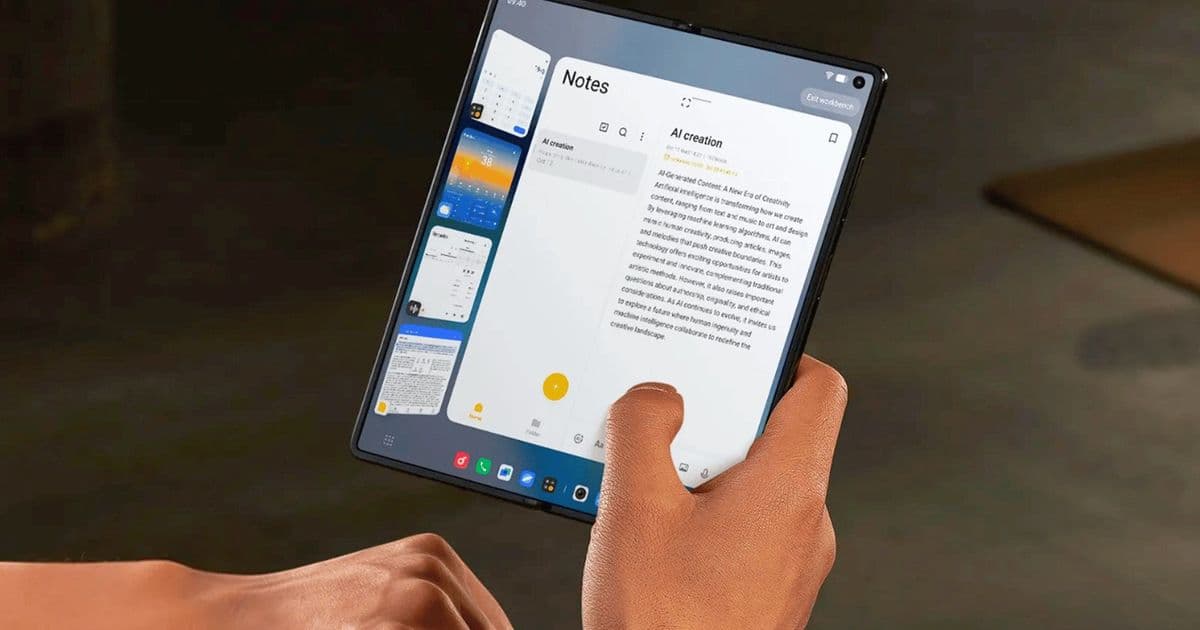
Vivo’s next foldable is shaping up less like a mild annual refresh and more like a direct challenge to Samsung’s battery and multitasking priorities.
What's new
Vivo has started turning the X Fold 6 from rumor into product, and the first confirmed detail is the most important one for a high-end foldable: the chipset. The company says its next flagship foldable will use the Dimensity 9500 Super Edition, a customized version of MediaTek's flagship silicon aimed at better NPU performance, lower power consumption, and stronger multitasking behavior.
That matters because foldables are unusually demanding devices. A normal slab phone has one main display target and a fairly predictable app model. A book-style foldable has to handle a cover screen, a large inner screen, split-screen apps, floating windows, continuity between displays, and often more aggressive background task retention. A faster CPU is helpful, but the bigger practical wins usually come from memory management, scheduler tuning, display power control, and AI acceleration that does not hammer the battery.
Vivo product manager Han Boxiao specifically points to improved NPU performance and reduced power consumption for the Super Edition chip. The NPU angle is not just marketing if Vivo uses it well. On-device image processing, live translation, transcription, photo cleanup, voice features, and app prediction can all benefit from a stronger neural processor. The buyer-facing question is whether those gains appear in everyday use or only in controlled benchmarks. I would want to test sustained performance on the inner display, camera processing speed, split-screen app switching, and battery drain while using AI-heavy features before calling it a clear upgrade.
{{IMAGE:2}}
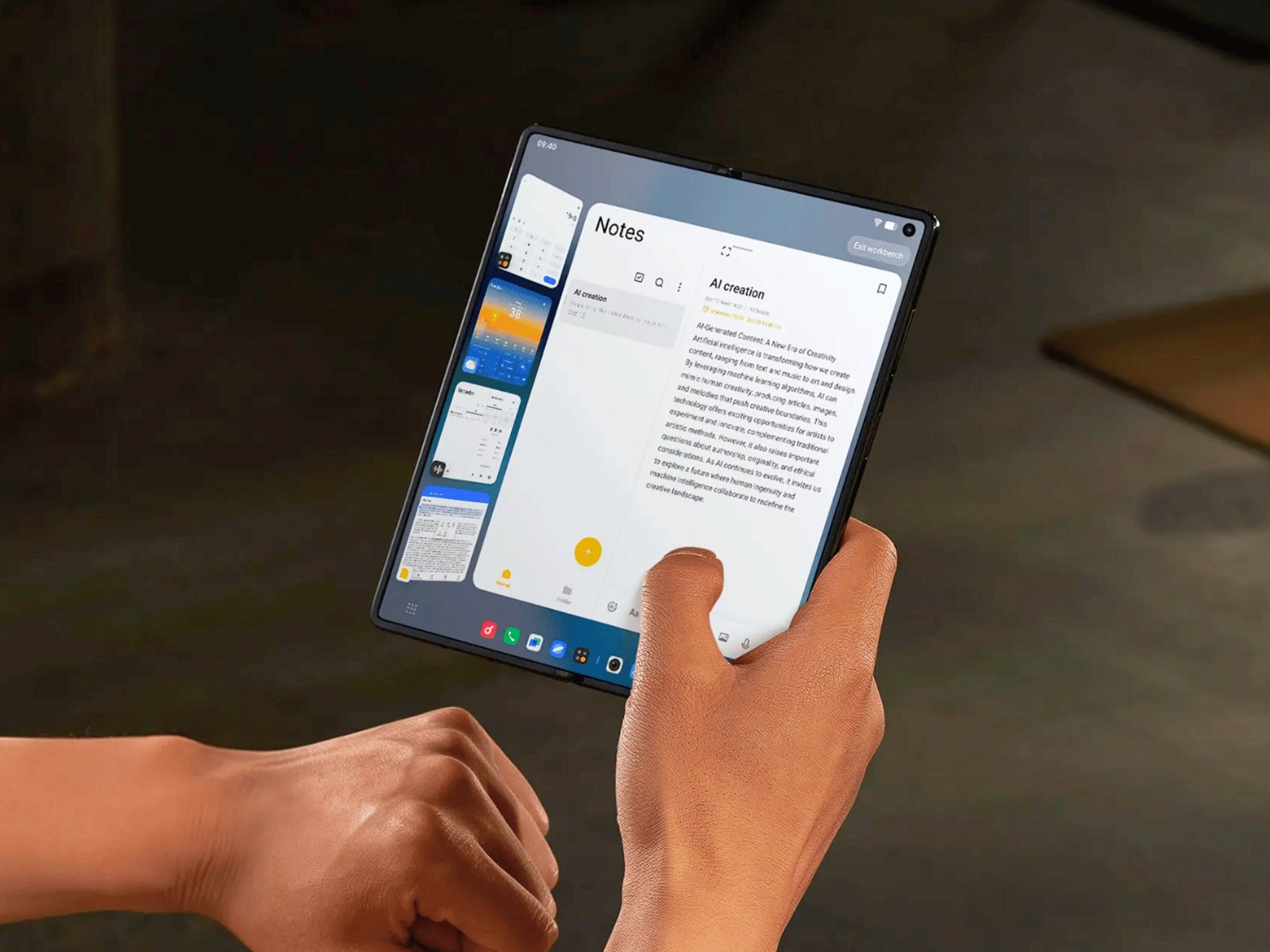
The other confirmed software piece is OriginOS 6 Fold, Vivo's foldable-focused interface. That is just as important as the processor. Foldable hardware is easy to advertise with screen size and hinge photos, but software is where these devices either justify their price or feel like oversized phones. A good foldable UI needs reliable app continuity, useful window controls, sensible keyboard behavior, and layout handling that does not waste the large panel. Vivo is signaling that the X Fold 6 will not simply run a stretched phone interface.
The unconfirmed specs are where the X Fold 6 becomes more interesting. A previous leak claims the phone may carry a 200MP primary camera, a 50MP zoom camera, and a 7,000mAh battery. Vivo has not confirmed those details yet, so they should be treated as early guidance rather than final specs. Still, if the battery claim is accurate, it would be the headline hardware change. A 7,000mAh cell in a foldable would put Vivo well ahead of Samsung's Galaxy Z Fold 7, which is listed with a 4,400mAh battery and a current reference price of $1,599.
Pricing for the X Fold 6 has not been announced. Vivo is expected to launch the device in China in June 2026, and global availability remains unclear. Buyers outside China should wait for regional software, band support, warranty coverage, and Google services details before treating it as a realistic import option. You can track Vivo's broader product lineup through Vivo's official site, while MediaTek's mobile platform direction is covered on its smartphone chipset page.
How it compares
The cleanest comparison starts with the Vivo X Fold 5. That phone arrived in June 2025 with a Snapdragon 8 Gen 3, a 6,000mAh battery, and a 50MP triple rear camera system with Zeiss tuning. On paper, the X Fold 6 appears to be targeting three pressure points: compute efficiency, camera ambition, and battery capacity.
The move from Snapdragon 8 Gen 3 to Dimensity 9500 Super Edition is not automatically a straight-line upgrade until independent benchmarks and thermal tests exist. Snapdragon 8 Gen 3 remains a high-end chip, and its performance is already more than enough for most phone tasks. The real test for Vivo will be sustained behavior. Foldables have more surface area than slab phones, but they also have hinge constraints, thinner halves, and complex internal packaging. A chip that posts a high peak score but throttles after ten minutes is less useful than one that holds a slightly lower level for longer.
For buyers, that means the key benchmarks will not be a single Geekbench run. I would look for repeated 3DMark stress tests, long video export tests, camera burst processing, app reload behavior with multiple windows open, and battery drain on both the inner and cover displays. Vivo's claim of lower power consumption is promising, but foldables expose weak efficiency quickly. A large inner OLED panel can erase chipset gains if brightness, refresh rate, and app scaling are not tuned well.
The battery comparison is much easier to understand. The X Fold 5 already had a large 6,000mAh battery for a foldable. If the X Fold 6 reaches the rumored 7,000mAh capacity, that would be a meaningful jump of about 16.7 percent over its predecessor. Against the Galaxy Z Fold 7's 4,400mAh figure, the rumored Vivo battery would be roughly 59 percent larger. Capacity is not the same as runtime, but that much extra cell volume gives Vivo more room to absorb the power cost of the big inner display.
Samsung still has advantages that do not show up in a battery spec table. The Galaxy Z Fold line usually has stronger global carrier support, mature accessory availability, polished multitasking features, long software support, and easier service access in many markets. That is why Vivo's likely China-first launch matters. A foldable can win a spec comparison and still be the wrong purchase if repair options, software localization, or app compatibility are weak in your region.
Camera hardware could be another major swing. The X Fold 5's 50MP triple camera setup with Zeiss tuning was already positioned as a premium system. A rumored 200MP main camera would give the X Fold 6 more room for pixel binning, crop zoom, and high-detail daylight captures. The 50MP zoom camera rumor is also encouraging because foldables often compromise telephoto hardware to save space. The trade-off is thickness, heat, processing time, and lens quality. A 200MP sensor only helps if Vivo pairs it with good optics, fast readout, strong stabilization, and sensible image processing.
Against Samsung, Vivo may be aiming for the buyer who thinks the Fold series has become too conservative on battery and camera hardware. Samsung's foldables tend to prioritize refinement, ecosystem integration, and durability messaging. Vivo appears to be pushing raw hardware capacity harder, especially if the battery and camera leaks hold. That makes the X Fold 6 potentially more exciting for spec-driven buyers, but also harder to judge until durability, hinge feel, crease visibility, and software polish are tested.
Who it's for
The Vivo X Fold 6 is shaping up for buyers who already know why they want a book-style foldable. This is not likely to be the sensible default phone for most people. It is a high-end productivity and media device for users who value a tablet-like inner display, serious multitasking, and flagship camera hardware in one pocketable package.
If you use split-screen apps constantly, review documents on a phone, edit photos, manage chats while browsing, or keep maps and messaging open side by side, the X Fold 6 could be appealing. The Dimensity 9500 Super Edition claim is especially relevant for that kind of workload because multitasking performance depends on more than peak speed. The phone needs to keep apps alive, resize them cleanly, and avoid stutter when moving between the cover and inner displays.
Battery-focused buyers should watch this device closely. A 7,000mAh battery, if confirmed, would be a serious practical advantage. Foldables often ask users to accept battery life that is merely adequate despite very high prices. Vivo may be trying to remove that compromise. Still, charging speed, battery health behavior, thermals, and real screen-on time matter more than capacity alone.
Camera-focused buyers should be cautiously interested rather than sold. The rumored 200MP main camera and 50MP zoom setup sound strong, but foldable cameras need real testing. I would compare shutter lag, motion handling, portrait edge detection, night mode processing, zoom detail, and video stabilization against the X Fold 5, Galaxy Z Fold 7, and top slab flagships. High megapixel counts can produce excellent results, but they can also create huge files and slower processing if the image pipeline is not tuned well.
The X Fold 6 is less ideal for buyers who want the safest support experience. If Vivo keeps the launch limited to China at first, import buyers may face missing bands, notification quirks, warranty friction, and software differences compared with global Android builds. Samsung's Galaxy Z Fold 7 remains the more predictable option for many U.S. buyers because it is widely sold, serviced, and supported through local channels.
The short version for practical shoppers: wait for full specs, launch pricing, and independent tests. Vivo has confirmed enough to make the X Fold 6 one of the more interesting foldables of June 2026, especially around processor tuning and foldable software. If the leaked 7,000mAh battery and upgraded cameras are accurate, Vivo may have a serious hardware advantage over more conservative rivals. The final verdict will depend on the parts buyers actually feel every day: battery life, thermals, hinge quality, camera consistency, app behavior, and price.
Comments
Please log in or register to join the discussion