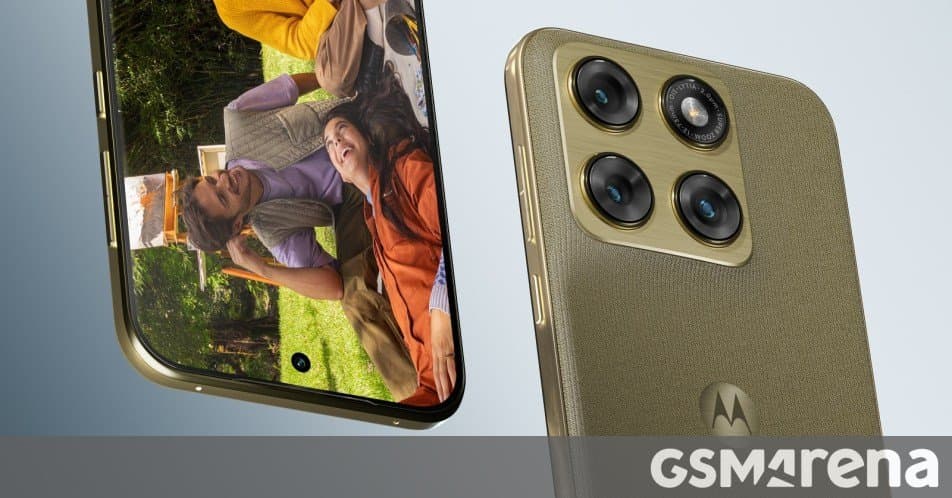
Motorola’s newest Edge is not chasing ultra-premium specs. It is aiming for the practical Android buyer who wants a compact OLED phone, modern software, solid cameras, and fewer ecosystem strings attached.
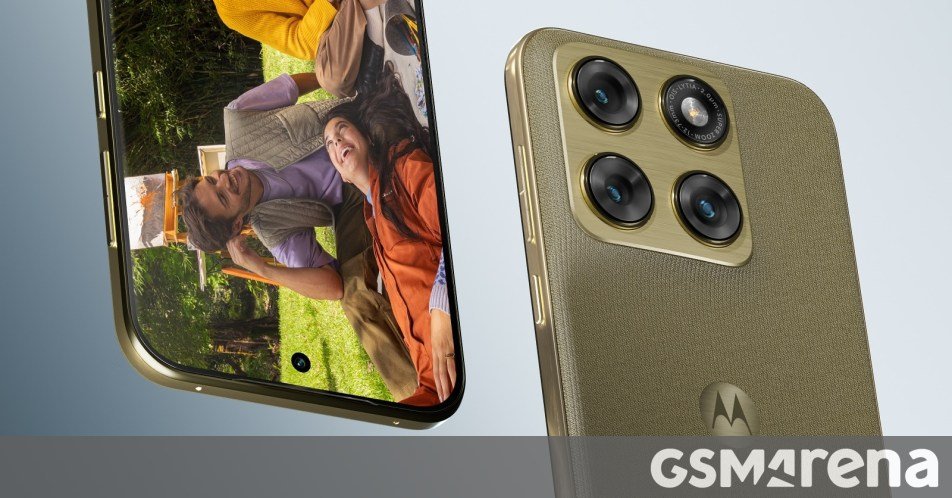
Motorola’s Edge (2026) is now available in the US and Canada after being announced last week, giving North American buyers a new midrange Android option that sits between budget Moto G hardware and the more expensive Razr foldable lineup. In the US, the phone is priced at $600 unlocked through Motorola.com and retail partners including Best Buy. In Canada, the same configuration is listed at CAD 850.
The launch configuration is straightforward: one storage tier, 128GB, and one color, Pantone Martini Olive. That simplicity has pros and cons. Buyers do not have to decode a half-dozen memory and color combinations, but 128GB is tight in 2026 if you shoot a lot of 4K video, keep large games installed, or store offline music and maps. Without a higher-capacity option mentioned for launch, cloud storage and regular cleanup become part of the ownership experience.
Motorola is also using an early-order bundle to make the launch feel more complete. US buyers can get Moto Buds Loop and a Moto Watch while supplies last, a combined claimed value of $400. That matters because accessories are now a major part of how phone makers shape buying decisions. A free watch and earbuds can make a $600 phone feel like a fuller ecosystem purchase, even if the phone itself remains the main attraction.
Key Features
The Edge (2026) centers on a 6.3-inch OLED display, which is smaller than many large-screen Android phones and should make the device easier to use one-handed. That is a practical shift. The midrange market has plenty of large phones with big batteries, but fewer options for people who want a modern display without carrying something that feels closer to a small tablet.
Inside, the phone uses MediaTek’s Dimensity 7450 platform. This is not positioned as a flagship gaming chip, and that is fine for the audience Motorola appears to be targeting. The value is in everyday responsiveness: messaging, browsing, camera processing, streaming, Android Auto, social apps, and light gaming. The bigger question is thermal behavior and long-term smoothness, since midrange phones can feel quick at launch but slow down after a year of updates, background services, and fuller storage.
The phone ships with Android 16, which is a meaningful point for a Motorola device. Motorola has often been criticized for slower update timing compared with Google and Samsung, so launching on a current Android version helps the Edge (2026) start from a better place. Android 16 also keeps the phone current with newer privacy, notification, connectivity, and security behavior documented through Android’s official developer resources.
For buyers, the OS version affects more than the settings menu. It determines how long banking apps, passkeys, Bluetooth accessories, smart home controls, and wearable integrations feel current. A phone that starts one Android generation behind can feel older faster, even if the hardware is still fine. Starting on Android 16 gives the Edge (2026) a cleaner baseline, though Motorola’s full update commitment remains a key detail buyers should check before choosing it over a Pixel or Galaxy.
The camera setup is also more ambitious than a basic midrange formula. The Edge (2026) uses a 50MP main camera, a 50MP ultrawide that can also handle macro-style shots, and a 10MP telephoto camera with 3x optical zoom. That telephoto lens is the standout. Many phones around this price use a main camera, ultrawide, and a low-value depth or macro sensor. A real 3x zoom lens gives users better framing for portraits, pets, concerts, travel details, and everyday shots where digital zoom usually falls apart.
Battery and charging are aimed at convenience rather than spec-sheet theater. A 5,000mAh battery is the modern Android comfort zone, large enough for a full day and often more depending on display brightness and 5G use. Support for fast wired charging and wireless charging also helps the Edge (2026) feel less compromised. Wireless charging is still missing from many cheaper phones, so its inclusion matters for people who already have Qi pads at a desk, nightstand, or car mount.
Durability is another practical selling point. Motorola has been leaning harder into water, dust, and drop-resistance messaging across its recent devices, and that fits the Edge audience well. A midrange phone is often kept for years, passed down, or used without the same level of babying as a $1,200 flagship. Better resistance ratings and tougher glass can matter more than another benchmark win.
Ecosystem Context
The Edge (2026) arrives in a phone market where ecosystem lock-in is becoming just as important as raw hardware. Apple still has the strongest closed loop with iPhone, Apple Watch, AirPods, iMessage, FaceTime, iCloud, and Mac handoff features. Samsung has its own Android-side version with Galaxy phones, Galaxy Watch, Galaxy Buds, SmartThings, DeX, and deep One UI features. Google pushes Pixel buyers toward Fitbit, Pixel Buds, Gemini, Photos, and Google services.
Motorola’s pitch is different. It is less about trapping users inside a single brand family and more about offering a familiar Android phone with useful companion hardware. The launch bundle hints at that strategy. Moto Buds Loop and a Moto Watch can give buyers a ready-made set of accessories, but Motorola does not have the same high-wall ecosystem as Apple or Samsung. For many people, that is a benefit.
A Motorola phone can still work well with Google services, Windows PCs, third-party earbuds, Garmin watches, Wear OS devices, car systems, and smart home gear. That flexibility is one of Android’s best traits. The trade-off is that the experience may feel less tightly integrated than a full Galaxy or Apple setup. Features like instant pairing, device switching, health tracking, backup behavior, and cross-device notifications depend on which accessories you use and how much support each vendor provides.
That makes the Edge (2026) appealing for practical Android users who do not want to rebuild their entire tech life around one company. If you already use Google Photos, Gmail, Google Drive, Chrome, WhatsApp, Spotify, and a mix of Bluetooth accessories, Motorola’s lighter ecosystem approach can be a good fit. If you want the deepest watch-phone-earbud-tablet integration, Samsung may still have the edge on the Android side.
The biggest competitive pressure comes from software support. Google’s Pixel phones and Samsung’s Galaxy A and S-series devices have made long update policies a major buying factor. Motorola can compete on design, display, cameras, charging, and bundle value, but update reliability is where long-term trust is built. A $600 phone is not an impulse buy for most people. Buyers should look at Motorola’s promised Android version upgrades and security patch schedule before deciding.
There is also the storage question. A single 128GB model keeps the launch simple, but phones are becoming storage-hungry in very ordinary ways. Camera files are larger, apps cache more data, offline video downloads are common, and AI features can add local processing assets. For a user who keeps a phone two or three years, 256GB would have been the more comfortable default.
Still, the Edge (2026) has a clear role. It is for someone who wants a polished Android phone with a manageable size, current OS version, OLED display, real zoom camera, good battery capacity, and accessory value without paying flagship money. It does not need to beat every Pixel or Galaxy on every metric. It needs to feel dependable every morning, take good photos without fuss, last through a long day, and avoid making the buyer feel locked into choices they did not ask for.
That is the practical promise of this launch. Motorola is not selling the Edge (2026) as a luxury status device. It is selling a phone for people who care about the details they touch every day: the screen, the battery, the camera, the software version, and how well the device fits into the tech they already own.
Comments
Please log in or register to join the discussion