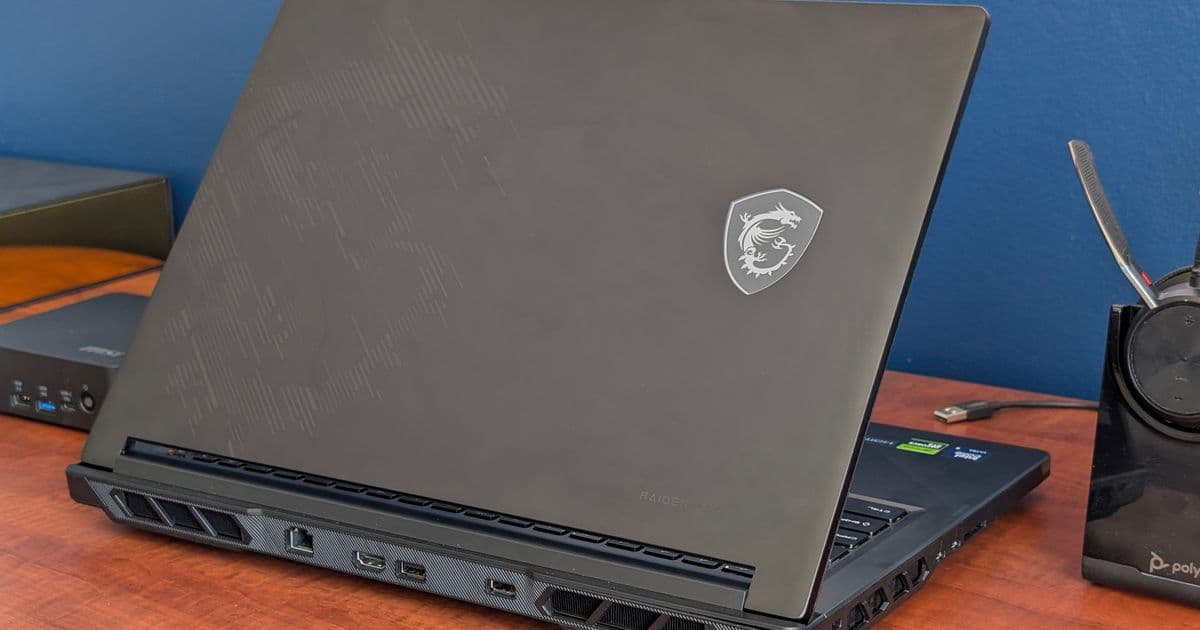
MSI’s 16-inch Raider turns Intel’s Core Ultra 9 290HX Plus into a chart-topping mobile CPU, but the win comes with desktop-replacement power draw.
What's new
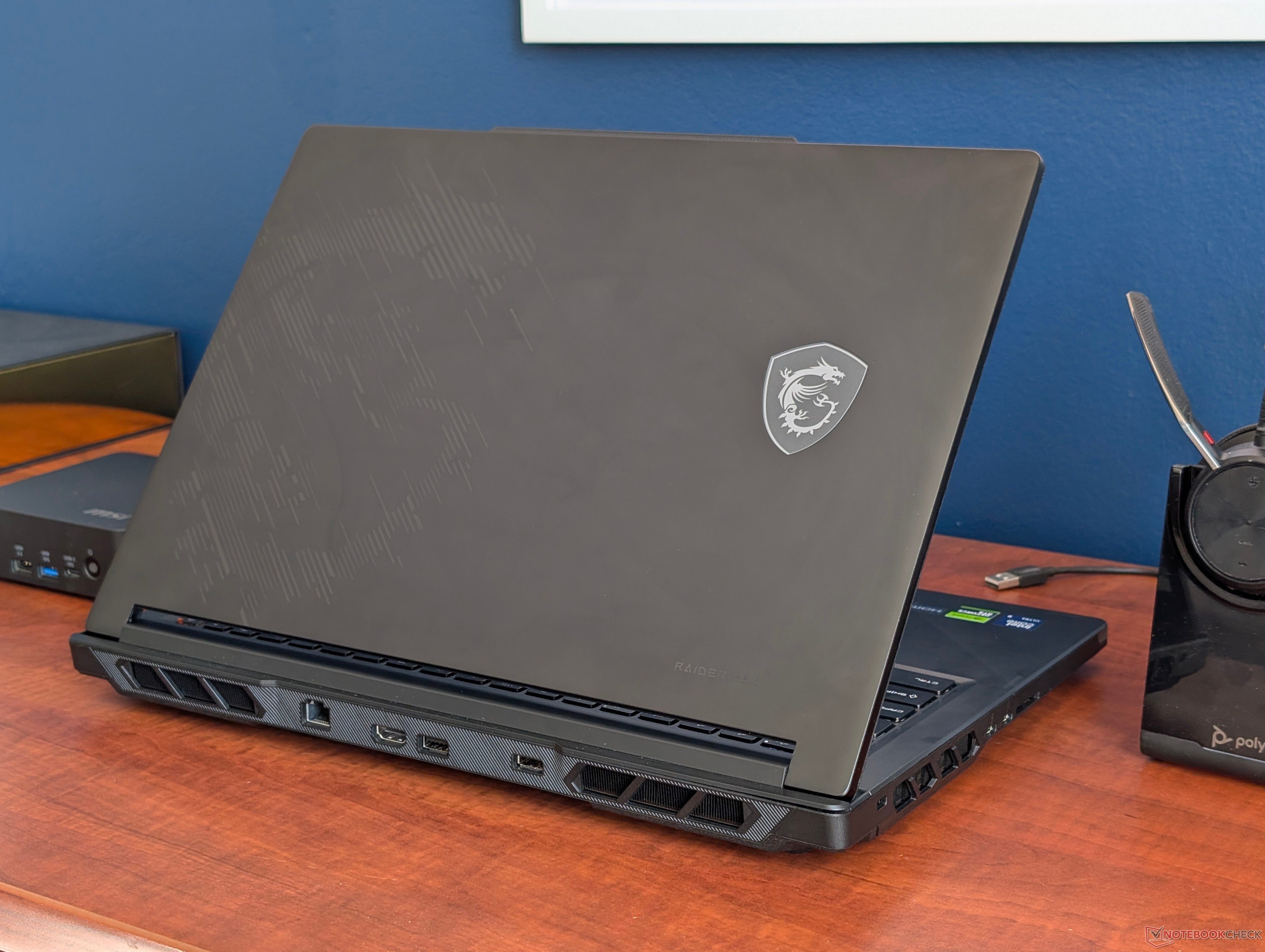
The MSI Raider 16 Max HX is shipping with Intel's Core Ultra 9 290HX Plus, and early benchmark results make a clean point: Arrow Lake is not done just because Panther Lake is newer. Notebookcheck's testing puts the Raider 16 Max HX at the top of its raw CPU performance charts, where the 290HX Plus edges past AMD's Ryzen 9 9955HX3D and narrowly beats the Core Ultra 9 285HX inside MSI's much larger Titan 18 HX AI.
That is the kind of result I pay attention to because it is not only a spec-sheet win. The Raider 16 Max HX is a 16-inch machine, not an 18-inch desktop replacement, yet it is producing CPU results that overlap with or exceed larger flagship laptops. In Cinebench R15 Multi Loop, the Raider 16 Max HX averaged 6,112 points, ahead of the Schenker XMG Neo 16 A25 with Ryzen 9 9955HX3D at 5,974 points, the Chuwi Gamebook with Ryzen 9 9955HX at 5,600 points, and the Alienware 16X Aurora with the same Core Ultra 9 290HX Plus at 5,102 points.
The broader CPU performance rating is tighter, but still flattering for MSI. Notebookcheck lists the Raider 16 Max HX and the XMG Neo 16 A25 at 83.3 points, with the Titan 18 HX AI and Core Ultra 9 285HX just behind at 82.4 points. That is not a huge gap, but when the newer chip is placed in a smaller chassis and still tops or ties heavier competitors, the cooling and power tuning deserve credit.
The processor itself is not a clean architectural reset. Intel's Core Ultra 200HX Plus launch positions the 290HX Plus as an enthusiast Arrow Lake refresh, not a Panther Lake part. It keeps the familiar high-performance laptop formula: 8 performance cores, 16 efficiency cores, 24 threads, and a maximum turbo frequency around 5.5 GHz. In practical terms, it behaves like a better-binned and harder-driven Core Ultra 9 285HX, with the same broad core layout and cache class but more aggressive clocks and platform tuning.
MSI wraps that chip in a laptop designed around high sustained power. The Raider 16 Max HX supports configurations with Nvidia GeForce RTX 5070 Ti, RTX 5080, or RTX 5090 Laptop GPUs, up to 128GB of DDR5-7200 memory, a mix of PCIe Gen 5 and Gen 4 storage slots, Wi-Fi 7, Bluetooth 5.4, and 16-inch 2560 x 1600 display options at 240Hz. The OLED option is the one most buyers will want at this price class, although IPS models remain relevant for users who prefer brightness consistency and lower burn-in concern over contrast.
Pricing keeps the Raider in premium territory. GamesRadar's Raider 16 Max review lists available Core Ultra 9 290HX Plus configurations from about $2,999.99 to $4,299.99, depending mainly on GPU and display. That range matters because the CPU result alone does not tell you whether this is a good buy. At $3,000, it is competing with high-end RTX 5080 laptops and some discounted 18-inch systems. At $4,300, it is fighting full-size RTX 5090 machines with larger cooling systems and, often, better keyboards, speakers, or panels.
How it compares
Against its direct Intel predecessor, the Core Ultra 9 290HX Plus is a refinement rather than a replacement for the 285HX. Intel has claimed modest gaming gains over the 285HX, while independent results suggest the biggest differences show up when a laptop vendor gives the chip enough power and cooling to hold boost behavior longer. The Raider does exactly that. Its advantage over the Titan 18 HX AI is not that the silicon is radically different, but that MSI's 16-inch chassis appears tuned aggressively enough to let the new part stretch.
That is also why the Alienware 16X Aurora comparison is useful. It ships with similar Arrow Lake processor options, but the Raider's Cinebench R15 loop average is much higher in the supplied results. Same class of CPU, different chassis behavior, different sustained performance. This is the oldest lesson in gaming laptops: the processor name gets you into a performance bracket, but the thermal design decides where in that bracket the machine actually lands after five or ten minutes of load.
Against AMD's Ryzen 9 9955HX3D, the Raider's win is narrower and more complicated. The Ryzen chip remains a serious rival, especially for games and workloads that benefit from AMD's cache-heavy design. In Notebookcheck's CPU performance rating, the Raider 16 Max HX and the Ryzen 9 9955HX3D-equipped XMG Neo 16 A25 are effectively tied at 83.3 points. The Intel system's higher Cinebench loop result looks excellent, but buyers should not read it as a universal AMD defeat. Rendering, compiling, compression, simulation, and gaming can stress different parts of the CPU, memory system, firmware, and cooling loop.
The real trade-off is power. Notebookcheck reports the Raider 16 Max HX consuming as much as 276W during Prime95. By comparison, the Razer Blade 16 with the newer but lower-power Core Ultra 9 386H reportedly consumed 93W under the same CPU stress scenario. The Raider can be roughly twice as fast in CPU-heavy work, but it can also use two to three times the power. That is a poor performance-per-watt story, even if the absolute performance is excellent.
This matters more than it might sound. A 276W CPU stress result means heat, fan noise, battery drain, and power adapter dependence are part of the package. You buy this class of laptop to run plugged in. You do not buy it expecting quiet lap use, long unplugged rendering sessions, or the kind of efficiency profile that makes Panther Lake interesting. Panther Lake's pitch is efficiency and newer platform direction. Arrow Lake HX Plus, at least in this Raider, is about brute-force throughput.
The GPU side reinforces that identity. MSI designed the Raider 16 Max HX around up to 300W total system power in some modes, with high-end RTX 50-series Laptop GPUs. That puts it closer to a condensed desktop replacement than a normal 16-inch gaming notebook. The benefit is obvious in sustained gaming and GPU benchmarks: the RTX 5090 has enough chassis volume and power headroom to behave closer to an 18-inch implementation than a slim 16-inch one. The cost is equally obvious: thickness, weight, thermals, and price.
Compared with thinner competitors like the Razer Blade 16, the Raider's advantage is not elegance. It is wattage. A slim chassis can be easier to carry and nicer to use on a desk every day, but it will usually clamp down harder on CPU and GPU boost under combined load. The Raider accepts the opposite compromise. It is heavier, louder under stress, and less travel-friendly, but it lets expensive silicon run closer to its ceiling.
Compared with 18-inch machines like the MSI Titan 18 HX AI or Asus ROG Strix Scar 18, the Raider 16 Max HX has a sharper sales pitch. It gives up some screen size and potential thermal volume, but it also saves space while preserving much of the performance buyers expect from the larger class. That makes it more interesting than a typical 16-inch gaming laptop. It is not small in the everyday sense, but it is smaller than the biggest machines that normally own these benchmark charts.
There are still practical caveats. Some Raider 16 Max HX configurations lack features buyers may expect at this price, and availability can vary by retailer and region. The platform also sits in an awkward generational slot. Panther Lake is newer, AMD's Zen 5 HX chips are highly competitive, and Nvidia GPU configuration often matters more for gaming than the last few CPU percentage points. For most games at QHD+ resolution, an RTX 5080 or RTX 5090 power limit can matter more than whether the CPU is a 285HX, 290HX Plus, or Ryzen 9 9955HX3D.
Who it's for
The Raider 16 Max HX makes the most sense for buyers who run CPU-heavy and GPU-heavy workloads on the same machine and do not want to step up to an 18-inch chassis. If you compile code, batch export video, render scenes, stream, run local AI tools, and game at high refresh rates, the Raider's willingness to burn power becomes useful. It is a laptop for people who care about the result at the wall outlet more than efficiency on battery.
It is also a strong fit for buyers who treat a gaming laptop as a movable workstation. That means desk to desk, room to room, hotel to office, not couch to backpack every day. The 16-inch footprint is easier to live with than an 18-inch monster, but the power behavior still says desktop replacement. If your current machine is a Titan, Raider 18, Scar 18, or Alienware 18-class system and you want similar performance in a slightly smaller format, this is where the Raider becomes persuasive.
The RTX 5070 Ti configuration is harder to judge. Pairing a near-flagship CPU with a lower GPU can make sense for CPU-bound creative work, engineering tasks, or simulation workloads, but gaming buyers should compare full-system pricing carefully. A cheaper laptop with a stronger GPU power profile may beat it in actual frame rates. The RTX 5080 version is likely the balanced pick if pricing stays sane. The RTX 5090 version is the halo model, and it is the one that best matches the Raider's high-power cooling concept.
The Raider is less convincing for users who value battery life, quiet operation, or thin-and-light design. The Core Ultra 9 290HX Plus can post excellent numbers, but the power draw tells you the cost of getting them. If you spend more time on flights, in classrooms, or in shared offices than plugged into a gaming desk, a Panther Lake system or a slimmer Ryzen AI laptop will probably feel better day to day. You will lose peak multi-core performance, but you will gain a machine that behaves more like a laptop and less like a portable tower.
For buyers cross-shopping AMD, the decision should come down to workload and price rather than brand loyalty. The Ryzen 9 9955HX3D remains a major competitor, especially if the laptop around it has strong cooling and a lower price. Intel's 290HX Plus wins some raw CPU charts in this MSI implementation, but AMD may still be the better gaming value in specific chassis designs. Always compare the whole laptop: GPU wattage, display, storage access, keyboard, ports, fan noise, warranty, and real street price.
My read is simple: the MSI Raider 16 Max HX proves Intel's Arrow Lake refresh can still win when a manufacturer gives it enough room and power. It does not prove that Arrow Lake is more efficient than Panther Lake, or that the 290HX Plus is automatically better than AMD's best HX chips in every workload. It proves that MSI has built a very fast 16-inch performance machine, and that the old desktop-replacement formula still works if you are willing to carry the heat, noise, and price that come with it.
For the right buyer, that is a fair trade. For everyone else, the Raider's benchmark lead is more useful as a reference point than a shopping mandate. It shows the top end of what a modern 16-inch gaming laptop can do, then asks whether you actually need that much CPU in a portable chassis.
Comments
Please log in or register to join the discussion