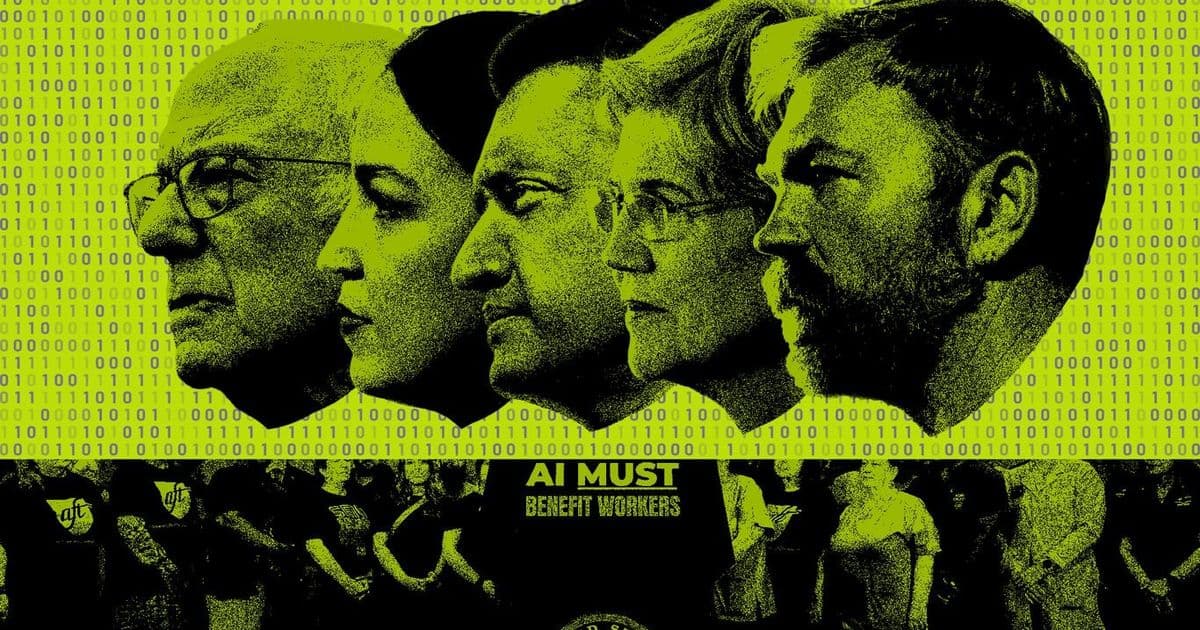
As AI technologies advance rapidly, Democratic lawmakers are forming a unified front calling for stronger regulation, worker protections, and ethical guidelines that diverge from the industry's preferred approach of self-regulation.
The rapid advancement of artificial intelligence has prompted a significant shift in Democratic policy circles, with lawmakers increasingly advocating for robust regulatory frameworks that directly challenge the tech industry's preferred approach of self-regulation. This growing resistance, led by prominent figures like Senator Bernie Sanders, Representative Alexandria Ocasio-Cortez, and Senator Ro Khanna, represents a fundamental rethinking of how AI development should proceed in the United States.
At the heart of this Democratic resistance is a three-pronged approach: comprehensive regulation, worker protections, and ethical guidelines that prioritize public welfare over corporate interests. Unlike the more incremental proposals coming from some Republican lawmakers and the Biden administration's recent executive order, the Democratic faction is pushing for legislation that would establish federal oversight bodies, mandate transparency requirements, and ensure AI technologies benefit workers rather than replace them.
The financial implications of this regulatory push are substantial. According to market analysis from firms like Bloomberg Intelligence, stricter AI regulations could potentially slow innovation in the short term while creating more stable long-term market conditions. The tech industry, which has invested billions in AI development, faces significant uncertainty as these proposals gain traction. Companies like OpenAI, Google, and Microsoft have seen their market valuations fluctuate in response to shifting regulatory winds, with AI-related stocks experiencing increased volatility in recent months.
"The current trajectory of AI development threatens to exacerbate existing inequalities," said Senator Sanders during a recent Senate committee hearing. "We cannot allow a handful of corporations to determine the future of this transformative technology without proper oversight and worker protections."
The Democratic resistance has gained momentum with the introduction of several key pieces of legislation. The "AI Workers' Rights Act," co-sponsored by Representative Ocasio-Cortez and Senator Warren, would establish new protections for workers displaced by AI technologies and require companies to demonstrate that AI implementations will create more jobs than they eliminate. Meanwhile, Senator Khanna's "AI Accountability and Transparency Act" would create a federal registry of high-impact AI systems and mandate regular audits by independent third parties.
Market analysts note that these proposals reflect a broader trend toward greater scrutiny of Big Tech. "The Democratic approach to AI regulation is consistent with their broader tech policy agenda," explains Sarah Jenkins, a tech policy analyst at the Brookings Institution. "They're viewing AI not just as a technological issue, but as one with profound economic and social implications that require proactive government intervention."
The tech industry has responded with mixed signals. While some companies have expressed openness to certain regulatory frameworks, others have warned against overly restrictive measures that could stifle innovation. In a recent letter to Congress, a coalition of AI firms including Anthropic and Cohere emphasized the need for "balanced" regulation that addresses risks without hindering progress.
The strategic implications of this Democratic resistance extend beyond the immediate regulatory landscape. Companies developing AI technologies may need to reevaluate their business models to accommodate potential requirements for worker retraining programs, transparency measures, and ethical review boards. This could accelerate a shift toward more responsible AI development practices, potentially creating new market opportunities for companies that specialize in ethical AI solutions.
"We're seeing a fundamental realignment in how policymakers approach AI," notes Michael Chen, a venture capitalist focused on AI startups. "The days of unfettered AI development are numbered. Companies that can demonstrate commitment to ethical practices and worker benefits will likely have a competitive advantage in the regulatory environment that's emerging."
The resistance also highlights growing concerns about AI's impact on labor markets. A recent report from the Economic Policy Institute estimates that AI could displace between 10-15% of jobs in certain sectors within the next decade, with disproportionate effects on lower-wage workers. Democratic lawmakers are positioning themselves as champions for these workers, proposing measures like mandatory AI impact assessments and worker representation in corporate AI governance boards.
As the 2024 election approaches, AI policy is emerging as a key differentiator between the parties. While Republicans generally favor a lighter regulatory touch and emphasize American competitiveness in the AI race, Democrats are increasingly framing AI regulation as an issue of economic justice and worker rights. This divergence suggests that regardless of the election outcome, AI regulation will remain a contentious and evolving policy area.
The Democratic resistance on AI represents more than just a policy disagreement—it reflects a deeper philosophical divide about the role of government in shaping technological development. As AI continues to advance, this divide will likely intensify, with significant implications for the future of work, economic inequality, and technological innovation in the United States.
Comments
Please log in or register to join the discussion