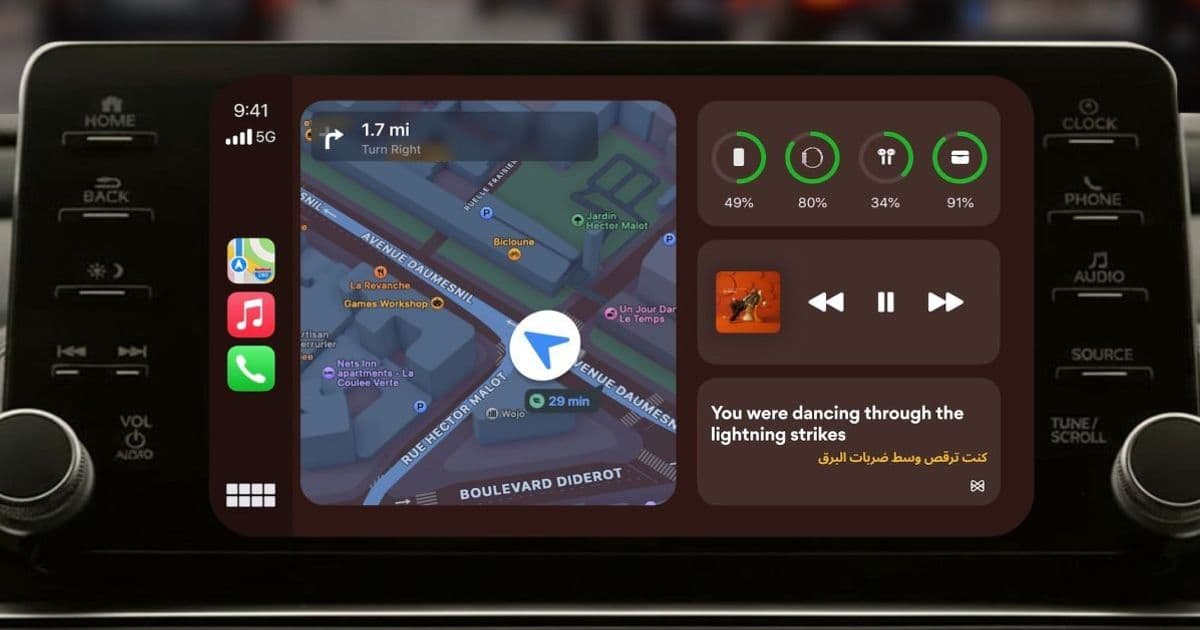
Musixmatch has updated its app to leverage CarPlay's Live Activities feature, enabling real-time lyrics display on vehicle screens. This implementation demonstrates how developers can extend their iOS apps to automotive environments, with considerations for both technical implementation and user safety.
Musixmatch Brings Live Lyrics to CarPlay via Live Activities SDK
Musixmatch, a popular third-party lyrics app for iPhone, has released a significant update that extends its functionality to CarPlay through Apple's Live Activities framework. The update allows users to view real-time lyrics directly on their vehicle's infotainment system when streaming music from Apple Music or Spotify, enhancing the in-car entertainment experience while maintaining driver safety.
Technical Implementation: Leveraging CarPlay Live Activities
The new CarPlay integration demonstrates how developers can utilize iOS 16.1+'s Live Activities API to extend app functionality beyond the iPhone screen into automotive environments. Unlike traditional CarPlay app extensions that require custom development, Musixmatch has implemented a more streamlined approach by treating lyrics as a Live Activity that appears on the CarPlay dashboard.
This implementation has several technical implications:
Real-time synchronization: The lyrics update in real-time as the song progresses, requiring a persistent connection between the iPhone and CarPlay system.
Minimal interface changes: Unlike traditional CarPlay apps that require a full interface redesign, Live Activities appear as overlays on the CarPlay dashboard, requiring less development resources.
Background processing: The app must maintain background processing to ensure lyrics remain synchronized even when the app isn't actively in use.
From a development perspective, this approach represents an interesting use case for the Live Activities SDK, which was primarily designed for displaying time-sensitive information on the lock screen and Dynamic Island. Musixmatch's implementation shows how third-party developers can creatively extend these APIs to new platforms.
Platform Requirements and Limitations
To implement this feature, Musixmatch must meet several platform requirements:
- iOS 16.1 or later: Live Activities were introduced with iOS 16.1, making this the minimum requirement for CarPlay integration.
- CarPlay-compatible vehicle: The feature requires a vehicle that supports Live Activities on its CarPlay interface.
- Continuous music streaming: The app must maintain an active connection to either Apple Music or Spotify to receive real-time track information.
Notably, the implementation has limitations that developers should consider:
- No dedicated CarPlay interface: Unlike traditional CarPlay apps, users cannot access the full Musixmatch interface through CarPlay. The lyrics appear as a Live Activity overlay rather than a dedicated app screen.
- Dependency on music streaming apps: Musixmatch cannot directly control music playback; it must integrate with Apple Music and Spotify to receive track information.
- Safety considerations: The implementation includes explicit warnings that the feature should only be used by passengers, not drivers, which reflects Apple's guidelines for in-app distractions.
Cross-Platform Considerations
For developers considering similar implementations across iOS and Android platforms, several factors must be considered:
iOS (CarPlay)
- Leverages Apple's Live Activities framework
- Requires specific vehicle hardware support
- Must comply with Apple's Human Interface Guidelines for in-car interfaces
- Benefits from Apple's tight integration between iPhone and automotive systems
Android (Android Auto)
- Would need to utilize Android Auto's media session APIs
- Requires different implementation approach due to platform differences
- May face more fragmentation across different vehicle manufacturers
- Google's guidelines for in-car interfaces differ from Apple's
Musixmatch's current implementation is iOS-only, but the company has previously offered Android support. The different technical requirements for Android Auto would necessitate a separate development approach, potentially using Android's MediaSession and MediaBrowser APIs rather than an equivalent to Apple's Live Activities.
Developer Impact and Opportunities
The Musixmatch update highlights several important considerations for developers looking to extend their apps to automotive environments:
Resource allocation: Implementing CarPlay functionality requires careful consideration of development resources, especially for smaller teams.
User experience design: Automotive interfaces have different constraints than mobile interfaces, requiring simplified interactions and larger touch targets.
Safety compliance: Apps must adhere to platform guidelines for driver distraction, which may limit functionality while the vehicle is in motion.
Integration complexity: The need to work with multiple music streaming platforms adds complexity to development and maintenance.
This implementation also opens opportunities for other types of apps to leverage CarPlay's Live Activities:
- Podcast apps displaying real-time transcripts
- Navigation apps showing turn-by-turn directions
- Fitness apps displaying workout metrics
- Communication apps showing message previews
Migration Path for Similar Apps
For developers looking to implement similar functionality, the migration path would involve:
Understanding Live Activities API: Developers must familiarize themselves with the Live Activities framework and its limitations in the automotive context.
Implementing real-time data synchronization: The app must maintain accurate synchronization between the iPhone and CarPlay display.
Designing automotive-optimized interfaces: Information must be displayed in a way that is easily readable and minimizes driver distraction.
Testing across different vehicle systems: CarPlay implementations can vary across different vehicle manufacturers, requiring thorough testing.
Implementing safety features: Apps should include mechanisms to disable certain features when the vehicle is in motion or when the driver is actively using other vehicle functions.
Future Implications
Musixmatch's implementation may signal a broader trend of extending iOS app functionality to automotive environments through Live Activities. As Apple continues to develop its CarPlay platform, we may see:
- Expanded Live Activities capabilities specifically for automotive use
- New guidelines for in-car app interfaces
- Increased integration between iPhone apps and vehicle systems
- More sophisticated implementations that go beyond simple overlays
For developers, this represents both an opportunity and a challenge. The automotive environment offers a new platform for user engagement but requires careful consideration of safety and usability constraints.
Conclusion
Musixmatch's update demonstrates how developers can creatively leverage Apple's Live Activities framework to extend app functionality to CarPlay. While the implementation has limitations, it provides a valuable case study for developers looking to bring their apps to automotive environments. As CarPlay continues to evolve, we can expect to see more innovative implementations that balance functionality with safety, enhancing the in-car experience while minimizing driver distraction.
For users, this update adds another dimension to the in-car entertainment experience, allowing passengers to follow along with their favorite songs in a format optimized for the automotive environment. As with all in-car features, however, safety should remain the top priority.
Developers interested in implementing similar functionality should review Apple's documentation on Live Activities and CarPlay human interface guidelines to ensure their implementations meet platform requirements and user expectations.
The updated Musixmatch app is available for free on the App Store, with a premium subscription required for full functionality. The app supports iOS 16.1 or later and is compatible with all CarPlay-enabled vehicles that support Live Activities.
This implementation represents an important step in extending mobile app experiences to automotive environments, demonstrating how developers can leverage existing frameworks to create new functionality across Apple's ecosystem.
Comments
Please log in or register to join the discussion