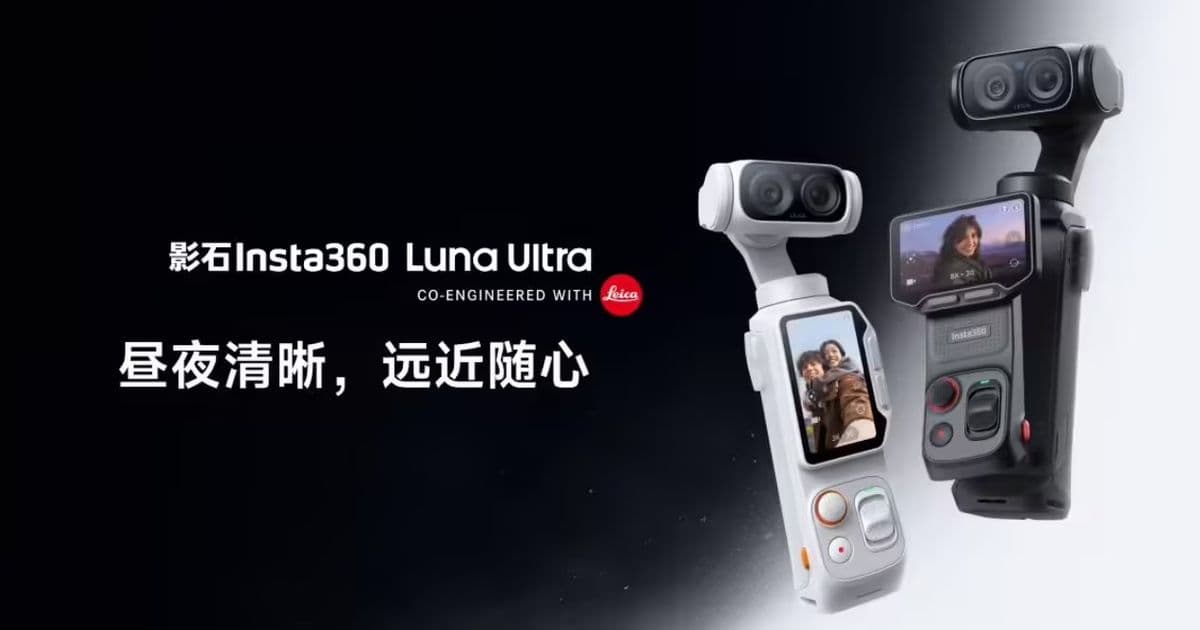
Insta360 built its reputation on 360-degree action cameras. With the Luna Ultra, a handheld gimbal camera co-developed with Leica, it is walking straight into DJI's backyard at RMB 3,999. The hardware specs are loud. The harder question is whether a second strong player changes the math for creators tired of a single dominant vendor.
Insta360 announced its first handheld gimbal camera on Wednesday, the Luna Ultra, launching in China at a limited-time starting price of RMB 3,999 (roughly $590). The company built its business on 360-degree action cameras like the X-series, so a stabilized point-and-shoot gimbal is a deliberate step into adjacent territory rather than a natural extension of what it already sells.
That territory has an incumbent. DJI's Osmo Pocket line has effectively defined the pocketable gimbal camera category, and the Luna Ultra reads as a direct answer to it. The pricing sits close enough to invite the comparison, and the spec sheet is clearly written to win it.
What Insta360 actually shipped
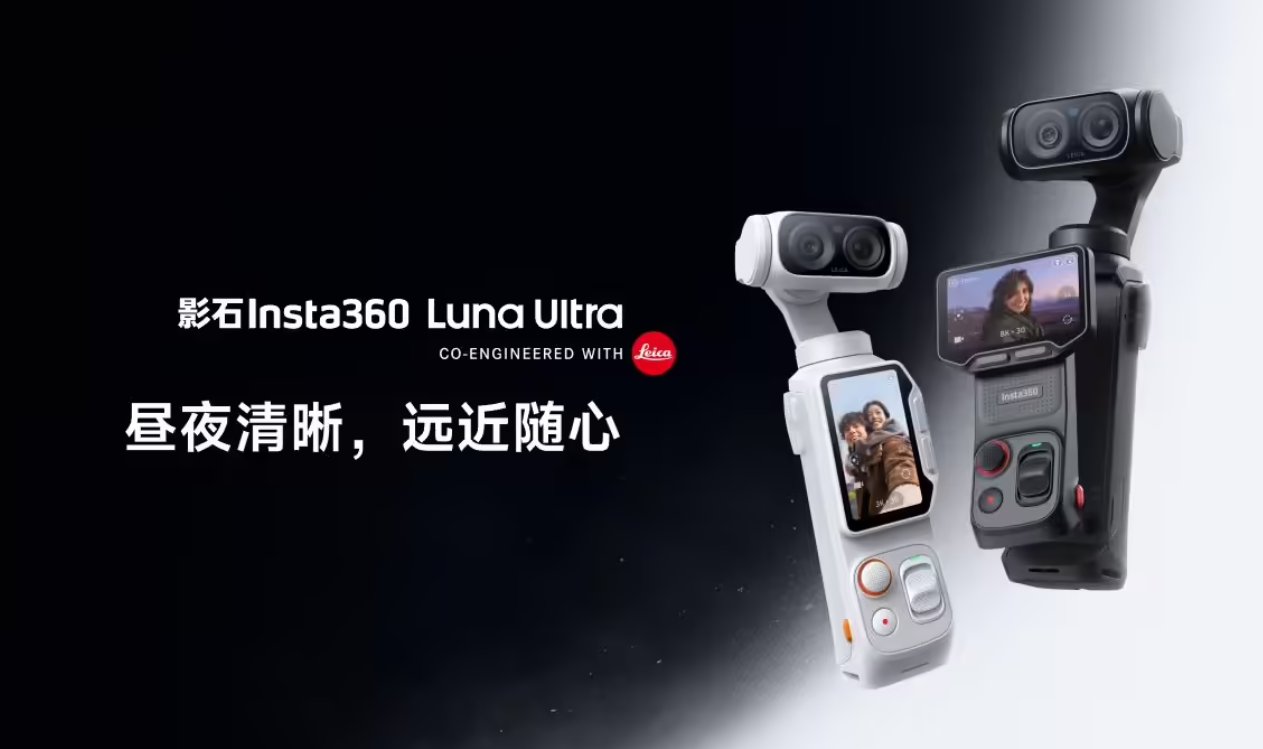
The Luna Ultra was co-developed with Leica Camera, and the partnership shows up in the optics rather than as a logo tax. The device carries two cameras: a 1-inch main sensor and a 1/1.3-inch telephoto sensor, both paired with Leica Summicron lenses. The dual-lens arrangement is what enables 6x lossless optical zoom and 12x hybrid zoom, a meaningfully different approach from single-sensor gimbals that crop into one lens and call it zoom.
On the video side, it records 8K at 30fps in Dolby Vision, and supports real-time 4K/60fps night-scene enhancement. The night-mode claim is the one to watch in real reviews, since computational low-light processing is where marketing and physics tend to diverge.
Two design choices stand out beyond the imaging numbers. The first is a detachable transmission and remote-control display that allows operation from up to 20 meters away, which turns a handheld camera into something closer to a small remote rig. The second is a first-person head-tracking module aimed at hands-free, point-of-view shooting. Power comes from a hot-swappable dual-battery design rated at up to 320 minutes, and the swappability matters more than the headline figure for anyone shooting a full day.
Why a second serious player matters
The interesting part of this launch is not any single feature. It is that the pocket gimbal segment has spent years as essentially a one-company market. When a category has a single dominant vendor, the pace of iteration and the pricing both tend to settle into a comfortable rhythm. A credible second entrant with its own manufacturing scale, its own software stack, and a Leica optical partnership changes that incentive structure.
Insta360 brings real advantages to the fight. It already owns a creator distribution channel, an app ecosystem, and a brand that the action-camera audience trusts. Those assets are expensive to build from scratch, and they are exactly what a hardware newcomer usually lacks. The risk runs the other direction: gimbal stabilization and the firmware around it are hard to get right, and DJI's lead there comes from years of drone-derived motion control. A first-generation product, however loaded the spec sheet, has to prove its tracking and stabilization hold up in ordinary use.
The open questions
The RMB 3,999 figure is a limited-time China price, so the international price and timing will determine how much pressure this actually puts on the incumbent. Specs also age quickly in this segment. The 8K capture, dual Leica lenses, and detachable remote display are strong on paper, but creators buy gimbals for reliability and feel, not feature counts.
What the Luna Ultra signals is worth more than its component list. The pocket gimbal market now has two companies willing to spend on optics partnerships and aggressive pricing to win the same buyer. For the people actually shooting video, a real contest between Insta360 and DJI is the most useful thing to come out of this announcement, regardless of which device ends up on top.
Comments
Please log in or register to join the discussion