
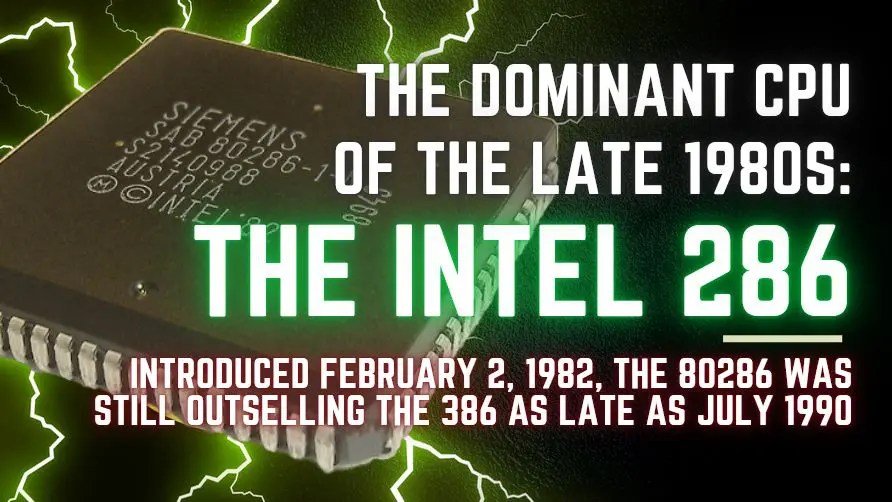
On February 1, 1982, Intel introduced the 80286 microprocessor, a 16-bit CPU that powered the IBM PC/AT and dominated the PC market throughout the 1980s despite being overshadowed by newer processors.
On February 1, 1982, Intel introduced the 80286 microprocessor, marking a pivotal moment in personal computing history. After three years of development, the 286 emerged as the first 8086-based CPU with separate, non-multiplexed address and data buses, along with groundbreaking memory management and protection capabilities.
Technical Breakthroughs
The 80286 packed approximately 134,000 transistors into its design, representing a significant leap in complexity from its predecessors. What truly set it apart was its near-complete backward compatibility with the Intel 8086 and 8088 processors, ensuring a smooth transition for developers and users alike.
The IBM PC/AT Connection
IBM's decision to use the 80286 in the PC/AT, introduced in August 1984, cemented the processor's place in computing history. By skipping the Intel 186 entirely, IBM positioned the 286 as the natural successor to the original PC architecture. The PC/AT compatible computers using the 80286 remained on the market until the early 1990s, demonstrating remarkable longevity for a processor architecture.

Market Dominance
By the end of 1988, Intel estimated there were around 15 million 286-based PCs in use worldwide. The adoption curve was telling: it took until 1987 to sell 5 million units, suggesting that by early 1992, when major brands finally discontinued 286-based systems, the user base may have exceeded 30 million machines.
Clock Speed Evolution
Intel's initial 80286 chips operated at maximum clock rates of 5, 6, or 8 MHz. The company later released 10 and 12 MHz versions, while AMD and Harris pushed the envelope further with 16 MHz, 20 MHz, and even 25 MHz variants. This progression in clock speeds kept the 286 competitive throughout its lifespan.
The Sweet Spot of the Late 1980s
Despite the hype surrounding the Motorola 68000 family in 1984-1985 and the introduction of Intel's own 386 in 1986, the 286 dominated the late 1980s PC market. The reason was purely economic: a 286 offered roughly twice the performance of an 8088-based machine at a much lower cost than a 386.
Market Share Reality
The July 23, 1990 issue of Computerworld revealed the 286's continued dominance, holding 35% of the computer market. The 386DX trailed at 31%, while the 386SX captured 11%. The older 8088/8086 architecture still maintained 9%, and the 486 had barely reached 1% market penetration. Motorola's various CPUs combined for 14%.
Living in the 386's Shadow
We often assume the 286 quickly faded away due to the 386's arrival, but the reality was quite different. As late as March 1992, Gateway 2000 was still selling a 16 MHz 286 for $1,345, compared to a comparable 16 MHz 386SX with Windows for $1,445. A 25 MHz 386DX commanded $1,895.
The Windows Effect
While many remember Windows 3.0 as the death knell for 286 interest, research suggests it was actually Windows 3.1 that truly diminished the 286's appeal. For pure DOS operations, the 286 remained an excellent choice well into the early 1990s, offering a perfect balance of performance and affordability.
The Intel 286's story is one of unexpected longevity and market success. It wasn't the fastest, the newest, or the most advanced processor of its era, but it found and maintained a sweet spot that kept it relevant for over a decade. In doing so, it helped establish the PC as the dominant computing platform of the late 20th century.
Comments
Please log in or register to join the discussion