Intel unveils new high-end mobile processors with AI-powered gaming optimizations, while Nvidia dominates AI hardware announcements at GTC 2026.
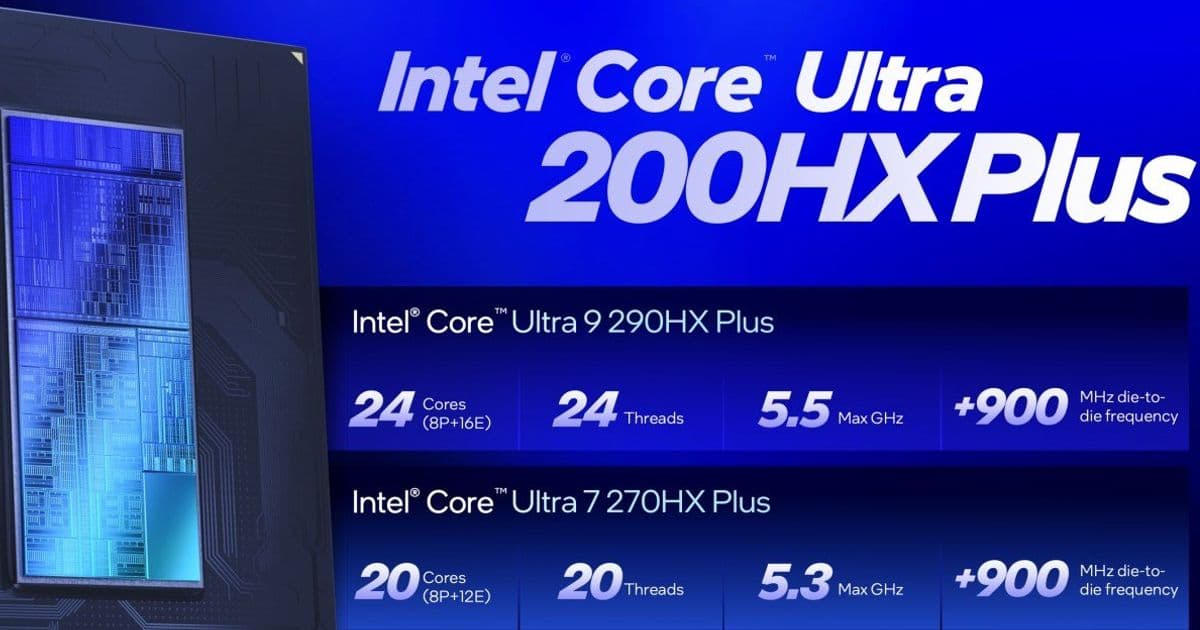
Intel has launched its Core Ultra 200HX Plus series processors, targeting the premium gaming laptop market with a focus on AI-enhanced performance. The flagship Core Ultra 9 290HX Plus joins the Core Ultra 7 270HX Plus in this new lineup, which Intel positions as the next evolution in high-end mobile computing.
The most notable feature accompanying these new CPUs is Intel's Binary Optimization Tool, designed to improve native game performance through AI-driven optimizations. This tool represents Intel's push to integrate artificial intelligence capabilities directly into gaming workflows, potentially offering performance gains without requiring developers to rewrite their code.
This launch comes amid a flurry of AI hardware announcements at Nvidia's GTC 2026 conference, where the GPU giant unveiled multiple products including the Vera Rubin NVL72 rack system, new inference servers, and updates to its DLSS technology. The timing highlights the intensifying competition between Intel and Nvidia in the AI and gaming hardware spaces.
Technical Specifications and Market Positioning
The Core Ultra 200HX Plus series builds on Intel's existing mobile processor architecture but adds enhanced AI capabilities through the integrated NPU (Neural Processing Unit). While specific clock speeds and core counts weren't detailed in the initial announcement, these processors are clearly aimed at the premium segment where gaming performance and AI acceleration are increasingly important selling points.
Intel's strategy appears to be twofold: compete directly with AMD's Ryzen mobile processors on traditional CPU performance metrics while also differentiating through AI-specific features that could provide tangible benefits in supported applications and games.
The Binary Optimization Tool: Promise and Limitations
The Binary Optimization Tool represents an interesting approach to performance enhancement. Rather than requiring game developers to implement specific optimizations, Intel's tool analyzes and optimizes game binaries at the system level. This could potentially benefit a wide range of existing games without developer intervention.
However, the effectiveness of such tools often varies significantly depending on the specific game engine, optimization techniques already employed by developers, and the underlying hardware architecture. Early reports suggest the tool may work best with certain game types or engines, raising questions about its universal applicability.
Industry Context and Competitive Landscape
Intel's announcement arrives as the entire PC industry grapples with the integration of AI capabilities into consumer hardware. While Nvidia has established dominance in discrete GPU AI acceleration, Intel is betting that integrated AI processing will become increasingly important for mainstream users.
The gaming laptop market specifically has seen rapid evolution, with manufacturers pushing for thinner designs, better battery life, and enhanced performance. Intel's new processors appear designed to address these competing demands through a combination of traditional CPU performance and AI-driven efficiency optimizations.
Market Reception and Future Implications
Gaming enthusiasts and industry analysts will likely scrutinize real-world performance benchmarks once these processors become available in shipping laptops. The success of the Binary Optimization Tool could influence whether other chip manufacturers pursue similar approaches to performance enhancement.
For Intel, this launch represents another step in its broader strategy to remain competitive in both the gaming and AI acceleration markets. The company faces pressure from both AMD in the CPU space and Nvidia in the AI/graphics space, making innovative features like AI-powered optimization tools potentially crucial for maintaining market share.
Availability and Ecosystem Support
While Intel has announced the processors, specific laptop models featuring the Core Ultra 200HX Plus series are expected to be unveiled by manufacturers in the coming months. The success of these chips will depend not only on their raw performance but also on how well they integrate with existing gaming ecosystems and whether developers embrace Intel's optimization tools.
The broader trend toward AI-enhanced computing continues to accelerate, with both hardware manufacturers and software developers exploring ways to leverage machine learning for improved user experiences. Intel's latest offering suggests the company sees this as a key battleground for future computing performance gains.
As the PC hardware market evolves, the distinction between traditional computing tasks and AI-accelerated workloads continues to blur. Intel's Core Ultra 200HX Plus series represents one of the first mainstream attempts to make this convergence tangible for high-end gaming users, though its ultimate impact will depend on real-world performance and developer adoption of the accompanying optimization tools.
Comments
Please log in or register to join the discussion