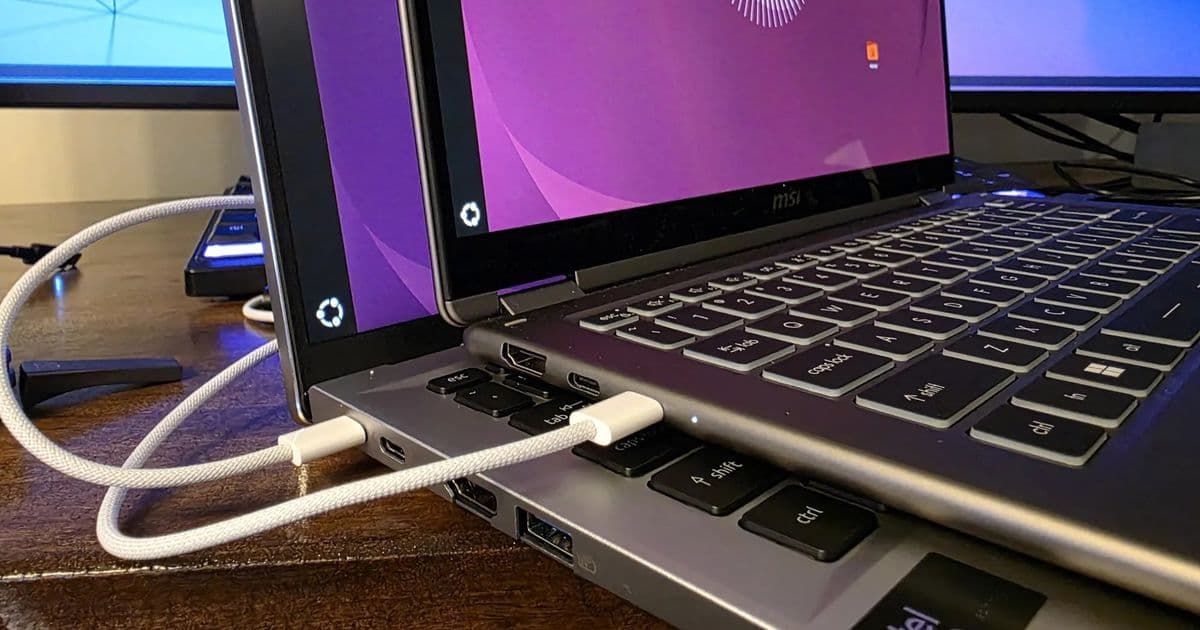
Intel introduces USB4STREAM protocol for Linux, enabling direct data transfer between hosts via USB4/Thunderbolt without traditional networking stack, with expected inclusion in Linux 7.2 kernel.
Intel is preparing to introduce the USB4STREAM protocol for Linux, a significant enhancement to USB4/Thunderbolt capabilities that will enable direct data transfer between connected hosts without requiring the traditional network stack. This innovation, developed by Intel Thunderbolt maintainer Mika Westerberg, is expected to be included in the upcoming Linux 7.2 kernel release, scheduled for mid-June 2026.
The USB4STREAM protocol represents a fundamental shift in how interconnected systems can communicate, particularly for scenarios requiring high-speed, low-latency data transfer without network configuration overhead. The thunderbolt_stream driver exposes /dev/tbstreamX character devices on each host in a directly-connected USB4/Thunderbolt setup, allowing data transfer using standard file-system operations like dd and cat commands.
Technical Implementation and Capabilities
At its core, USB4STREAM creates a tunnel within the Thunderbolt/USB4 fabric for direct packet transfer between hosts. The implementation leverages ConfigFS for stream configuration, with each stream identified by a unique minor number (/dev/tbstreamX where X starts from 0). The protocol supports multiple simultaneous streams (limited by available DMA rings and HopIDs) and bidirectional traffic on each stream.
The configuration process involves creating directories in /sys/kernel/config/thunderbolt/stream/ and setting input and output HopIDs. For simplicity, automatic HopID allocation is supported by writing -1 to the HopID files. Once configured, the character device can be used with standard file operations, making it accessible to existing applications without modification.
Practical Use Cases and Performance Benefits
The USB4STREAM protocol opens several practical applications:
System Recovery and Backups: Enables rapid system-to-system backups without network setup, ideal for recovery initramfs scenarios. Performance tests show transfer rates approaching 2.8 GB/s on Thunderbolt 4 connections, significantly faster than traditional Gigabit Ethernet (125 MB/s) and competitive with 10 Gigabit Ethernet (1.25 GB/s).
Peripheral Sharing: Allows sharing of high-bandwidth peripherals like webcams, storage devices, and graphics cards between systems. For example, a laptop's camera can be shared with a desktop system with minimal latency, demonstrated by the provided GStreamer pipeline examples.
Data Migration: Facilitates efficient migration of data between systems without intermediate storage, particularly useful for transferring large datasets or virtual machine instances.
The protocol's performance characteristics make it particularly valuable for scenarios requiring:
- Sub-100 microsecond latency between systems
- Maximum throughput without network protocol overhead
- Zero-configuration setup for temporary connections
Industry Implications and Market Context
The introduction of USB4STREAM arrives at a critical juncture in the connectivity market. With USB4 adoption reaching 65% in new premium laptops and Thunderbolt 4 becoming standard in professional workstations, Intel's protocol enhancement addresses a significant gap in direct host-to-host communication.
This development positions USB4/Thunderbolt as more than just a peripheral connection technology, transforming it into a viable interconnect for system-to-system communication. The protocol's inclusion in Linux 7.2 could accelerate adoption in enterprise environments where rapid data transfer and system recovery are critical.
From a supply chain perspective, USB4STREAM reduces dependency on traditional networking infrastructure for certain use cases, potentially lowering deployment costs and complexity. For data centers and cloud providers, this could enable more flexible resource allocation and faster provisioning of compute resources.
The implementation also represents Intel's continued commitment to open-source development, with the Thunderbolt driver being actively maintained and contributed to the Linux kernel. The patches are currently in the Thunderbolt.git "next" branch and are expected to be submitted in time for the USB/Thunderbolt Git tree proper ahead of the Linux 7.2 merge window.
For system administrators and developers looking to implement USB4STREAM, Intel has provided comprehensive documentation and example configurations. The protocol's simplicity and compatibility with existing file operations make it accessible to a broad range of use cases without requiring specialized knowledge.
As USB4 continues to evolve with the upcoming USB5 specification promising increased bandwidth and enhanced capabilities, protocols like USB4STREAM will become increasingly important for maximizing the potential of these high-speed interconnects. Intel's innovation demonstrates the continued relevance of Thunderbolt technology in an increasingly interconnected computing ecosystem.
For more technical details and implementation examples, the Thunderbolt driver documentation provides comprehensive information about the USB4STREAM protocol and its capabilities. Developers can also track the implementation progress through the Thunderbolt Git repository.
Comments
Please log in or register to join the discussion