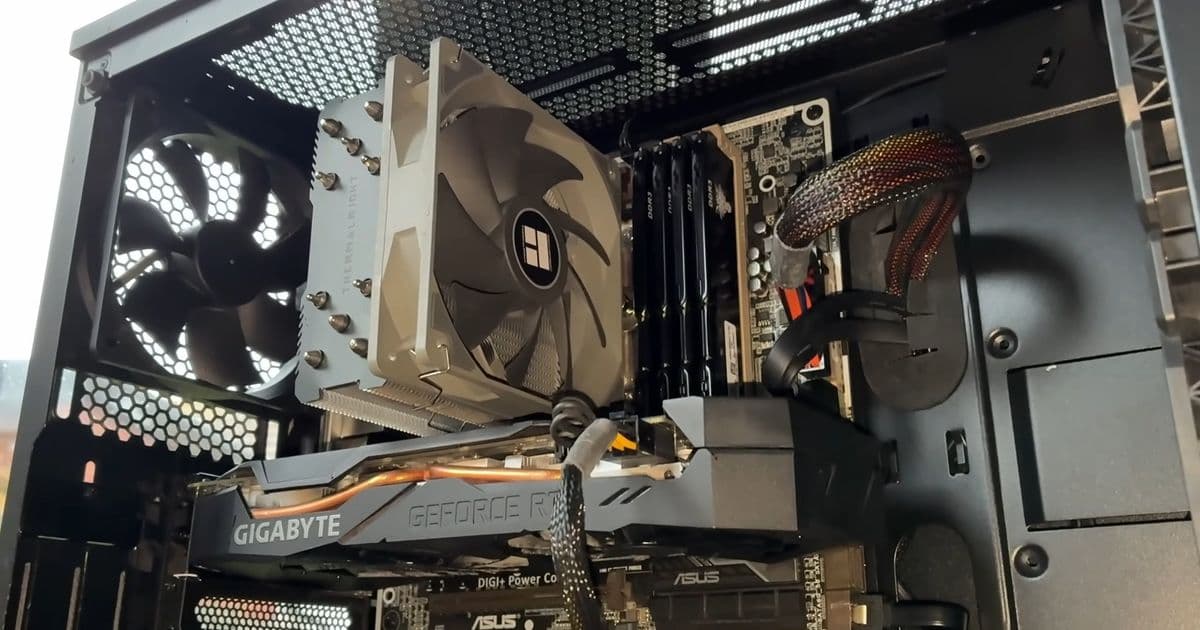
A YouTuber demonstrates that a 12-year-old Intel Core i7-4790K system, paired with a modern GPU and 32GB of cheap DDR3 RAM, can still deliver 60 FPS in demanding 2024 titles like Cyberpunk 2077, offering a compelling budget alternative to the current DDR5 price surge.
The persistent shortage and escalating cost of DDR5 memory have pushed budget-conscious gamers toward increasingly creative solutions. In a recent video, the YouTube channel RandomGamingInHD demonstrated a practical workaround: building a complete gaming system around Intel's 2014-era Core i7-4790K processor, which still supports the older, far cheaper DDR3 memory standard. The result is a capable gaming rig that can run modern AAA titles at playable frame rates for a fraction of the cost of a contemporary build.
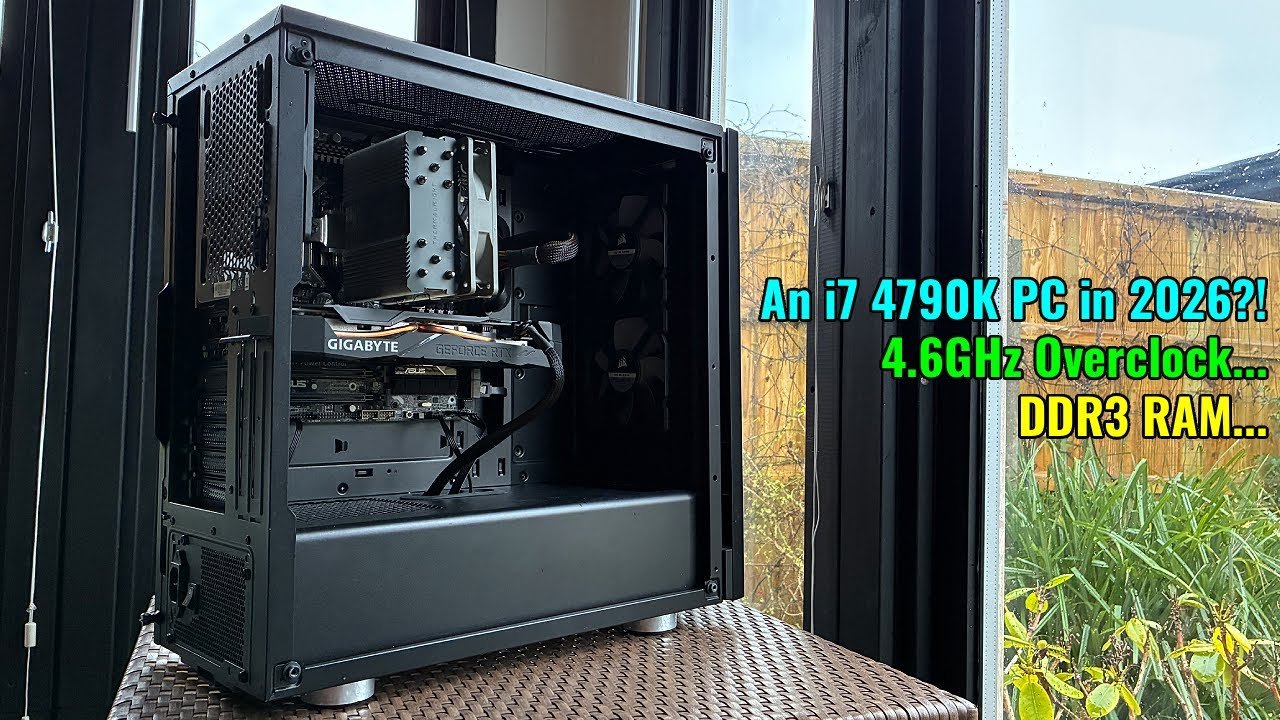
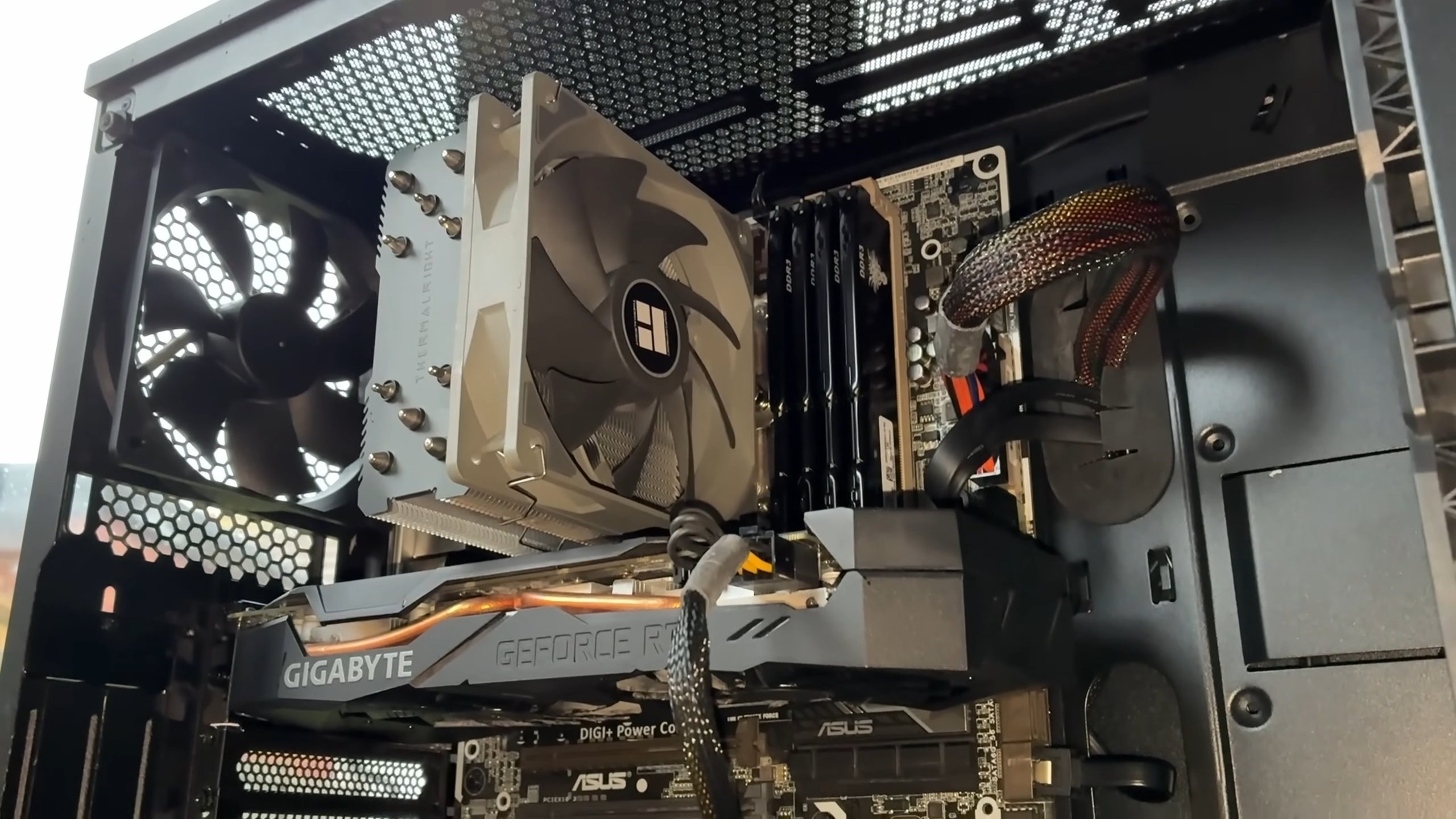
The system in question, as detailed in the video "I Built an i7 4790K Gaming PC in 2026. It Actually Surprised Me," centers on a Haswell-generation Core i7-4790K, overclocked to 4.6GHz. This quad-core, eight-thread CPU is paired with 32GB of DDR3 memory running at 1866 MHz, an Asus Z97 chipset motherboard, and a modern NVIDIA GeForce RTX 2060 Super graphics card. The builder sourced the 32GB of DDR3 RAM for approximately $40, a stark contrast to the current market where a single 8GB stick of DDR5-4800MT/s memory can cost nearly the same amount. This price disparity highlights the core economic argument for revisiting older platforms during periods of memory market volatility.
The benchmark results, captured across eight contemporary games, challenge the assumption that older CPU architectures are entirely obsolete for modern gaming. At 1080p resolution with medium-to-high graphical settings, the i7-4790K and RTX 2060 Super combination delivered playable frame rates in every title tested:
- Cyberpunk 2077: 59.8 FPS average (High preset, high textures, medium crowds)
- Baldur's Gate 3: 57.9 FPS average (High settings)
- Battlefield 6: 69.7 FPS average (Medium settings)
- Counter-Strike 2: 117.9 FPS average (High settings)
- Fortnite: 115.2 FPS average (Medium settings)
- GTA V Enhanced: 69.6 FPS average (Very High with Ray Tracing)
- Kingdom Come: Deliverance 2: 72.2 FPS average (High settings)
- Red Dead Redemption 2: 72.3 FPS average (Ultra Textures, other settings medium)
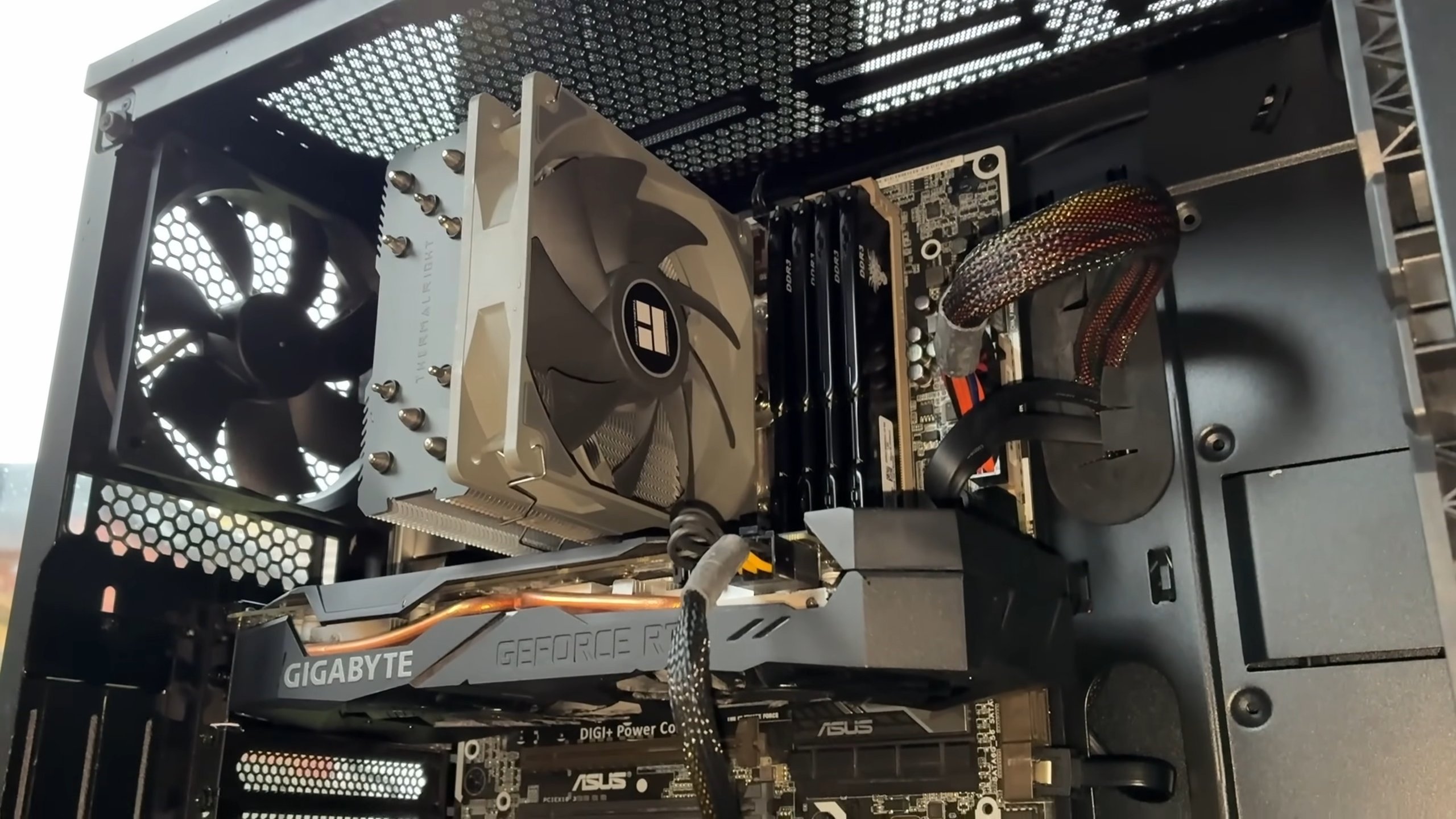
The data reveals a clear bottleneck. While the RTX 2060 Super is capable of higher performance, the 4790K's limited instruction per clock (IPC) and core count constrain the GPU's potential, particularly in CPU-intensive scenes. This is evident in the 1% low frame rates, which are often below 40 FPS and can lead to noticeable stuttering. For instance, Cyberpunk 2077 averaged 59.8 FPS but had 1% lows of 35.4 FPS. Lowering graphical settings further would improve these lows but would also reduce the GPU utilization, making the CPU bottleneck more pronounced.
The economic analysis is where this build becomes truly compelling. Sourcing the components from the used market yields a total system cost that undercuts a single component upgrade on a modern platform. A used i7-4790K can be found for $60-$80, while a used RTX 2060 Super 8GB is available for around $150. The 32GB DDR3 kit, as noted, costs between $70 and $120. Adding a used Z97 motherboard, a budget SSD, a case, and a power supply brings the total to approximately $600. For context, a high-capacity 64GB DDR5 dual-channel kit often costs more than this entire system.
This approach is not without its trade-offs. The Z97 platform lacks modern features like PCIe 4.0, which the RTX 2060 Super doesn't fully utilize, and USB 3.1 Gen2. More importantly, the platform's age means no official upgrade path beyond the 4790K; a future CPU upgrade would require a full motherboard, CPU, and RAM replacement. The 1% low frame rates, while manageable, are a step behind what a modern Ryzen 5 or Core i5 system could deliver.

However, for a gamer entering the PC ecosystem on a strict budget or for someone with an existing Haswell-era system looking for a cost-effective graphics card upgrade, this represents a viable path. The benchmark data from RandomGamingInHD provides empirical evidence that the CPU is the limiting factor, but not an insurmountable one. The system demonstrates that gaming performance is a function of the entire pipeline, and a balanced, older CPU paired with a competent GPU can still deliver a satisfying experience in 2024.
With DDR5 prices unlikely to see significant relief until 2028, according to industry forecasts, the strategy of leveraging older, depreciated hardware platforms may gain more traction. It underscores a market reality: while the cutting edge of silicon manufacturing advances, the performance of previous generations often remains sufficient for mainstream use cases, especially when paired with a judiciously selected modern component like a GPU. The viability of the 4790K build in 2026 is a testament to the longevity of PC gaming hardware and a practical response to current market dynamics.
Comments
Please log in or register to join the discussion