
University of Missouri researchers have created a prototype DNA storage system that can be erased and rewritten repeatedly, using frameshift encoding and nanopore sensing to potentially replace energy-hungry data centers with molecular-scale storage.
The quest for denser, more energy-efficient data storage has taken a molecular turn at the University of Missouri, where researchers have developed what they call a "DNA hard drive" capable of being erased and rewritten repeatedly—a feature that could make DNA storage practical for everyday use.
Unlike previous DNA storage demonstrations that treated genetic material as a write-once medium, Mizzou's approach tackles one of the field's biggest limitations: rewritability. The team, led by chemical and biomedical engineering professor Li-Qun "Andrew" Gu, claims to have created a system that can store, erase, and overwrite DNA data multiple times, potentially moving the technology from experimental curiosity to practical solution.
The Technical Breakthrough
The key innovation lies in what the researchers call "frameshift encoding," an emerging technique among groups exploring rewritable DNA storage. While the university's blog post remains light on specifics, the associated research paper reveals that this method allows for more flexible data manipulation at the molecular level compared to traditional DNA storage approaches.
For reading data, the team developed a compact electronic system paired with a nanopore sensor—essentially a molecular-scale detector that can sense electrical changes as DNA passes through its field. This "read head" converts the DNA's A, C, G, and T sequences into binary data through electronics and software processing.
Why Rewritability Matters
DNA storage has long been touted for its extraordinary density and longevity—a single gram of DNA can theoretically store about 215 petabytes of data, and properly preserved DNA can last for thousands of years. However, most demonstrations have been write-once operations, limiting practical applications.
"DNA is incredible—it stores life's blueprint in a tiny, stable package," Gu explains. "We wanted to see if we could store and rewrite information at the molecular level faster, simpler, and more efficiently than ever before."
The Bigger Picture
The timing of this development is significant given the current strain on global memory and storage supply chains. AI data centers are consuming unprecedented amounts of storage, while chip scarcity continues to impact industries from automotive to consumer electronics. Memory makers are projected to earn $551 billion from the AI boom, highlighting the massive demand for storage solutions.
DNA storage could potentially address these challenges by offering a radically different approach to data preservation. The technology promises not just density but also energy efficiency—a critical consideration as data centers already consume massive amounts of electricity.
Challenges and Timeline
Despite the promising breakthrough, practical DNA thumb drives remain a long-term goal. The researchers acknowledge that shrinking their DNA HDD to USB thumb-drive size is still years away. Currently, there are no prototype photos, demo statistics, or clear availability timelines.
The project leverages Mizzou's interdisciplinary expertise across physics, biology, data science, and materials science, marking what the academics call a "key milestone" in making DNA a viable replacement for some of today's energy-hungry storage technologies.
While we may not see DNA-data thumb drives on Amazon anytime soon, the development represents a significant step toward molecular-scale storage that could eventually transform how we preserve the world's growing data archives. The combination of simplicity, speed, and rewritability makes Mizzou's approach particularly attractive in the ongoing search for storage solutions that can keep pace with our data-hungry future.
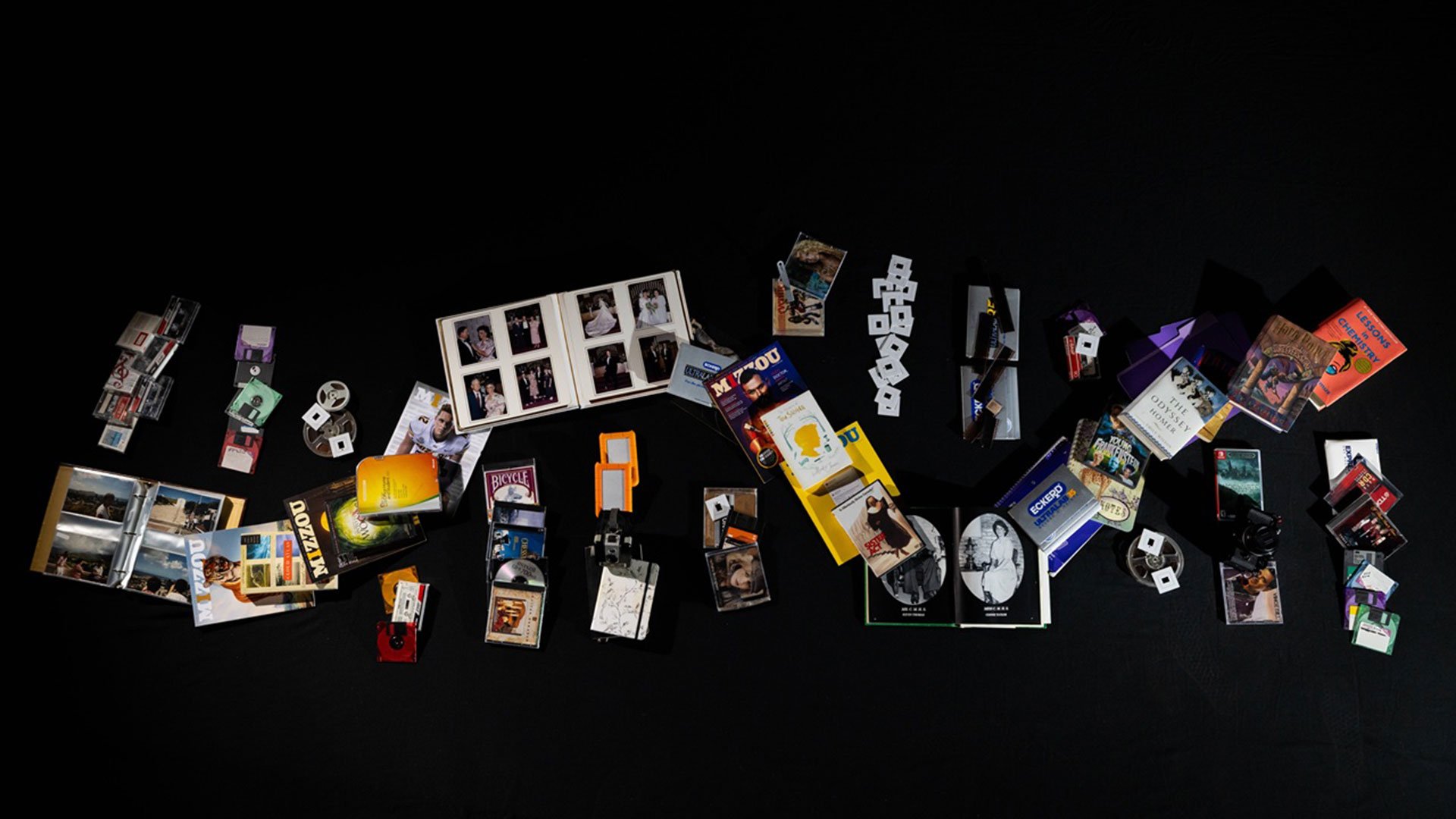
(Image credit: Abbie Lankitus, University of Missouri)
As research continues and the technology matures, DNA storage may eventually offer a solution to the physical and energy constraints facing traditional storage technologies, potentially revolutionizing everything from personal data backup to archival storage for massive institutions.
Comments
Please log in or register to join the discussion