Apple's iOS 27 reworks Find My with silent location hiding, custom sharing durations, and a delayed Liquid Glass redesign. For developers building location-aware apps, the changes signal where Apple's privacy and design expectations are heading.
Apple used WWDC this week to walk through what's new across iOS 27, and Find My picked up a meaningful set of changes that go beyond cosmetics. The headline updates are more flexible location sharing and a Liquid Glass interface refresh, but the underlying shifts in how Apple frames location privacy are worth attention if you build anything that touches Core Location or shares user position data.
What changed in Find My
Apple called out two main areas of improvement. The first is more granular sharing control. You can now share your location for a custom duration or until a specific date and time, rather than the older fixed options of one hour, until end of day, or indefinitely. You can also pause sharing with individual people on demand instead of toggling sharing on or off globally.
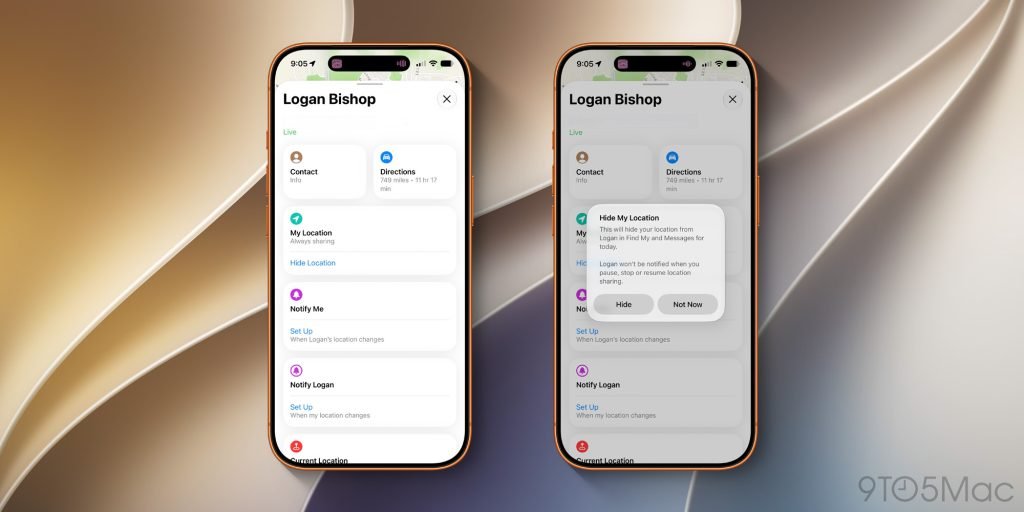
The more notable behavioral change is silent hiding. A new "Hide Location" toggle sits on each person's card, and when you pause sharing, the other person receives no notification. They simply see a "No Location Found" message in their own Find My app. Previously, stopping location sharing could surface as a state change the other party could infer. Apple has now made the absence of location indistinguishable from a genuine signal loss, which is a deliberate privacy decision.
The second area is the UI. Find My largely skipped the Liquid Glass treatment in iOS 26, and iOS 27 brings it in line with the rest of the system. There's a new tab bar design matching Apple's other first-party apps, the main page now shows more specific street-level location detail without drilling into each contact, and the Items tab uses a new AirTag-style icon.
Why this matters for developers
Find My is a first-party app, but Apple's first-party patterns set user expectations that ripple into third-party apps. Two things stand out.
The silent-hide behavior reinforces that location sharing is a per-recipient, revocable, and non-observable permission from the user's point of view. If your app implements its own friend-finding or family-sharing feature, users coming from iOS 27 will expect that pausing sharing does not leak a notification to the other side. Designing your sharing UI so that "stop sharing" looks identical to "never shared" or "signal lost" is now the baseline Apple has set. If your backend pushes a notification when a user revokes sharing, reconsider that flow.
The custom-duration sharing also aligns with Core Location's broader direction toward time-boxed and least-privilege access. Apple has spent several releases pushing developers away from always-on location grants toward when in use and one-time authorizations. Find My's per-contact, time-limited sharing model mirrors that philosophy at the feature level. If you request location permission, the expectation is increasingly that you request the minimum scope for the minimum time.
Liquid Glass and the migration question
The Find My redesign is the more concrete cross-platform consideration for app maintainers. Liquid Glass arrived broadly in iOS 26, and Apple is now finishing the rollout to apps that lagged. If you maintain a SwiftUI or UIKit app and have not yet adopted the iOS 26 design system, iOS 27 is the release where holding back will start to look visibly dated against the system apps.
For teams shipping on both iOS and Android, the practical takeaway is that Apple's tab bar and translucency conventions are diverging further from Material Design. A shared design language across platforms gets harder to maintain each year. Cross-platform frameworks like React Native and Flutter will need updated component libraries to match the new tab bar treatment, and historically those updates trail Apple's release by a cycle. If pixel-accurate platform fidelity matters to your product, budget for native customization rather than expecting the framework defaults to track iOS 27 on day one.
What to do now
If you ship a location feature, audit your sharing and revocation flows against the silent-hide model before iOS 27 reaches general availability. Confirm your minimum deployment target and review whether you've adopted the Liquid Glass design system from iOS 26, because the gap between updated and un-updated apps widens with this release. And if you support both platforms, plan for the Android and iOS UIs to drift further apart visually rather than assuming a single shared component set will cover both.
Apple's full breakdown of iOS 27 is available through the Apple Newsroom and the iOS developer documentation, and the Find My product page covers the consumer-facing feature set. The deeper API context for location work lives in the Core Location framework reference.
Comments
Please log in or register to join the discussion