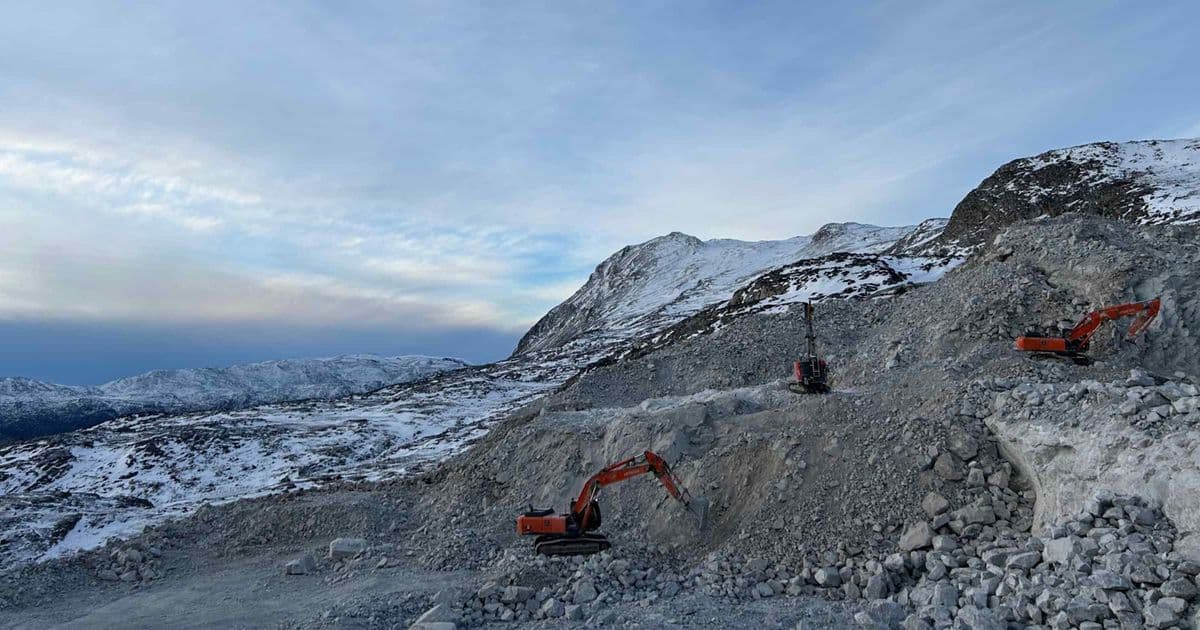
Tokyo is treating Greenland as strategic insurance for magnets, motors and defense electronics as China's rare earth position turns from a cost issue into a boardroom risk.
Business News
Japan plans to begin studying rare earth and other critical mineral mining opportunities in Greenland as early as this summer, according to Nikkei Asia, with government geologists expected to examine deposit scale, mining costs and the feasibility of Japanese corporate investment. The move is not a routine resource survey. It is an industrial security signal from Tokyo to automakers, electronics suppliers and defense manufacturers that rare earth exposure is now a strategic liability, not only a procurement problem.
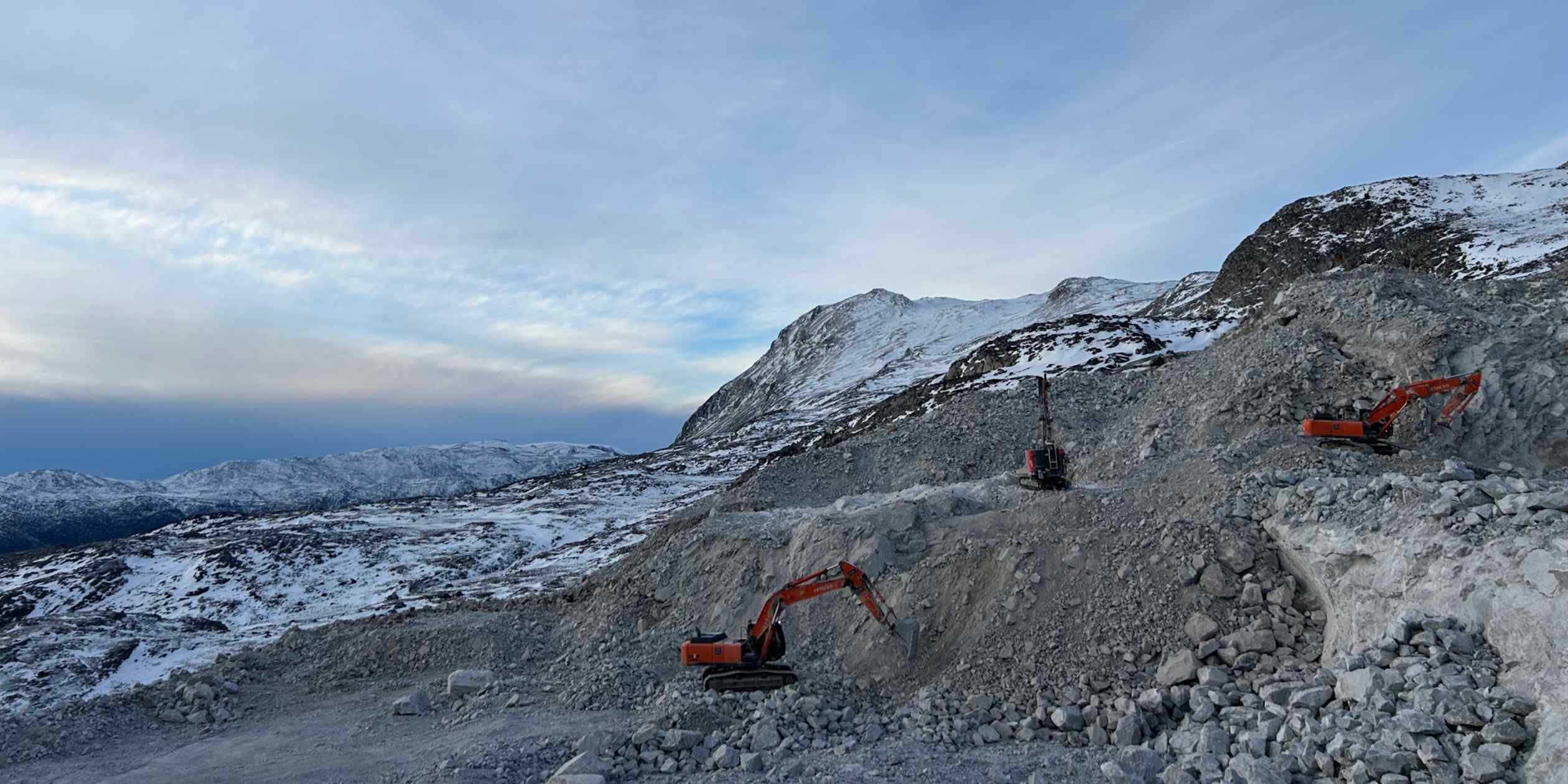
The immediate target is supply optionality. Rare earths are a group of 17 elements used in permanent magnets, catalysts, polishing powders, batteries, sensors and defense systems. The most commercially sensitive segment is magnet materials, especially neodymium, praseodymium, dysprosium and terbium. These inputs sit inside EV traction motors, hybrid vehicles, industrial robots, hard-disk drives, missile guidance systems, drones, wind turbines and factory automation equipment. Japan's manufacturing base depends on them across multiple value chains.
Greenland matters because it offers resource potential inside the political orbit of Denmark and, by extension, a close partner network for Japan, Europe and the U.S. The island has no meaningful rare earth production today, but the U.S. Geological Survey's 2025 rare earths data lists Greenland's reserves at about 1.5 million metric tons of rare-earth-oxide equivalent. That is small compared with China's 44 million tons, but the relevant metric for Japan is not reserve rank alone. It is whether a non-Chinese source can be permitted, financed, processed and tied into Japanese offtake contracts.
One obvious project reference point is Energy Transition Minerals' Kvanefjeld project in southern Greenland. The company says more than 1 billion tonnes of JORC-compliant mineral resources have been delineated across Kvanefjeld, Sorensen and Zone 3, with a proposed mine, concentrator and refinery producing a concentrate containing 20-25% rare earth oxide. The company also says rare earth products are forecast to generate more than 80% of project revenue. Those figures explain why Greenland remains attractive. They also show why the issue is more complicated than sending survey teams. Kvanefjeld has been tied up in political and environmental disputes because its ore body includes naturally occurring radioactive material, and the company has disclosed arbitration proceedings involving Greenland and Denmark.
Market Context
China's advantage is not just geology. It is a full industrial stack. According to the IEA's Global Critical Minerals Outlook 2025, critical minerals policy is increasingly focused on supply concentration, refining bottlenecks and geopolitical risk. Rare earths fit that pattern more tightly than most minerals because mining is only the first stage. Ore must be concentrated, chemically separated, refined into oxides or metals, alloyed and then turned into magnets. Each step has its own capital cost, permitting risk, waste issue and technical learning curve.
USGS data shows the scale gap. Global rare earth mine production reached an estimated 390,000 tons of rare-earth-oxide equivalent in 2024. China produced about 270,000 tons, or roughly 69% of the global total. The U.S. produced 45,000 tons from mineral concentrates, valued at about $260 million, mostly tied to Mountain Pass in California. Australia produced 13,000 tons. Greenland produced none. This is why Greenland is best understood as a medium-term option rather than a near-term supply fix.
Prices also complicate investment. USGS reported average 2024 prices of $56 per kilogram for neodymium oxide, down from $78 in 2023, $260 per kilogram for dysprosium oxide, down from $330, and $810 per kilogram for terbium oxide, down from $1,298. Lower prices help manufacturers in the short run, but they weaken the economics for new mines outside China, where labor, permitting, energy and environmental costs are often higher. For a Greenland project, the business case must survive not only geology and metallurgy, but also Arctic logistics, port access, power supply, waste management and long payback periods.
That is the central tension in Japan's strategy. Tokyo wants less dependence on China, but the market still rewards the lowest-cost integrated supplier. China has spent decades building separation capacity, magnet manufacturing know-how and downstream customer relationships. A Japanese-backed Greenland mine would still need a processing plan. Shipping concentrate out of Greenland is not enough if separation, refining or magnet production still routes through Chinese facilities.
Japan has been here before. After the 2010 Senkaku Islands dispute exposed its rare earth dependence, Tokyo pushed diversification through trading houses, recycling, stockpiles and overseas investment. That reduced exposure, but did not eliminate it. Recent export anxiety has revived the same boardroom calculation: the value of alternative supply is not measured only by spot-market price. It is measured by avoided factory stoppages, protected defense programs and negotiating room during political disputes.
Japan's February recovery of rare-earth-rich seabed mud near Minamitorishima, reported by AP, shows the same pattern. Tokyo is testing multiple paths at once: domestic seabed resources, allied-country mines, recycling, substitution and offtake deals. Greenland fits into that portfolio because it could anchor a North Atlantic source of magnet materials if the economics, permitting and processing chain line up.
What It Means
The strategic implication is that rare earths are becoming a capital allocation problem for governments, not only miners. Private companies struggle to fund projects that may take a decade to permit and build while competing against established Chinese supply. Governments can change that equation through loan guarantees, offtake commitments, tax support, stockpile purchases and diplomatic backing. Japan's survey work is a low-cost first step toward deciding whether it should help domestic companies take project risk in Greenland.
For Japanese industry, the most important question is magnet security. Automakers are trying to reduce rare earth intensity in motors, and some designs use ferrite magnets or induction motors to avoid the tightest materials. Those substitutions carry trade-offs in size, weight, heat tolerance and efficiency. High-performance applications still favor neodymium-iron-boron magnets, often with dysprosium or terbium added for heat resistance. That means Japan cannot engineer its way out of all exposure without accepting performance costs in EVs, robotics and defense equipment.
For Greenland, Japanese interest could broaden the investor base beyond U.S., Australian and European capital. That matters because local politics are sensitive. Mining can support Greenland's long-term economic ambition, including less fiscal dependence on Denmark, but communities are wary of tailings, radioactive byproducts, water risk and foreign control. Any Japanese-backed project would need to show not just financing, but credible environmental management and local economic benefit.
For China, the signal is that export controls and supply pressure accelerate diversification. They may preserve short-term bargaining power, but they also push buyers to fund alternatives that previously looked too expensive. The same logic is visible in U.S. and European critical minerals policy. The U.S. Department of Energy defines critical materials around importance to energy, technology and national security, which is the frame now shaping procurement decisions across allied economies.
The likely outcome is not a clean break from China. It is a more expensive, more redundant rare earth supply chain. Japan's Greenland study could lead to investment, offtake agreements or technical partnerships, but production would take years even under favorable conditions. The near-term value is information: deposit quality, processing complexity, transport cost and political feasibility. That information lets Tokyo decide whether Greenland is a bankable source of supply or another resource story that looks better on a map than in a project finance model.
The business lesson is clear. Rare earth independence is not bought with one mine. It requires mines, refiners, magnet plants, customers willing to pay for supply security and governments willing to absorb some early risk. Japan's Greenland move is best read as part of that larger buildout, a measured attempt to turn geopolitical vulnerability into investable industrial capacity.
Comments
Please log in or register to join the discussion