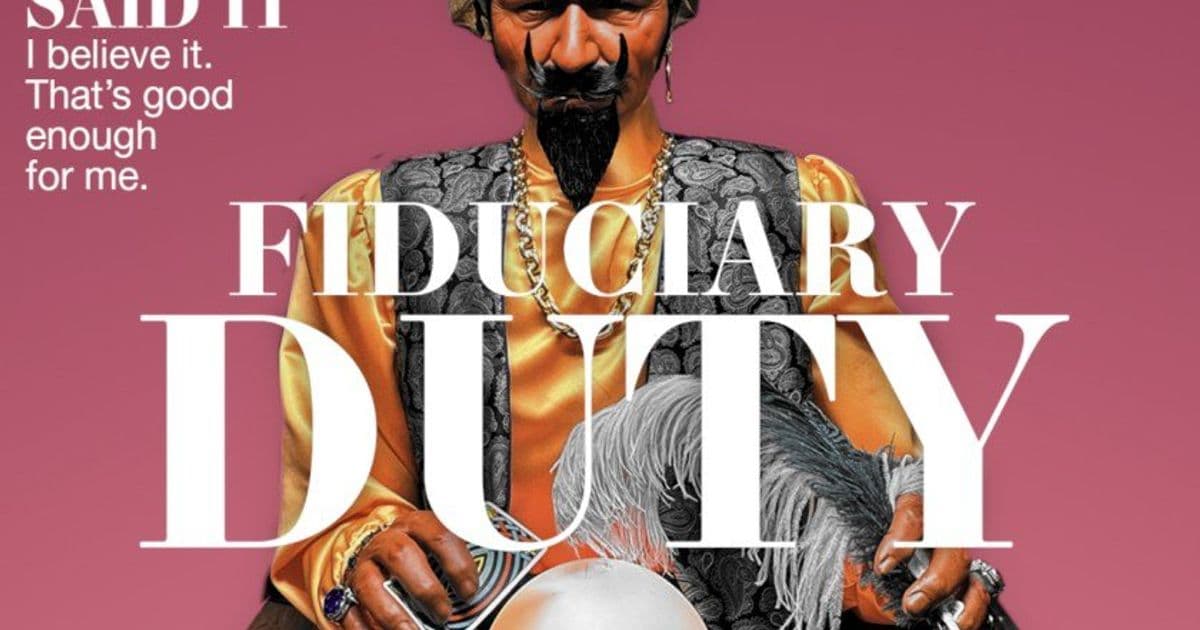
Cory Doctorow’s latest Pluralistic post gives tech workers a language for something many already suspect: shareholder value is often less a clear rule than a retroactive excuse.
Trend observation
Cory Doctorow’s June 13, 2026 Pluralistic post, "Shareholder supremacy and the precog CEO", is not a narrow argument about Milton Friedman. It is a diagnosis of a recurring pattern in corporate tech culture: executives invoke shareholder duty as if it were an objective constraint, then use that supposed constraint to justify choices that were never as mechanically determined as they claim.
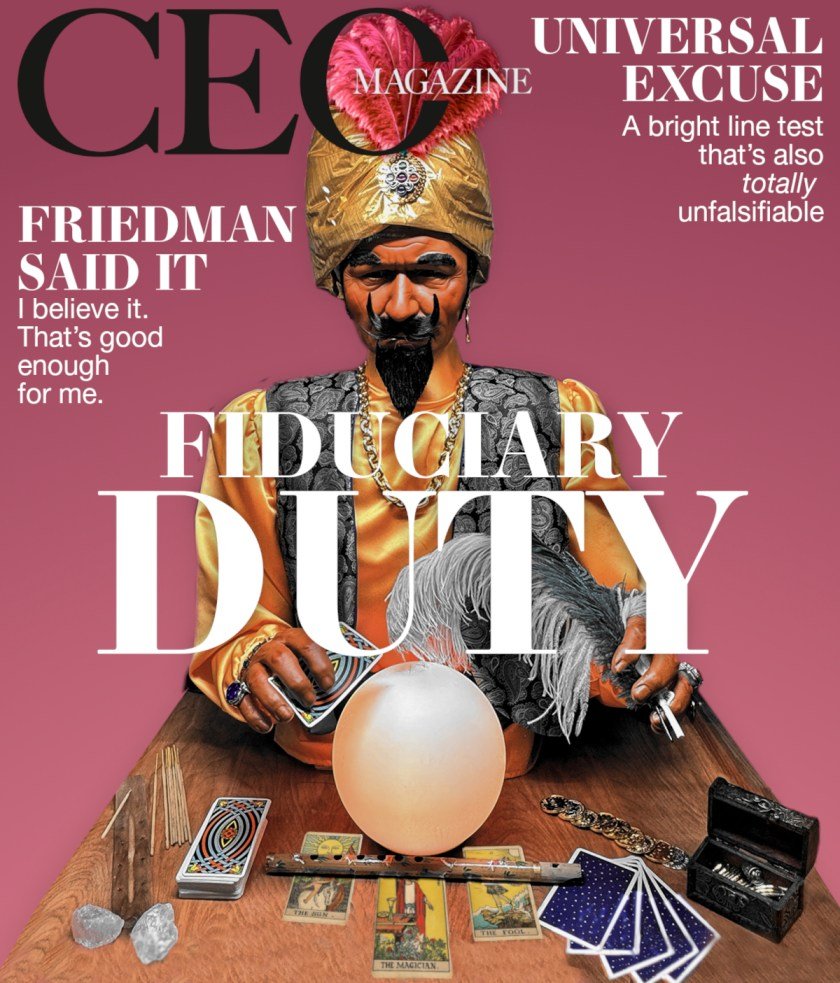
The argument lands because it touches a nerve in developer and tech communities. Engineers have spent the past decade watching companies reframe layoffs, safety compromises, content moderation retreats, privacy reversals, open source extraction, and AI deployment races as unavoidable obligations to investors. The language varies by era. Sometimes it is fiduciary duty. Sometimes it is efficiency. Sometimes it is focus. Sometimes it is market reality. The common move is the same: a discretionary decision is presented as if no human judgment remained.
Doctorow’s target is the doctrine commonly associated with Milton Friedman’s 1970 New York Times essay, "The Social Responsibility of Business Is to Increase Its Profits". Friedman argued that managers should not spend corporate resources on social aims unless doing so serves owners. Doctorow’s counter is sharper than the usual ethics critique. He argues that shareholder value is not the clean measurement tool its defenders often claim. It requires knowing not only whether management made money, but whether it made as much money as possible.
That second standard is where the doctrine becomes unstable. If a company earns $10 billion while a rival earns $11 billion, did management fail? If a company invests in worker goodwill and later faces a backlash, was the original decision prudent or naive? If a firm cuts trust and safety spending to improve margins, then suffers reputational harm two years later, was that shareholder discipline or short-term vandalism? The answer depends on a counterfactual future no board can prove.
That is the "precog CEO" problem. A doctrine that claims to judge executives by objective outcomes quietly requires clairvoyance. Since nobody can run the alternate timeline, the doctrine can become unfalsifiable. Success proves wisdom. Failure can be blamed on bad luck, changing market conditions, activist employees, regulation, consumer politics, or insufficient ruthlessness.
Evidence
The post’s strongest evidence is not statistical. It is structural. Doctorow points to a contradiction inside shareholder supremacy itself: the doctrine claims to replace vague moral judgment with measurable business judgment, but business judgment often depends on unknowable alternatives. Corporate social responsibility can be marketing. It can also be recruiting. It can be risk management. It can be empty branding. The same action can be read as values-driven waste or profit-seeking strategy, depending on what later happens.
Tech workers recognize this ambiguity because their industry is full of examples where values and profit were never neatly separable. Google’s early reputation for not being evil helped it attract engineers. Open source participation gives companies access to shared infrastructure, credibility, hiring pipelines, and technical influence. Privacy commitments can be moral commitments, but they can also be product differentiation. AI safety investment can reflect genuine concern, future regulation planning, brand protection, or all three at once.
That mixture makes the boardroom excuse powerful. When executives want to retreat from a controversial position, they can say they owe it to shareholders. When they want to pursue a controversial position, they can also say they owe it to shareholders. This is why Doctorow frames shareholder supremacy as a universal excuse rather than a bright standard. Its appeal is not only that it disciplines managers. Its appeal is that it can launder managerial preference through the language of obligation.
The post also connects to a wider developer conversation about AI and labor. In the same link roundup, Doctorow points readers to Miguel Grinberg’s "I Am Not a Reverse Centaur", John Scalzi’s "Please I Beg of You Do Not Use ‘AI’ In Your Business Communications", and Sony’s network service termination notice. Those links may look miscellaneous, but together they map the mood: skepticism toward managerial AI narratives, frustration with product abandonment, and impatience with corporate language that treats users and workers as variables in a financial model.
Adoption signals are visible in how this critique travels. Doctorow’s writing tends to circulate among developers, open web advocates, security people, digital rights lawyers, policy researchers, and engineers who distrust platform concentration. His book ecosystem reinforces that audience. "The Internet Con" focused on interoperability and Big Tech power. "Enshittification" turned a once-niche complaint about platform decay into a shared term for a common user experience. His upcoming "The Reverse Centaur’s Guide to Life After AI" aims at the same contested zone where labor, automation, and executive storytelling meet.
The phrase "reverse centaur" matters here. In AI discourse, a centaur usually means a human and machine working together, each compensating for the other’s weakness. A reverse centaur is the darker version: the human serves the machine, cleaning up its failures while management pretends the automation is doing the work. That idea pairs naturally with the shareholder supremacy critique. In both cases, a system that should be a tool becomes an authority. The model says. The market demands. The shareholders require. The executive disappears behind the instrument.
Developers are especially sensitive to this move because they build instruments that later become institutional alibis. A ranking model becomes the reason creators lose income. A fraud score becomes the reason a customer cannot appeal. A productivity dashboard becomes the reason a team is reorganized. A code assistant becomes the reason headcount plans change. Engineers know that systems encode choices, but corporate narratives often describe those systems as neutral forces.
That is why the post is likely to resonate beyond people who care about corporate law. It gives a governance vocabulary to a technical intuition: measurement does not remove judgment. It relocates judgment into the design of the metric, the interpretation of the result, and the story told after the fact.
Counter-perspectives
The strongest defense of shareholder primacy is that managers do need constraints. Without some financial discipline, executives can spend other people’s money on reputation projects, political preferences, executive vanity, or vague social programs that nobody can evaluate. A company is not a public agency. Investors do bear risk. Employees, customers, and communities may want many things from a firm, but the firm still has to survive in markets where capital has alternatives.
That defense should not be dismissed too quickly. Tech has plenty of examples of leaders using mission language to excuse weak execution. "Changing the world" can hide bad unit economics. "Community" can mean unpaid moderation and free labor. "Open" can describe a project whose governance is effectively controlled by one vendor. "AI safety" can serve as both a real research concern and a moat-building strategy. A doctrine that asks whether a decision serves the business can expose some forms of managerial theater.
There is also a practical governance issue. Boards cannot evaluate every decision by replaying alternate futures. They need standards that are legible enough to enforce. Profit, cash flow, stock performance, retention, market share, and regulatory exposure are imperfect, but they are not meaningless. The critique of shareholder supremacy can become too easy if it treats all financial accountability as cynical. Some companies fail because leaders ignore commercial reality, not because they worship it.
The better argument is not that shareholder value is always fake. It is that shareholder value is not self-interpreting. It cannot tell a board whether to invest in accessibility, keep an unprofitable developer tool alive, fund open source maintainers, slow an AI launch, or retain a trust and safety team through a downturn. Those choices involve forecasts, values, incentives, and power. Calling them shareholder obligations does not remove the politics. It often conceals them.
For developers, the useful takeaway is not a simple anti-business slogan. It is a sharper test for executive claims. When management says a decision is required by fiduciary duty, ask what future they are assuming. Ask what risks they are excluding. Ask whether the same doctrine would also justify the opposite decision under a different narrative. Ask who benefits from treating the decision as inevitable.
That habit matters in the current AI cycle. Companies are under pressure to automate support, replace junior work, summarize communications, rewrite internal tooling, and ship AI features before the market settles. Some of those projects will be useful. Some will be expensive theater. Some will transfer work from machines back to humans while pretending the reverse happened. The shareholder argument will appear on all sides: spend aggressively to avoid being left behind, cut aggressively to protect margins, deploy quickly to capture market share, slow down to reduce liability.
Doctorow’s post is valuable because it refuses the consensus frame that shareholder supremacy is a hard rule with occasional bad uses. It treats the ambiguity as central. That is a pattern worth watching across tech: the more uncertain the future becomes, the more confidently executives describe their choices as unavoidable.
A serious tech community should be skeptical of that confidence. Markets matter. Investors matter. So do workers, users, law, infrastructure, and the long-term health of the systems everyone depends on. The hard part is not choosing one word that settles every conflict. The hard part is admitting that no word does.
Comments
Please log in or register to join the discussion