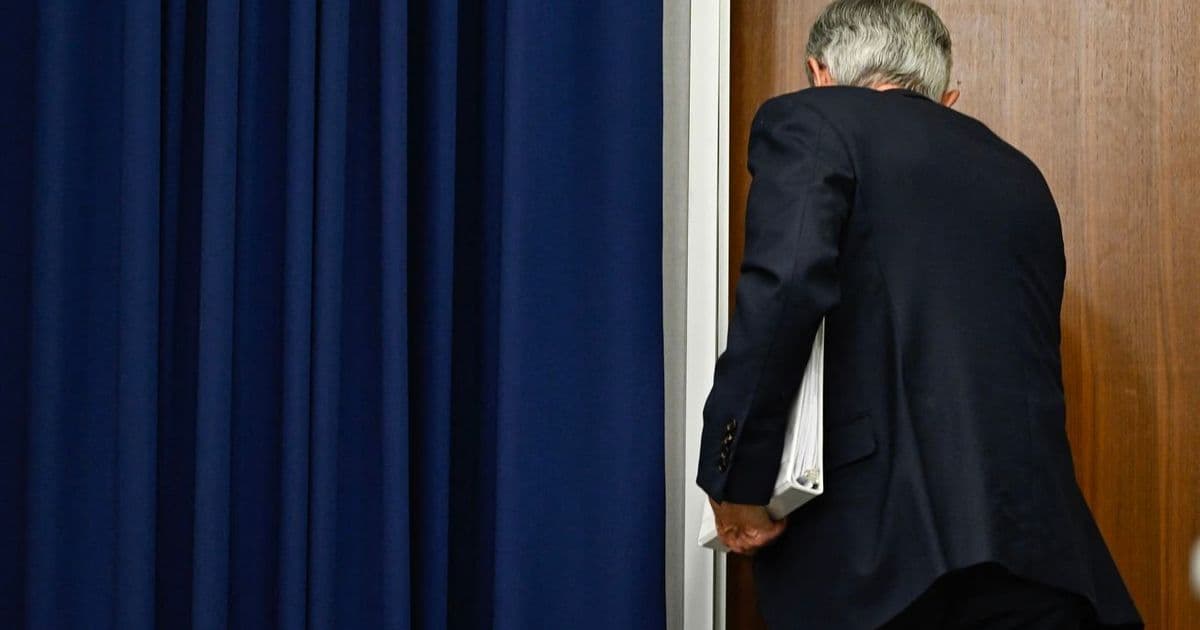
As Jerome Powell concludes his historic Fed chairmanship, Kevin Warsh faces significant challenges in navigating the complex economic landscape shaped by inflation, banking instability, and political pressures.
Federal Reserve chair Jerome Powell concluded his final press conference this week, marking the end of an era in central banking leadership. The transition period now highlights the formidable challenges awaiting potential successor Kevin Warsh, who would inherit a Federal Reserve grappling with persistent inflation, banking sector fragility, and heightened political scrutiny.
Powell's tenure, which began in 2018, encompassed unprecedented monetary policy responses to the COVID-19 pandemic, the most aggressive interest rate hiking cycle in decades, and the most severe banking stress since 2008. His departure leaves a complex legacy that any successor, including Warsh, would need to navigate carefully.
Kevin Warsh, a former Fed governor and current Morgan Stanley director, brings substantial credentials to the potential role. His resume includes serving on the Federal Reserve Board from 2006 to 2008, during which he gained firsthand experience with the financial crisis. Warsh also served as a special advisor to President George W. Bush on economic policy and currently teaches at MIT's Sloan School of Management.
The economic landscape Warsh would confront differs significantly from that faced by previous Fed chairs. Inflation, while moderating from 40-year highs, remains sticky above the Fed's 2% target. The core Personal Consumption Expenditures (PCE) price index, the Fed's preferred inflation gauge, stood at 2.8% in the most recent reading, indicating persistent price pressures that require careful management.
"The incoming chair will face a delicate balancing act," said Janet Yellen, former Fed chair and Treasury Secretary, in a recent interview. "They need to maintain credibility on inflation while avoiding over-tightening that could trigger unnecessary economic damage."
The banking sector presents another significant challenge. Regional banks like First Republic and Silicon Valley Bank experienced severe stress earlier this year, exposing vulnerabilities in the financial system. The Fed's supervision framework faces renewed scrutiny, with critics arguing that regulatory lapses contributed to the instability.
Warsh's potential nomination comes at a politically sensitive time. With the 2024 presidential election approaching, monetary policy decisions could become increasingly politicized. Warsh, who has sometimes expressed more hawkish views than current Fed officials, might face resistance from Democrats concerned about the economic impact of continued rate hikes.
The Federal Reserve's balance sheet presents another complex issue. The Fed's assets have expanded to approximately $7.5 trillion following its emergency lending facilities during the banking stress. The process of quantitative tightening, or reducing this balance sheet, continues to influence financial conditions and market liquidity.
Market participants will be watching closely for signals about Warsh's potential approach. "The market needs clarity on the future path of policy," said Michael Feroli, chief U.S. economist at JPMorgan Chase. "Any uncertainty about the incoming chair's views could lead to increased volatility in Treasury markets."
Powell's legacy includes successfully navigating the Fed through multiple crises while maintaining independence from political pressure. His approach emphasized data-dependency and transparent communication, principles that any successor would likely need to uphold to maintain market confidence.
The confirmation process for a new Fed chair typically involves extensive congressional hearings and scrutiny of the nominee's economic philosophy. Warsh's academic work and public statements suggest he might favor a more rules-based approach to monetary policy, potentially differing from Powell's more pragmatic data-driven methodology.
As the Fed prepares for this transition, the central bank continues to face criticism from various stakeholders. Progressive economists argue that rate hikes have been too aggressive, potentially causing unnecessary unemployment. Meanwhile, fiscal conservatives contend that the Fed has been too slow in addressing inflation, risking entrenched price increases.
The international dimension adds further complexity. Global central banks have been coordinating policy responses to shared economic challenges, and the Fed's leadership transition could affect these delicate relationships. Other major central banks, including the European Central Bank and the Bank of England, will be watching the Fed's next moves closely.
In the coming months, President Biden will need to consider not only economic qualifications but also the political implications of his nomination. The selection process will likely involve extensive consultation with current Fed officials, congressional leaders, and market participants to ensure a smooth transition and maintain institutional continuity.
Regardless of who ultimately succeeds Powell, the challenges facing the Federal Reserve remain substantial. The path back to price stability while supporting employment and financial stability requires careful calibration of policy tools, clear communication, and unwavering commitment to the Fed's dual mandate.
The Federal Reserve's official website provides detailed information on monetary policy decisions and economic data that will inform the next chair's approach. Additionally, the Board of Governors offers insights into the structure and functions of the Federal Reserve system.
Comments
Please log in or register to join the discussion