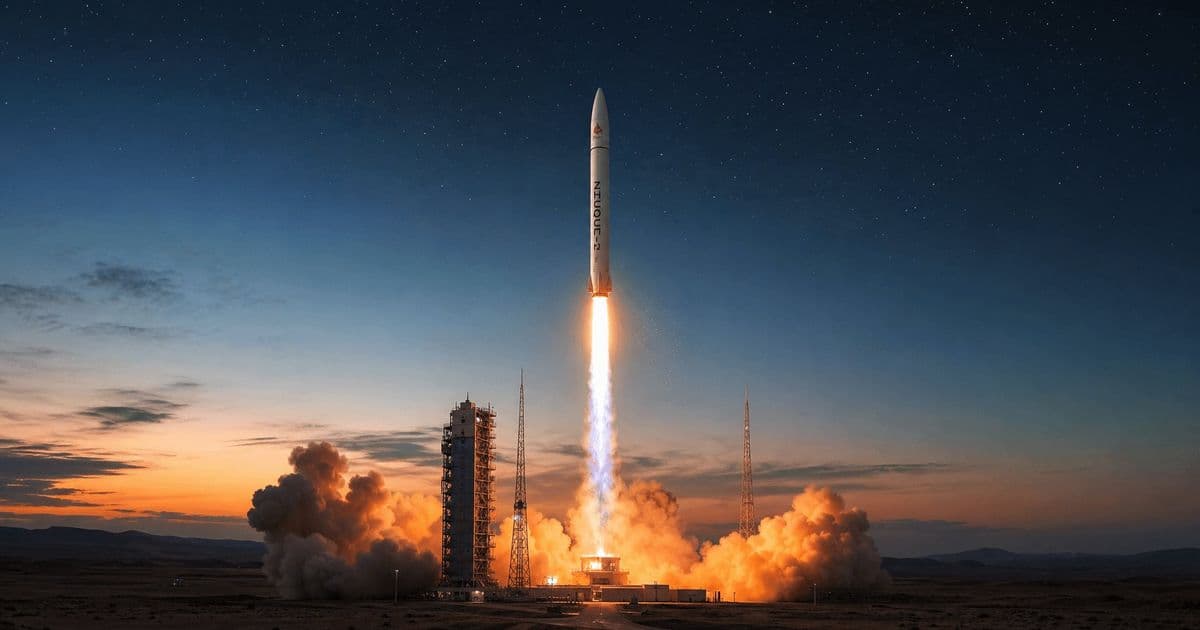
LandSpace put its upgraded Zhuque-2E rocket into orbit again on June 9, its second flight in 27 days. The hardware changes are incremental, but the real signal is what they tell us about the company's reusable Zhuque-3, which is now the part of the story worth watching.
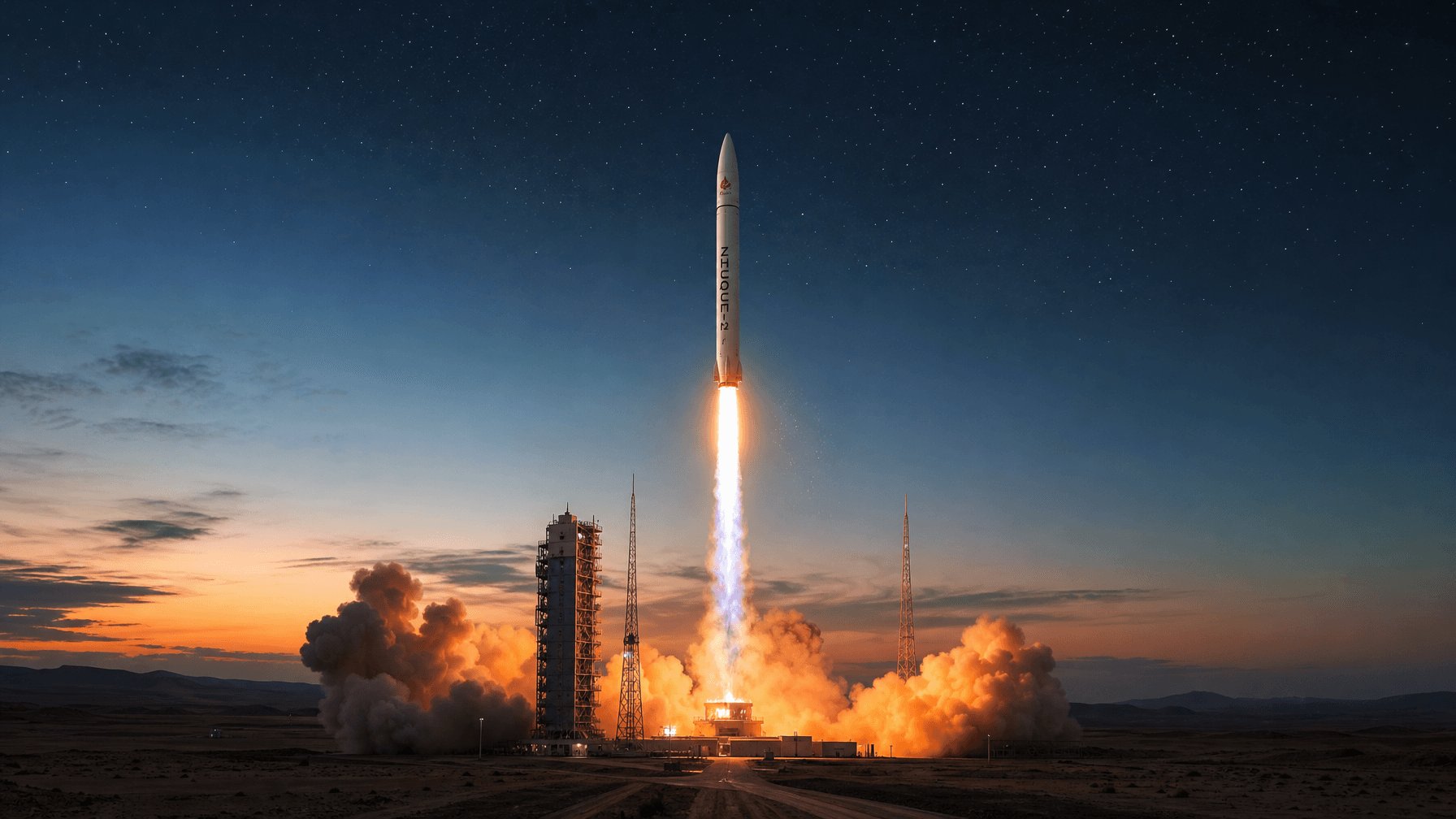
Chinese commercial launch firm LandSpace flew its improved Zhuque-2E (designated Y6) on June 9, 2026, lifting off at 16:23 Beijing time from the Dongfeng Commercial Aerospace Innovation Zone. The rocket carried two satellites, Qianfan DTC01 and China Mobile 02, to their intended orbits. It was the eighth flight in the Zhuque-2 series and the company's second mission in under a month, following the Y5 launch on May 14. That puts 27 days between flights.
What was actually claimed
The headline framing is "milestone" and "forefront of China's commercial launch industry." Strip the promotional layer off and the concrete claims are narrower: a successful orbital insertion of two payloads, a faster turnaround than LandSpace has managed before, and a set of design changes carried over from its next vehicle. Each of those is verifiable on its own terms, and none of them individually is dramatic. Taken together they describe a company trying to move from one-off launches to a production rhythm.
The Zhuque-2 itself is worth placing in context. In July 2023 it became the first liquid-propellant rocket using a methane and liquid oxygen propellant combination to reach orbit, beating SpaceX's Starship and Blue Origin's New Glenn to that specific milestone. Methalox is the propellant combination most reusable designs are converging on, because methane burns cleaner than kerosene (less engine coking, easier reuse) and is easier to handle and produce than hydrogen. So the Zhuque-2 line has always been a testbed for the propellant choices that matter for what comes next, rather than an end in itself.
What is actually new in the Y6
Three changes are listed for the improved variant, and they are the kind of changes that reward a close reading.
The first is a pneumatic push-rod stage separation system, replacing explosive separation devices. This is the most interesting item because it is explicitly described as derived from the Zhuque-3 reusable rocket. Pyrotechnic separation works fine for an expendable vehicle, but it is a single-use, destructive event that scatters debris and is hard to inspect or reuse. Moving to a pneumatic push-off is the sort of change you make when you intend to recover and refly hardware, and you want separation events that are repeatable and non-destructive. The fact that it is flying on the expendable Zhuque-2 first reads as risk reduction for Zhuque-3: test the mechanism on an operational vehicle before betting a recovery flight on it.
The second is a 3D-printed integrated engine frame on the second stage. Additive manufacturing for engine structures is now common across the industry because it collapses many machined and welded parts into a single printed component, which cuts part count, assembly labor, and potential failure points at joints. The claim here is improved manufacturing efficiency and structural performance, which is plausible but is exactly the kind of statement that is easy to assert and hard to independently quantify from a press release.
The third is simply the vehicle's stated performance: a 3.35-meter diameter body, a 4.2-meter maximum fairing, and capacity for up to 6 tonnes to low Earth orbit or 4 tonnes to a 500-kilometer sun-synchronous orbit. Those are medium-lift numbers, useful for the kind of constellation deployment the named customers are building.
Why the cadence number matters more than the hardware
A 27-day gap between launches is the figure to anchor on. Reusability gets the attention, but for a launch provider serving megaconstellations, the binding constraint is how often you can fly, not just whether you can land a booster. China is deploying two large LEO broadband constellations, the GW Constellation (associated with state-backed China SatNet) and the Qianfan, also called Thousand Sails, constellation. Both need thousands of satellites in orbit, and that demand only translates into revenue if rockets are available on a predictable schedule.
LandSpace has signed launch service contracts with China SatNet and Yuanxin Satellite, and its Zhuque-3 has been selected as a core supplier for the GW Constellation and won launch services for Qianfan. Those contracts are the commercial logic behind the production push. Industry watchers calling 2026 the "mass production year" for Chinese commercial rockets are describing this transition: solid-fuel rocket makers ramping output, liquid-rocket developers expanding capacity, and reusable programs entering verification. The Y6 flight is one data point in that larger shift toward volume.
The limitations worth stating plainly
Two flights in a month is a good sign, but it is not yet a sustained rate. SpaceX's Falcon 9 cadence, the benchmark everyone is implicitly measured against, took years of iteration and a recovered, reflown fleet to reach. A 27-day interval demonstrates the ability to do it once; the open question is whether LandSpace can hold that pace across a full year while also developing Zhuque-3.
The Zhuque-2 is also still fully expendable. Every one of the hardware improvements described is a step toward reuse, but none of them makes this rocket reusable. The economics of throwing away an entire methalox vehicle per flight are the thing reuse is meant to fix, so the improved Zhuque-2 should be read as a bridge, not a destination.
That makes Zhuque-3 the real story. The program is approaching its verification window, with the Y2 vehicle scheduled for another recovery test later in 2026 and a first reuse flight targeted for the fourth quarter. "Targeting" is the operative word. Recovery test campaigns slip routinely across the industry, and a Q4 reuse flight is an ambitious goal that has not happened yet. The honest assessment is that LandSpace has demonstrated it can build and fly an improved expendable rocket on a faster schedule, and has laid credible groundwork for reuse, but the milestone that would actually change its competitive position, flying the same hardware twice, remains ahead of it.
For anyone tracking the broader pattern, this is what a commercial launch industry looks like while it is still maturing: incremental hardware carryover from the next vehicle into the current one, cadence improving in steps rather than leaps, and contracts signed against capabilities that are promised but not yet proven. The Y6 flight moves LandSpace forward on all three fronts. Whether that adds up to a durable lead depends entirely on what happens with Zhuque-3 in the back half of the year.
Comments
Please log in or register to join the discussion