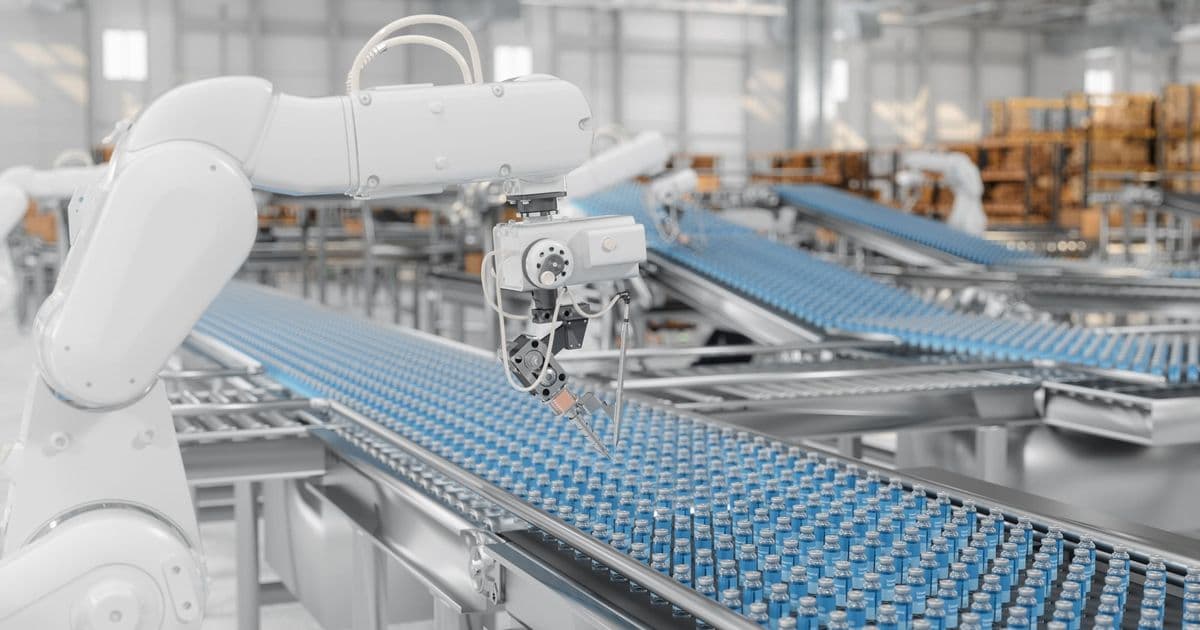
An MIT team printed an array of 16 triaxial electrospray emitters in roughly one square centimeter using a $13,000 desktop resin printer, sidestepping the semiconductor-class cleanroom these microscopic devices have always demanded. The result is faster iteration, three-layer droplets instead of two, and a manufacturing path cheap enough to commercialize.
A team at MIT has fabricated triaxial electrospray emitters, microscopic nozzles that dispense three liquids at once into solidified three-layered droplets, using standard vat-polymerization 3D printing rather than the cleanroom processes these parts have historically required. The shift matters less for any single drug formulation and more for what it does to the cost structure and iteration speed of building the hardware itself.
Electrospray emitters are not new. They are workhorse components in pharmaceutical microparticle production, where a charged liquid is pulled through a fine nozzle and broken into uniform droplets by an applied voltage. The catch has always been the geometry. To stack multiple liquids into concentric layers, you need coaxial channels nested inside one another, machined or etched to tolerances that previously pushed fabrication into semiconductor fabs. That constraint capped most commercial designs at two layers, or forced a trade-off between layer count and the number of nozzles you could run in parallel.
The fabrication change
MIT's approach uses UV-cured resin, the same broad category of process a dentist uses to harden a filling, to define an array of 16 triaxial nozzles in roughly one square centimeter. Each nozzle carries its own internal network of three channels. The team printed these on an Asiga Max X27, a printer capable of 25-micrometer layer heights, about a third the width of a human hair. At around $13,000, the machine is a rounding error against typical medical research budgets, and the print runs in a few hours rather than the multi-week cycle a cleanroom mask-and-etch flow would demand.
That speed is the real story. Researcher Luis Fernando Velásquez-García stated the team "couldn't make a device like this in a semiconductor cleanroom" at all, and that the printer's quick turnaround let them iterate experimental geometries rapidly. When fabrication drops from weeks to hours and from a fab to a desktop, the design space you can actually explore widens considerably. You stop optimizing around what the process can tolerate and start optimizing around what the application wants.
Why three layers and precise control matter
The triaxial design dispenses three concentric liquid layers, and the printed array lets operators tune flow rates and applied voltages per nozzle to customize each droplet shell. For oral drugs, that translates into practical structure: an outer layer engineered to survive stomach acid and dissolve in the intestine, wrapped around a payload that activates where it is absorbed. The same layered-droplet capability extends to skin creams, gels, wound dressings, injectable formulations, and microparticle contrast agents for imaging.
The applications run beyond medicine. Layered microdroplets are used in self-healing materials, where an encapsulated agent ruptures and cures a crack, as well as biosensors, solar cell coatings, and implant surface treatments. In each case, the value is consistency: more uniform droplets mean tighter control over dose, release timing, or coating thickness, and an array of 16 emitters raises throughput without the usual penalty of going to a single complex nozzle.
The manufacturing read
The broader pattern here is familiar to anyone watching additive manufacturing creep into precision domains. As resin printers push layer resolution toward the tens-of-micrometers range, they start displacing processes that previously justified far higher capital costs. A two-layer coaxial limit gives way to three. A cleanroom requirement gives way to a workshop-grade machine. The point is not that 3D printing matches semiconductor lithography on absolute precision, it does not, but that for this class of feature it is close enough while being cheaper, faster, and far more forgiving of design changes.
For commercialization, the economics look favorable. A sub-$15,000 printer, a few hours per array, and a path to denser, more capable emitters than existing two-layer or low-count designs is the kind of combination that gets technology out of the lab. The constraint that kept these devices specialized was never the physics of electrospray. It was the cost and rigidity of making the nozzle. Removing that bottleneck is what could actually move production volumes for layered drugs and the adjacent material applications that share the same hardware.
Comments
Please log in or register to join the discussion