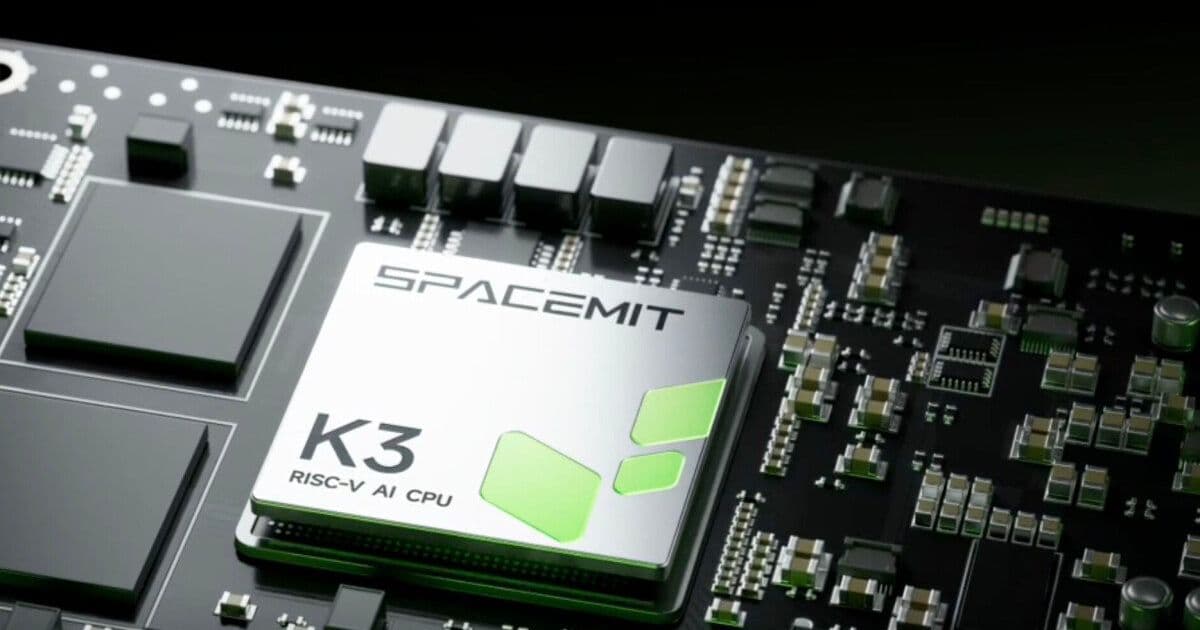
SpacemiT's 16-core K3 chip is the first commercially shipping RVA23 RISC-V hardware that runs Ubuntu GNOME smoothly. The catch is a price roughly double a Raspberry Pi 5, reviving an old question: how much premium will buyers tolerate for an open architecture that still trails on raw value?
For years, the RISC-V conversation has run on promise rather than product. The architecture was open, the roadmaps were ambitious, and the demos were either underwhelming or running inside an emulator. At this year's Ubuntu Summit, SpacemiT showed something different: a 16-core RISC-V machine running full Ubuntu GNOME on real silicon, playing video smoothly while staying responsive. That last part, responsiveness under load, is the detail that separates a tech demo from a usable computer.
What actually shipped
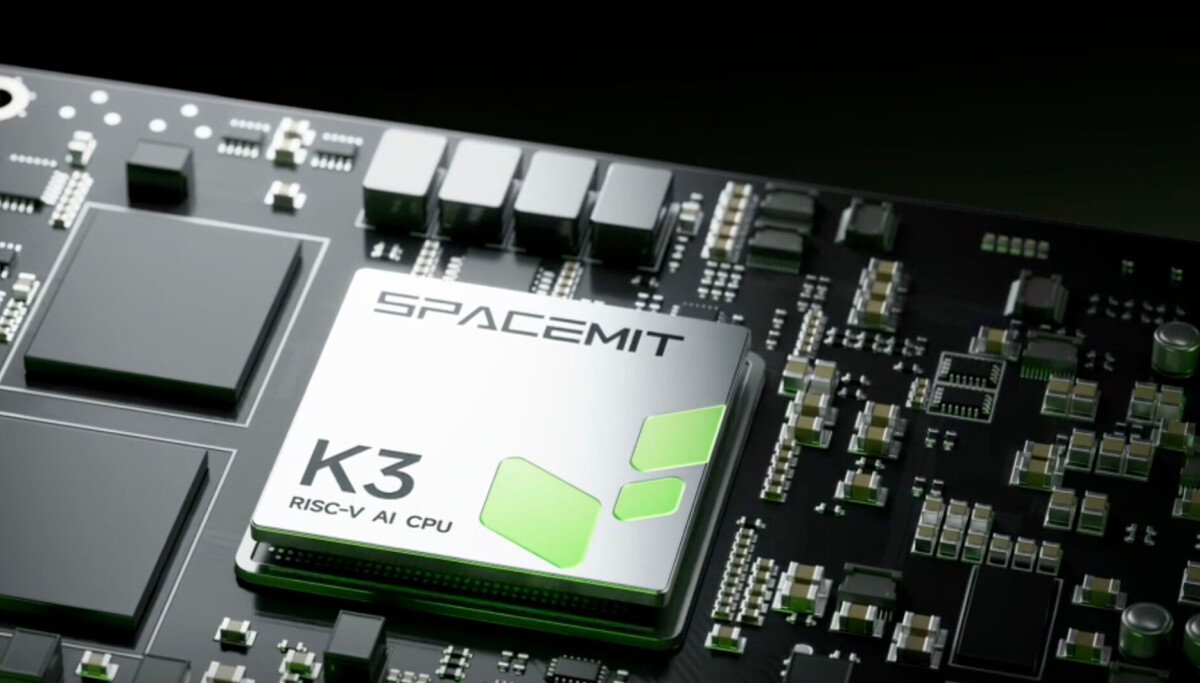
The chip in question is the Key Stone K3, a SoC that splits 16 cores between eight of SpacemiT's own X100 cores clocked up to 2.4 GHz and eight A100 "AI cores." The headline specification is compliance with RVA23, and that matters more than the marketing usually conveys. RVA23 is the RISC-V profile that brings full vector-math acceleration and hypervisor support into a single mandated baseline. The RISC-V association called it a major milestone for a reason: before a stable profile, software vendors had no fixed target to compile against.
Canonical leaned into this. When Ubuntu 25.10 "Questing Quokka" arrived last October, its RISC-V variant required RVA23S64 specifically. The awkward problem at launch was that no commercially available RVA23 hardware existed. The only way to run the RISC-V edition was under QEMU emulation, which is a strange position for an operating system to ship into. You could have the software or the silicon, but not both at once. The K3 closes that gap. Canonical announced support back in February, and the hardware is now shipping through SpacemiT's partner Banana Pi.
The physical product is the K3 Pico-ITX board, and the spec sheet reads like a serious small-form-factor machine rather than a hobbyist curiosity. There's Gigabit copper Ethernet plus an SFP+ cage for 10GbE over fibre, 16 or 32 GB of LPDDR5-6400, 128 or 256 GB of UFS storage, and two M.2 slots for additional NVMe. It drives a 4K display at 60 Hz or a 2.5K panel at 90 Hz. SpacemiT also offers it in an Intel NUC-sized case, which is the configuration Phoronix benchmarked in detail last month.
The performance picture, read honestly
Here is where the community sentiment splits. The optimistic reading: the K3 beats the Raspberry Pi 500+ across multiple tests and outperforms the SiFive P550 Premier, which has been one of the mainstream RISC-V reference boards since its 2024 launch. That is real, measurable progress against the architecture's own recent history.
The skeptical reading: back in January, CNX Software's remote benchmarks placed the chip roughly at Raspberry Pi 5 level. So the practical comparison is not against high-end ARM or x86 silicon. It's against a £168 single-board computer. Beating last generation's RISC-V boards is a low bar when the architecture is competing with a much broader ecosystem for developer attention. The honest summary is that the K3 is the best RISC-V desktop experience available and still lands in the neighborhood of a mid-range ARM SBC for general compute.
That tension is the whole story of RISC-V hardware right now. Progress is genuine and the trajectory is steep, but the absolute numbers still ask buyers to value openness over raw price-performance.
The price question
Banana Pi launched the board in May. On Ali Express, an 8 GB version surfaced for slightly under £300 (about $400), while the listed RRP is £595, just under $800. Compare that to a Raspberry Pi 5 with 8 GB RAM at £168 or $175, and the K3-Pico costs roughly twice as much, before you account for the higher-spec configurations.
Defenders will point out, fairly, that this is not a like-for-like comparison. The K3 board carries 10GbE, UFS storage, dual M.2 slots, and far more memory bandwidth than any Pi. You are buying a different class of machine. The counter-argument is just as fair: most people evaluating a RISC-V desktop are doing so out of curiosity or principle, and a near-$800 RRP is a steep entry fee for an architecture whose software ecosystem is still maturing. "RISC-V performance will still cost you" is the uncomfortable refrain that has followed every credible board so far, and the K3 does not escape it.
Why this still matters
Step back from the price tag and the significance becomes clearer. The momentum around RISC-V is no longer purely speculative. Alibaba has Android 16 running on RISC-V. Debian 14 is tightening its package reproducibility rules in ways that benefit alternative architectures. There's talk of US supercomputing exploring more exotic silicon, and an updated Framework laptop mainboard built around the K3 is reportedly coming soon. Each of these is a small adoption signal, and together they describe an architecture moving from research project to shipping product.
SpacemiT itself is part of that shift. The company, based in Hangzhou, supports a spread of distributions both Western and Chinese, including its own Ubuntu-and-LXQt-based Bianbu OS. A couple of years ago The Register described the firm as "relatively obscure." The K3 suggests that label has a short shelf life.
The pattern worth watching is not whether RISC-V can match x86 or ARM today, because it plainly cannot on value. It's whether each generation closes the gap fast enough to sustain the ecosystem investment that would eventually make it competitive. The K3 is the first board where a casual user could sit down, browse, play video, and not immediately notice they were on exotic silicon. That is a meaningful threshold, even if the receipt is harder to swallow. Whether enough buyers cross it at this price will determine if the next SpacemiT board gets cheaper or stays a niche statement of intent.
Comments
Please log in or register to join the discussion