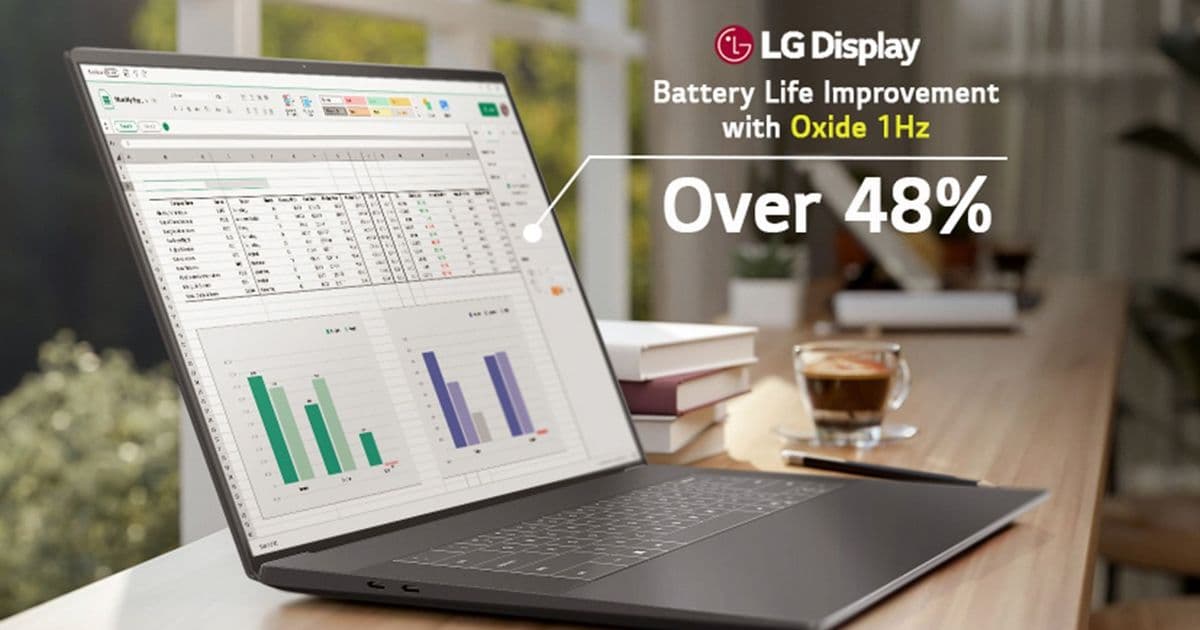
LG has developed the world's first mass-produced 1 Hz-capable LCD laptop display, promising 48% better battery efficiency than existing solutions, with OLED variants set to arrive in 2027.
LG has unveiled the world's first mass-produced LCD laptop display capable of operating at just 1 Hz, a breakthrough technology that promises to dramatically extend battery life by reducing power consumption when displaying static content. The new 120 Hz display, which will debut in Dell's upcoming XPS laptops, uses Oxide TFT technology to achieve remarkably low power leakage in its minimum refresh rate mode.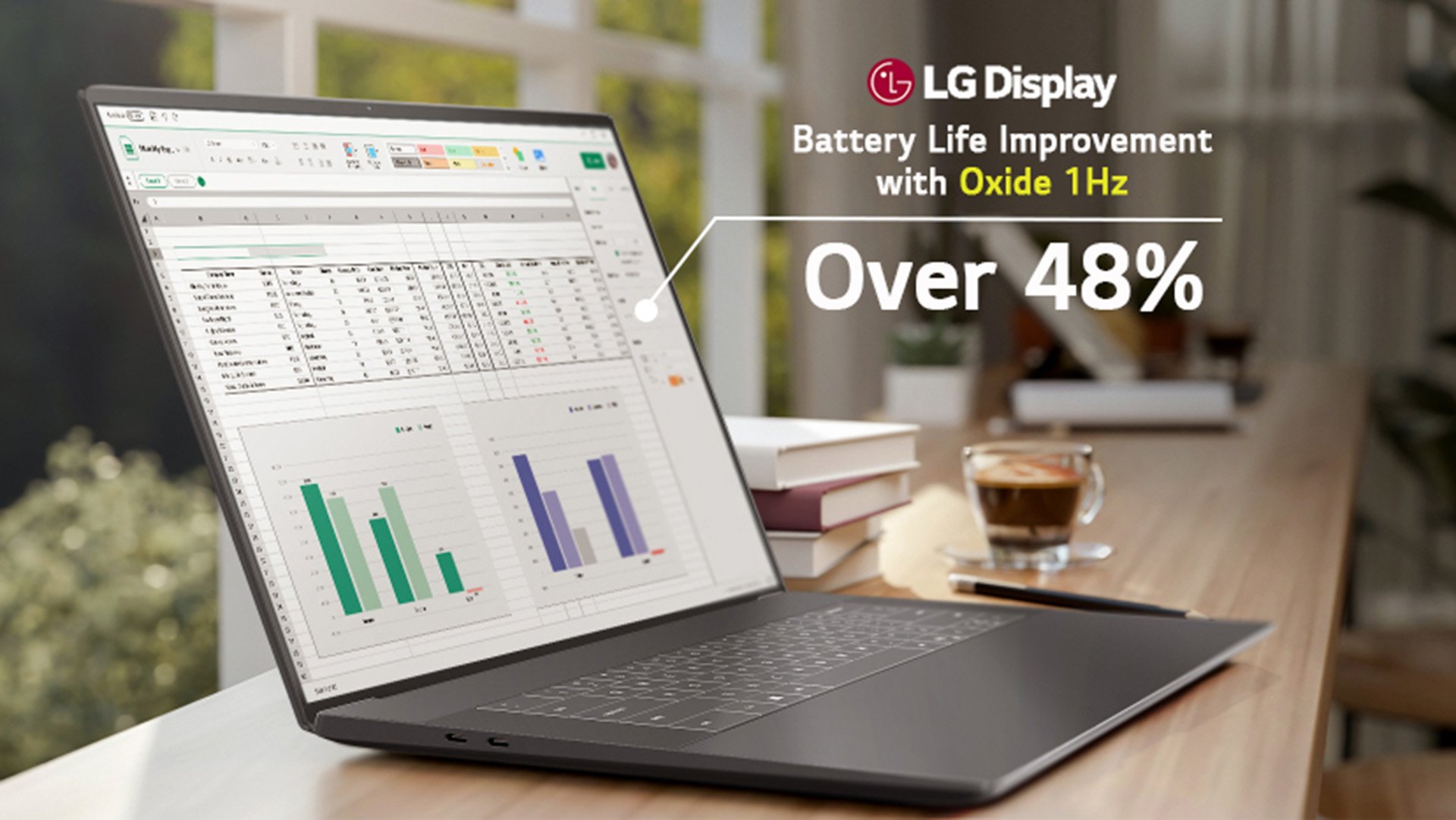
The Technology Behind 1 Hz LCD Displays
The new display technology represents a significant advancement in laptop display efficiency. Unlike traditional LCDs that maintain a constant refresh rate regardless of content, LG's implementation can automatically detect when screen content remains static and transition from 120 Hz down to 1 Hz. This dynamic adjustment is made possible through Oxide TFT (Thin-Film Transistor) technology, which exhibits minimal power leakage even at the lowest refresh rates.
LG claims this innovation delivers 48% greater battery efficiency compared to existing display solutions. The display achieves this by spinning down to 1 Hz when motion on screen is static, then ramping back up to 120 Hz when activity resumes. This variable refresh rate capability mirrors what has been available in OLED smartphone displays for several years but represents a first for the LCD laptop market.
Market Context and Industry Evolution
The laptop display industry has been gradually shifting toward variable refresh rate technology to improve energy efficiency. Intel and BOE are also developing similar displays using LTPO (Low-Temperature Polycrystalline Oxide) technology, which employs AI algorithms to determine optimal times to reduce refresh rates. These systems can even detect when users are away from their screens and adjust accordingly.
This technology has been evolving in the mobile space since the late 2010s. Apple pioneered the approach with the Apple Watch Series 5, introducing an LTPO display capable of switching between 60 Hz and 1 Hz. The technology subsequently migrated to smartphones, with devices like the OnePlus 9 and Oppo Find X3 Pro incorporating similar capabilities.
Product Implementation and Future Plans
LG's new display technology will make its debut in Dell's refreshed XPS laptop lineup, first unveiled at CES 2026. The base display option for these laptops will feature a 1920 x 1200 resolution with LG's 1-120 Hz variable refresh rate capability. However, premium variants will sacrifice the 1 Hz functionality in favor of OLED panels with a 20-120 Hz variable refresh rate window.
Looking ahead, LG has announced plans to introduce OLED counterparts of its 1 Hz-capable LCDs beginning in 2027. This suggests the company sees significant market demand for ultra-low power display technology and is investing in multiple display technologies to meet different market segments and price points.
Technical Implications and Performance Considerations
The transition from 120 Hz to 1 Hz represents a 99% reduction in refresh rate, which translates to substantial power savings. For users who spend significant time viewing static content such as documents, spreadsheets, or web pages, this technology could extend battery life by several hours. The automatic detection system ensures the transition happens seamlessly without user intervention.
However, the technology does have limitations. The 1 Hz mode is only suitable for static content, and any motion or animation will trigger an immediate return to higher refresh rates. Additionally, the base model's 1920 x 1200 resolution, while adequate for many users, may not satisfy those seeking higher resolution displays.
Industry Impact and Future Developments
LG's breakthrough could accelerate the adoption of variable refresh rate technology across the laptop industry. As battery life remains a critical factor in laptop purchasing decisions, manufacturers may increasingly prioritize displays that can dynamically adjust their refresh rates. The success of this technology in smartphones suggests strong potential for similar adoption in laptops.
The development also highlights the ongoing innovation in display technology, where manufacturers continue to find ways to improve efficiency without sacrificing visual quality. As AI algorithms become more sophisticated in detecting content types and user behavior, future iterations of this technology could become even more efficient and responsive.
For now, consumers will have to wait for the technology to become more widely available beyond Dell's initial XPS implementation. However, given the clear benefits in battery life and the precedent set by smartphone adoption, it seems likely that 1 Hz-capable displays will become a standard feature in premium laptops within the next few years.
Comments
Please log in or register to join the discussion