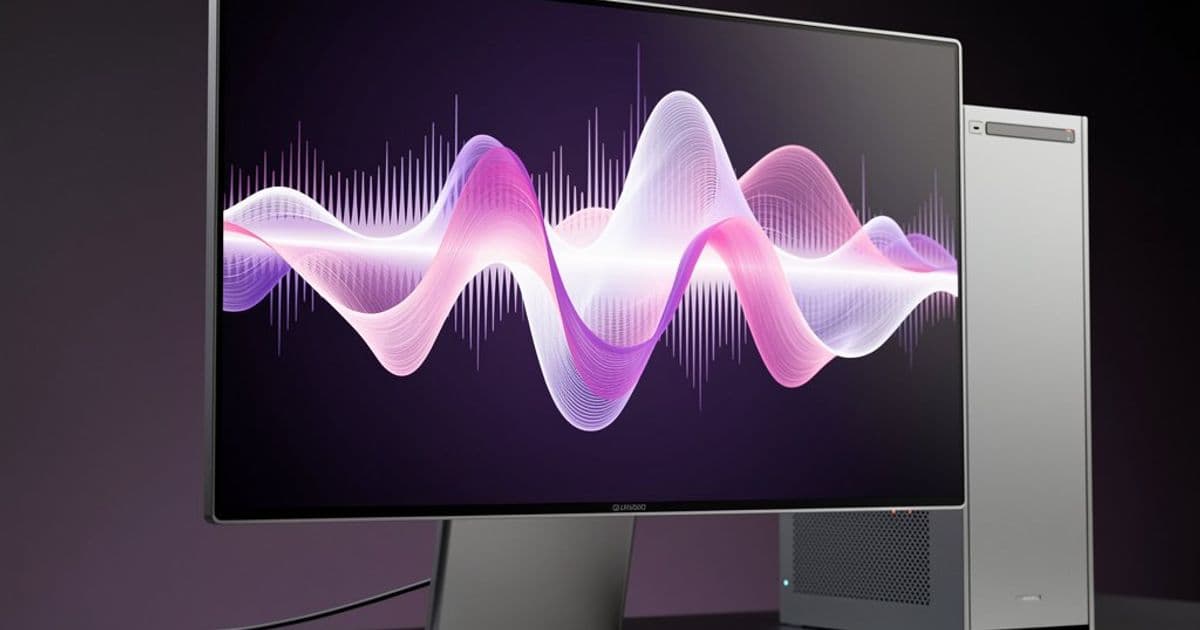
Linus Torvalds describes using AI tools to write a Python visualizer for audio samples, skipping his own programming knowledge entirely.
Linus Torvalds recently shared an anecdote about building a Python audio sample visualizer that reveals something about the current state of AI-assisted development. He describes the project as "basically written by vibe-coding" and notes that he knows more about analog filters than Python programming—a statement he immediately qualifies as not saying much.
The project started with his typical approach to unfamiliar programming tasks: "google and do the monkey-see-monkey-do." This pattern describes copying code snippets from search results and adapting them without deep understanding. However, he took a further step by removing himself from the process almost entirely, using what he calls "Google Antigravity" to generate the visualizer directly.
What This Actually Means
"Vibe-coding" refers to the practice of describing what you want to an AI system and accepting the generated code, even without fully understanding the implementation details. Torvalds is essentially admitting that he bypassed the learning process entirely—he didn't need to understand Python syntax, libraries, or audio processing concepts to get a working tool.
This approach has practical implications:
- Speed over understanding: The tool gets built quickly, but the developer may not understand edge cases or failure modes
- Reduced barrier to entry: Someone can create functional code in an unfamiliar language or domain
- Maintenance challenges: Fixing bugs or extending functionality requires either more AI assistance or actual learning
The Broader Pattern
Torvalds' comment reflects a shift in how experienced developers approach new problems. Rather than treating programming as a skill to be learned systematically, more developers are using AI as an abstraction layer. This mirrors how modern programmers rarely need to understand memory management or assembly language—except the abstraction is conversational rather than technical.
The approach works well for one-off tools and prototypes. For production systems or long-term projects, the lack of understanding becomes a liability. When the visualizer breaks or needs modification, the developer faces the same knowledge gap they started with.
Practical Trade-offs
The "Google Antigravity" method Torvalds mentions likely refers to AI coding assistants that generate complete solutions from natural language descriptions. This approach trades:
Benefits:
- Immediate productivity in unfamiliar domains
- Reduced time spent on boilerplate and research
- Access to patterns and libraries you wouldn't discover otherwise
Costs:
- No knowledge transfer to the developer
- Difficulty debugging or optimizing
- Potential security issues from generated code
- Dependency on the AI tool's quality and training data
Torvalds' self-deprecating tone about his analog filter knowledge versus Python skills suggests he sees this as a pragmatic shortcut rather than a replacement for learning. The fact that he's building guitar pedal-related tools indicates this is a hobby project where the trade-offs make sense.
For developers considering similar approaches, the key question is whether the tool is disposable or foundational. Torvalds' visualizer is likely a personal utility—acceptable for his use case. Building a company's core product this way would be reckless.
The quote also highlights how programming is evolving from writing code to directing AI systems. Torvalds, known for his meticulous attention to detail in the Linux kernel, is comfortable admitting he used AI to skip the learning curve for a side project. That's telling—when even the most principled kernel developer embraces vibe-coding for practical tasks, the practice has crossed into mainstream acceptance.
The real test comes when these tools need to scale beyond prototypes. Torvalds' Linux kernel work shows he understands that systems need maintainers who comprehend every line of code. His guitar pedal visualizer doesn't have those requirements, which is precisely why the vibe-coding approach works for it.
Related Context
This discussion connects to ongoing debates about AI's role in software development. Tools like GitHub Copilot and ChatGPT have made code generation accessible, but questions remain about long-term consequences for skill development and system reliability.
For developers interested in exploring similar approaches, the key is matching the tool to the context. Torvalds' approach makes sense for a hobby project where the alternative is not building anything. For mission-critical systems, the traditional path of understanding before implementation remains essential.
The quote ultimately serves as a realistic assessment of where AI-assisted coding stands: useful for specific contexts, but not a universal replacement for programming knowledge. Torvalds' willingness to use it while acknowledging his limitations provides a model for pragmatic adoption without overhyping the technology's capabilities.
Comments
Please log in or register to join the discussion