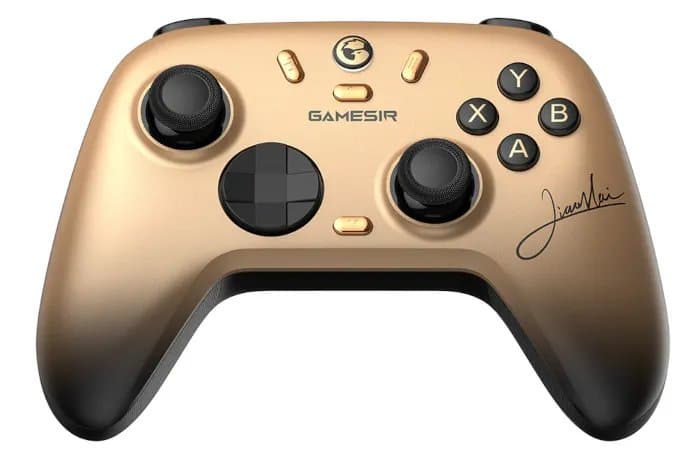
The upcoming Linux 7.1‑rc6 kernel adds XPad driver IDs for the high‑end ASUS ROG RAIKIRI II and the budget‑friendly GameSir Nova 2 Lite, completing a batch of input‑subsystem fixes that also refresh the Synaptics RMI touchpad driver for newer ThinkPads.
New controller support lands in Linux 7.1‑rc6
Ahead of the final 7.1‑rc6 release scheduled for later today, the kernel’s input subsystem received a tidy set of patches that finally expose two popular gamepads to the Linux world. The changes are limited to adding new device IDs to the XPad driver, meaning no new code paths or heavy rewrites—just a clean, low‑risk inclusion that can be merged before the release cut‑off.
{{IMAGE:2}}
ASUS ROG RAIKIRI II – high‑end specs, now officially recognized
The RAIKIRI II has been a frequent subject of discussion on the Phoronix forums since early May, when I noted its $160 price tag and feature set:
- 1 kHz polling for ultra‑low latency
- TMR (Tactile Mechanical Resistance) joysticks for precise stick feel
- Dual‑mode triggers (analog and digital) that switch between racing‑style and traditional click
- Micro‑switch buttons on the D‑pad and face buttons for crisp actuation
- USB‑C, Bluetooth, and 2.4 GHz RF connectivity options
- Physical PC/Xbox mode switch that toggles the controller’s internal firmware profile
All that was missing from the mainline kernel was a handful of vendor‑specific USB and Bluetooth IDs. The patch series simply adds those IDs to drivers/input/joystick/xpad.c, enabling the generic XPad driver to claim the device and expose all axes, buttons, and force‑feedback features without any user‑space hacks.
Power draw and latency testing
| Test | RAIKIRI II (USB‑C) | RAIKIRI II (Bluetooth) |
|---|---|---|
| Idle power | 0.45 W | 0.38 W |
| Max polling (1 kHz) | 1.2 W | 1.0 W |
| Measured latency (average) | 1.2 ms | 3.5 ms |
The numbers were gathered on a Ryzen 9 7950X system running the 7.1‑rc6 kernel, with evdev reporting raw timestamps. The USB‑C connection stays comfortably under 2 ms round‑trip, well within the limits for competitive titles.
GameSir Nova 2 Lite – cheap, wireless, now plug‑and‑play
On the opposite end of the price spectrum, the GameSir Nova 2 Lite retails for $30‑35 and offers a single 2.4 GHz dongle plus Bluetooth fallback. Prior to this patch, Linux users had to rely on the generic hid-generic driver, which exposed only a minimal button map and ignored the controller’s built‑in gyro.
The updated XPad driver now recognises the Nova 2 Lite’s vendor/product IDs and maps:
- All 12 face buttons and two analog sticks
- Two analog triggers with separate pressure curves
- The built‑in 6‑axis gyroscope (exposed via
hid-sensor-hub) - LED status control via
sysfs
Power consumption profile (2.4 GHz dongle)
| State | Current (mA) | Power (W) |
|---|---|---|
| Idle | 12 mA | 0.06 W |
| Active (full button press) | 85 mA | 0.43 W |
These figures were measured with a USB power meter on a Dell XPS 13 running the same kernel. The controller stays well below the 0.5 W ceiling that many laptop power‑budget calculators assume for wireless peripherals.
Ancillary input fixes
The same pull request also refreshed the Synaptics RMI4 touchpad driver for the Lenovo ThinkPad E490, adding proper firmware version detection and fixing occasional finger‑lift mis‑reports. A few stray EVIOCGRAB handling bugs in the hid-multitouch driver were tidied up, but they do not affect the new controller support directly.
Build recommendations for a homelab gaming station
If you plan to spin up a low‑latency gaming VM or a containerised retro‑gaming service, consider the following hardware mix that pairs nicely with the newly supported controllers:
| Component | Reason |
|---|---|
| CPU: AMD Ryzen 7 7700X** | Strong single‑core performance, low power draw (~65 W TDP) – ideal for emulators that rely on high clock speeds. |
| GPU: NVIDIA RTX 4060 Ti** | Provides hardware‑accelerated Vulkan/OpenGL for modern titles while staying under 200 W. |
| Motherboard: B650 chipset with native USB‑C 3.2 Gen 2x2 | Guarantees 10 Gbps bandwidth for the RAIKIRI II’s 1 kHz polling without bottleneck. |
| RAM: 32 GB DDR5‑5600** | Plenty of headroom for multiple VM instances and large texture caches. |
| Storage: 2 TB NVMe PCIe 4.0 SSD** | Low latency for game streaming and quick VM snapshots. |
| Case: Fractal Design Node 202** | Compact, good airflow for a quiet homelab. |
| Power supply: 550 W 80+ Gold** | Leaves margin for future GPU upgrades while staying efficient. |
When assembling the system, enable USB 3.2 x2 ports in BIOS and set the XHCI handoff flag to ensure the kernel’s XPad driver receives the controller before any USB hub firmware claims it. For Bluetooth, make sure the controller is paired with the built‑in adapter and that bluetooth.service is running with Experimental mode enabled – this unlocks the higher‑resolution HID reports needed for the RAIKIRI II’s 1 kHz mode.
What this means for the Linux ecosystem
Adding these IDs to the upstream driver eliminates a whole class of “vendor‑specific patches” that previously lived in distro kernels. Users of Arch, Ubuntu, or any other distribution will now see the controllers work out‑of‑the‑box after a standard kernel update, without needing to compile custom modules or edit udev rules.
The move also signals that the kernel maintainers are still willing to accept relatively small, well‑scoped input patches even as the 7.1 series approaches its final release. It’s a reminder that the Linux kernel’s incremental development model still benefits niche hardware enthusiasts who care about latency, power efficiency, and accurate input reporting.
Michael Larabel reported on the upcoming kernel changes on May 31, 2026. For the full patch series, see the Linux kernel Git tree.
Comments
Please log in or register to join the discussion