
Governor Janet Mills blocks comprehensive ban on large data centers while pushing for regulatory framework that addresses power consumption concerns in semiconductor-dependent AI era.
Maine Governor Janet Mills has exercised her veto authority on a bill that would have imposed a moratorium on all new data center projects exceeding 20MW of power consumption, citing both environmental and economic considerations that reflect the complex relationship between semiconductor workloads and energy infrastructure.
The vetoed legislation would have effectively halted all new data center approvals until October 2027, requiring a state council to study the impacts on local power grids, water supplies, and air quality. However, Mills indicated support for such a moratorium only if it included an exemption for a specific project in Jay, Maine, which represents a significant investment in both infrastructure and economic development.
"A moratorium is appropriate given the impacts of massive data centers in other states on the environment and on electricity rates," the Democrat governor stated in her veto announcement. "But the final version of this bill fails to allow for a specific project in [Jay] that enjoys strong local support from its host community and region."
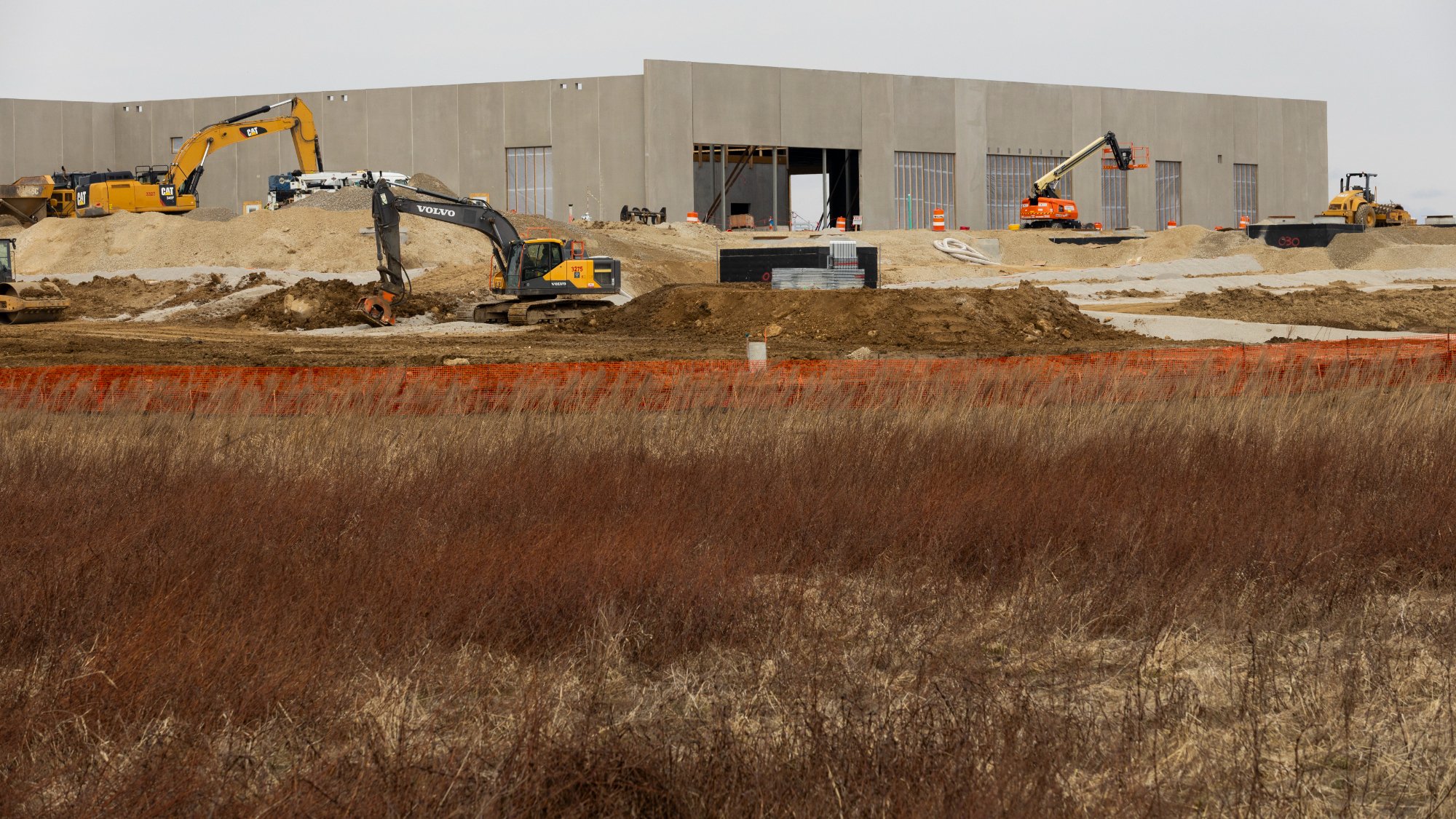
The Jay data center project, valued at $550 million, is being constructed on the site of a former paper mill that suffered a catastrophic accident in 2023. This location offers unique advantages for semiconductor-related computing infrastructure, as it leverages existing electrical grid capacity while potentially mitigating some environmental impacts through repurposing industrial infrastructure.
From a technical perspective, modern data centers supporting semiconductor design and AI training operations require substantial power density. The 20MW threshold referenced in the legislation represents approximately 1,600-2,000 high-performance computing servers, which would be essential for running complex chip design simulations, verification workloads, and large language model training that increasingly drive semiconductor innovation.
The economic implications of such facilities extend beyond direct employment. The Jay project is expected to create 800 construction jobs and 100 permanent high-paying technical positions, with significant contributions to local property tax revenue. These facilities often serve as anchor points for broader technology ecosystems, potentially attracting semiconductor design firms, software developers, and hardware manufacturers to the region.
The semiconductor industry's increasing reliance on AI and machine learning has created unprecedented demand for data center capacity. Companies designing advanced chips at 3nm and below processes require massive computational resources for electronic design automation (EDA) tools, thermal simulation, and verification workloads that can't be performed on-premises by most organizations.
However, this growing demand has created tension between technological advancement and environmental considerations. Data centers supporting semiconductor R&D can consume enormous amounts of electricity, with some facilities exceeding 100MW. This has led to increased electricity costs and power quality issues in communities near major data center hubs, as noted in the pushback against data center projects across multiple states.
Governor Mills' decision to veto the comprehensive moratorium while supporting targeted regulation reflects a nuanced approach to balancing technological needs with environmental stewardship. The governor plans to issue an executive order creating a state council to study data center impacts, while simultaneously signing legislation that prevents data centers from accessing state business development tax incentives.
These actions come amid broader national conversations about data center energy consumption. President Trump recently convened hyperscale operators at the White House, securing commitments that they would "pay their own way" for electricity needs. This reflects growing recognition that the semiconductor industry's computational requirements are placing unprecedented demands on power infrastructure.
The semiconductor design and manufacturing ecosystem depends on reliable, high-performance computing resources that increasingly require specialized data center infrastructure. As chip designs grow more complex with billions of transistors, the computational requirements for verification and simulation scale exponentially, driving demand for data center capacity that can deliver both performance and reliability.
Maine's regulatory approach may offer a model for other states seeking to balance technological advancement with environmental protection. By focusing on specific project evaluations rather than blanket prohibitions, policymakers can address legitimate concerns about power grid strain while still enabling the infrastructure necessary for semiconductor innovation.
The semiconductor industry's future depends on access to computational resources that can handle increasingly complex workloads. As we approach the physical limits of Moore's Law, computational efficiency and specialized hardware become paramount, making data center infrastructure an essential component of the semiconductor value chain.
Governor Mills' veto represents a recognition that technological progress and environmental sustainability need not be mutually exclusive, particularly when data center projects demonstrate commitment to leveraging existing infrastructure and contributing to local economic development.
The semiconductor industry will continue to watch Maine's regulatory approach as other states consider similar legislation. The balance between computational requirements for chip design and manufacturing, environmental considerations, and economic development will shape the future of data center infrastructure in the United States and its relationship with semiconductor innovation.
Comments
Please log in or register to join the discussion