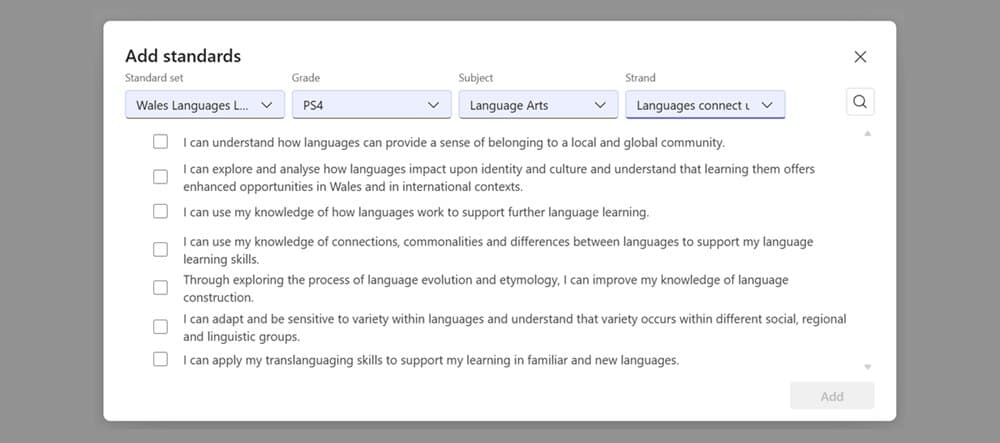
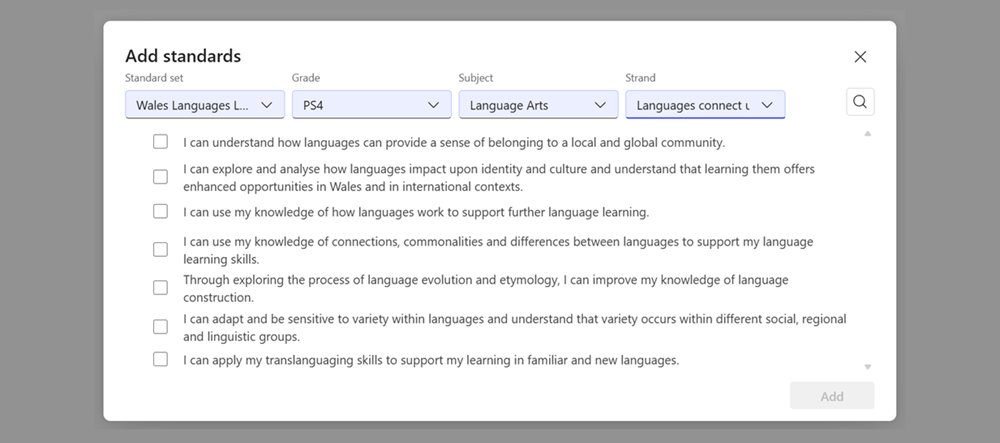
Microsoft Education has partnered with EdGate and 1EdTech to embed a massive, machine‑readable standards catalog into Teams, Teach and other Microsoft 365 tools. The integration uses the open CASE format to let AI‑driven workflows generate lessons, quizzes and rubrics that are directly tied to state, national and international curriculum expectations, cutting manual alignment effort and improving consistency across platforms.
What changed
Microsoft announced a deepening partnership with EdGate and 1EdTech to make curriculum standards a first‑class data object inside its education suite. The collaboration expands the publicly available standards catalog to cover all 50 U.S. states, 70+ countries, and hundreds of supplemental frameworks such as career‑technical education and world‑language standards. More than 5 million standard statements are now exposed through an API that follows the CASE 1.1 (Competencies and Academic Standards Exchange) specification. In practical terms, educators using the Teach module, Assignments in Teams for Education, or any Microsoft 365 LTI integration can now search, tag and align content to standards without leaving the workflow.
Provider comparison
| Feature | Microsoft Education (with EdGate) | Traditional LMS / Content Vendors |
|---|---|---|
| Standards coverage | 5 M+ statements, U.S. + 70+ countries, vocational & arts | Often limited to a single jurisdiction or a paid add‑on |
| Data format | Open CASE 1.1 (machine‑readable, interoperable) | Proprietary XML/CSV, difficult to exchange |
| API access | RESTful endpoint, integrated into Teams, Teach, LTI | Varies; many require custom connectors |
| AI grounding | Prompt engineering uses standards as context for Copilot, Designer, etc. | AI models generate generic content, risk of mis‑alignment |
| Cost for institutions | Select standards free; broader catalog via EdGate partnership | Usually a separate licensing fee for standards modules |
| Governance | 1EdTech member, CASE certified, regular updates | No open‑standard governance, updates ad‑hoc |
Pricing and migration considerations
- Pricing – Microsoft is releasing a core subset of standards at no charge, which already covers the most common U.S. and international frameworks. Institutions that need deeper coverage can subscribe to EdGate’s catalog directly; pricing is tiered by the number of API calls and the breadth of standards required. Because the API is billed per request, schools can start with a low‑volume pilot and scale as usage grows.
- Migration path – Existing LMSs that already store standards in CSV or custom tables can map those files to CASE using EdGate’s authoring tools. The tools export a CASE‑compliant JSON bundle, which can be imported into Microsoft 365 LTI or Teams via the Standards API. For schools that rely on paper‑based curricula, the migration effort is largely a one‑time data import followed by a change‑management program to train teachers on the new “Align to Standards” UI.
- Vendor lock‑in risk – Because CASE is an open specification, the same JSON bundle can be consumed by any CASE‑compatible platform (e.g., Canvas, Moodle, Brightspace). This reduces the risk of being tied exclusively to Microsoft’s ecosystem.
Business impact
- Reduced instructional design overhead – Teachers no longer need to manually copy standard identifiers into quizzes or rubrics. The “Align to Standards” button pulls the exact statement, inserts it into the assignment metadata, and auto‑generates a matching rubric template. Early pilots report a 30 % decrease in time spent on lesson‑plan preparation.
- Higher AI relevance – Copilot‑powered lesson generators now receive the selected standard as a prompt anchor. The resulting content is more likely to meet district assessment criteria, which improves adoption confidence among administrators.
- Cross‑system interoperability – An assignment tagged in Teams can be exported to a reporting dashboard, a state‑wide analytics system, or a credentialing platform without re‑keying data. This unlocks new analytics possibilities, such as longitudinal tracking of standard mastery across schools and even across borders.
- Scalable international rollout – By leveraging EdGate’s global catalog, multinational school networks can deploy a single standards‑aware solution that respects local curricula, simplifying procurement and support contracts.
- Developer ecosystem boost – EdTech startups can now build on a stable, open API to create niche tools—adaptive practice apps, competency‑based grading systems, or micro‑credential issuers—without negotiating separate data‑licensing agreements.
What educators will see tomorrow
- More standards in the UI – When you open the Teach module, the standards picker now lists subjects from Canada, Finland, the UK and many other jurisdictions alongside U.S. frameworks.
- AI‑assisted content that talks the same language as your district – Generated quizzes, lesson outlines and rubrics will reference the exact standard IDs your assessment office uses.
- Less manual data entry – Tagging an assignment automatically populates the corresponding standard field in Teams, OneRoster exports and any downstream analytics.
Next steps for institutions
- Enable the Standards API in the Microsoft 365 admin center and generate an API key.
- Review the free standards list and identify any gaps relevant to your curriculum.
- Submit a request through the Standards Feedback form for additional frameworks.
- Pilot the “Align to Standards” workflow in a single department before scaling school‑wide.
- Monitor usage via the Azure Monitor dashboard to gauge API call volume and adjust subscription tiers accordingly.
Helpful links
- Getting started with Teach – Align to Standards
- Microsoft Teams for Education documentation
- EdGate standards catalog API reference
- 1EdTech CASE specification
- Submit Standards Feedback
By embedding open, machine‑readable standards into everyday teaching tools, Microsoft, EdGate and 1EdTech are turning a long‑standing administrative burden into a source of efficiency and insight. The move not only streamlines lesson planning but also creates a data‑rich foundation for AI, analytics and cross‑platform credentialing—key ingredients for any institution that wants to future‑proof its instructional design.
Comments
Please log in or register to join the discussion