Britain’s Maritime and Coastguard Agency helped shape the IMO’s draft International Code of Safety for Maritime Autonomous Surface Ships, laying the groundwork for mandatory rules that could see 200‑kt container vessels operating without a crew by the early 2030s.
MCA Pushes First Global Safety Code for Crewless Cargo Ships
The United Kingdom’s Maritime and Coastguard Agency (MCA) announced that it played a central role in drafting the International Maritime Organization’s (IMO) first non‑mandatory International Code of Safety for Maritime Autonomous Surface Ships (MASS Code). The draft is slated for publication on 1 July 2026, with a mandatory version expected after a review period, targeted for adoption in 2030 and entry into force on 1 January 2032.
Why the MASS Code matters for the industry
- Regulatory certainty – Shipbuilders, operators and insurers have long complained about a regulatory vacuum surrounding unmanned vessels. A globally recognised code gives them a concrete set of design and operational criteria to meet.
- Scalable autonomy – The IMO’s scoping exercise defined four degrees of autonomy, mirroring the automotive sector:
- Level 1 – Crew on board, limited automation.
- Level 2 – Crew on board, remote control capability.
- Level 3 – Fully remote‑controlled, no crew.
- Level 4 – Fully autonomous, no human intervention.
- Safety‑first language – The draft introduces precise terminology for responsibility, liability and emergency response, which have been vague in earlier discussions.
Current testbeds and performance data
| Vessel | Length | Gross Tonnage | Power source | Autonomy level | Typical route | Reported fuel‑/energy use |
|---|---|---|---|---|---|---|
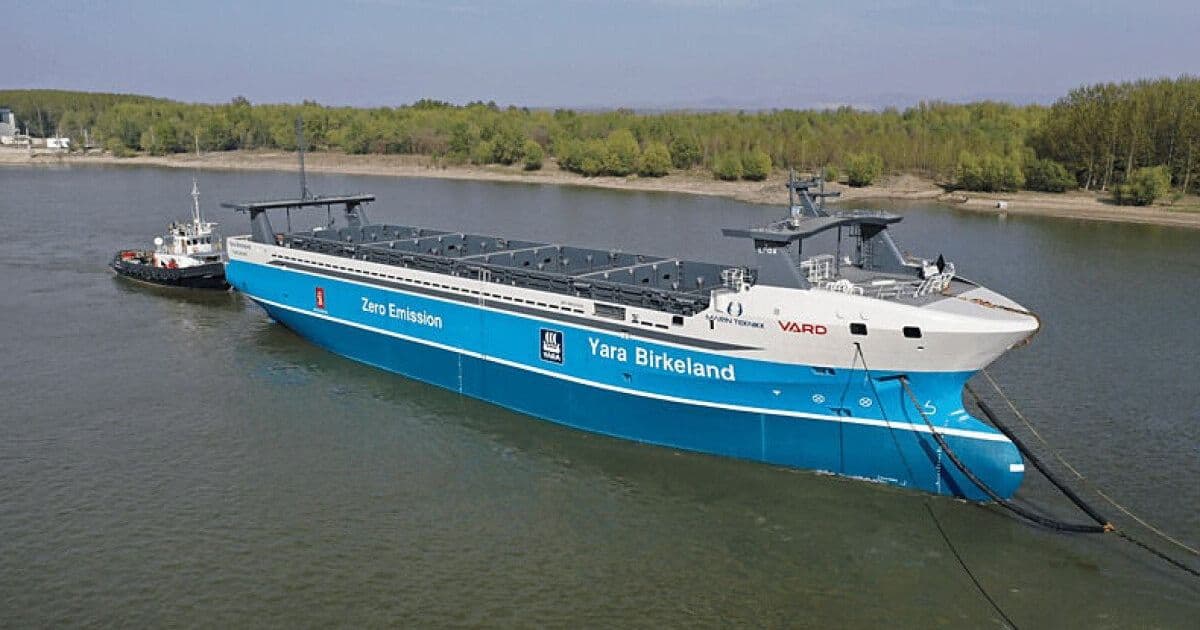
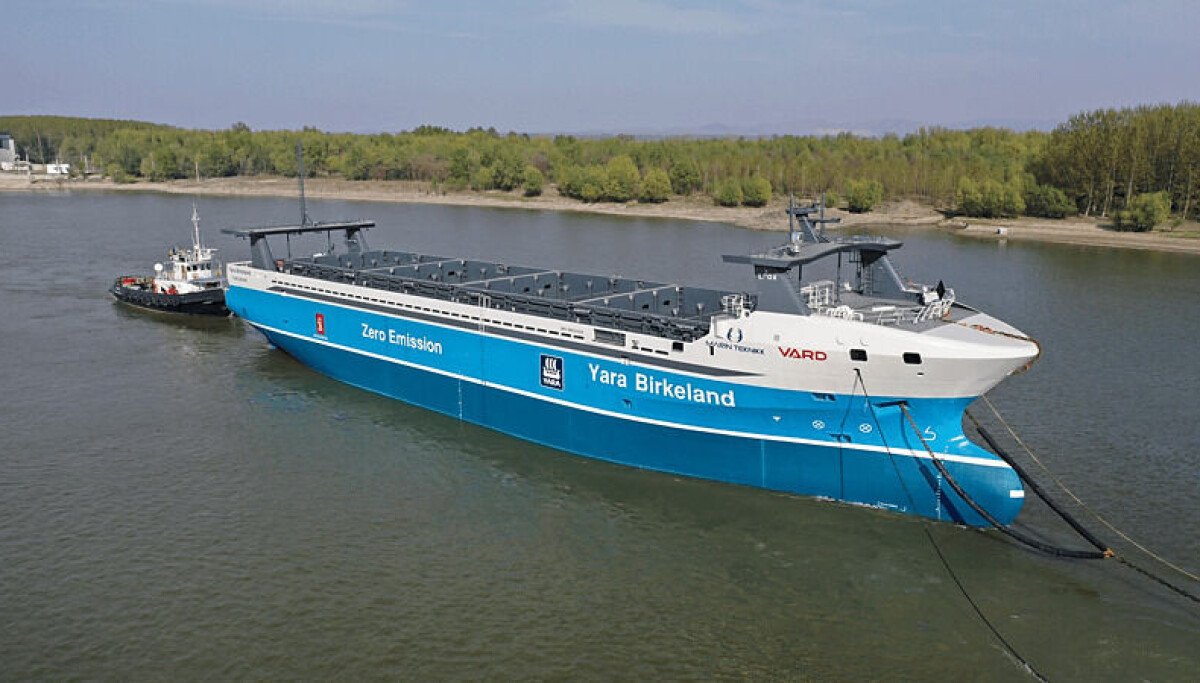
| Yara Birkeland | 80 m | 3 200 t | Battery‑electric (≈ 4 MWh) | Level 4 | Oslo‑Brevik (≈ 70 km) | 0 t CO₂ per voyage (full electric) |
| MV Moby Dolly (Norway) | 120 m | 7 500 t | Dual‑fuel LNG/MEG | Level 3 | Bergen‑Stavanger (≈ 150 km) | 0.35 t CO₂/100 nm |
| Future 200 kt class concept (studied by DNV‑GL) | 400 m | 200 000 t | LNG‑dual fuel + battery hybrid | Level 4 (target) | Asia‑Europe (≈ 12 000 nm) | 10 % lower specific fuel consumption vs conventional ULCS |
The Yara Birkeland data set is the only publicly released performance figure for a fully autonomous cargo ship. Its electric drivetrain consumes roughly 0.02 MWh per nautical mile, a figure that scales favorably when combined with hybrid LNG‑battery packs for larger vessels. DNV‑GL’s simulation of a 200 kt class MASS shows a 10 % reduction in specific fuel consumption compared with a conventional ultra‑large container ship (ULCS) of the same size, largely because the absence of crew accommodations reduces deadweight and because optimized hull forms can be employed without the constraints of crew safety zones.
Power‑consumption and infrastructure implications
- Battery sizing – For a 400‑meter, 200 kt vessel operating at Level 4, a 30 MWh battery pack would provide roughly 150 nm of pure electric range, enough for port‑to‑port manoeuvres and short‑haul legs. The bulk of the voyage would still rely on LNG or methanol generators, but the hybrid approach cuts peak engine load by 15‑20 %.
- Shore‑side charging – Ports that wish to accommodate MASS will need high‑power DC connections (≥ 10 MW) and robust grid interlocks to handle simultaneous charging of multiple vessels. Early pilots in Rotterdam and Singapore are already installing 10‑15 MW fast‑charge stations.
- Remote‑control bandwidth – Level 3 operations require a minimum of 10 Mbps uplink with < 250 ms latency for safe manoeuvre commands. Satellite constellations such as OneWeb and Starlink are positioning themselves as the primary back‑haul for ocean‑wide remote control.
Compliance hurdles highlighted by the draft code
- Responsibility matrix – The code demands a clearly documented chain of command for Levels 3 and 4, including a designated “Remote Master” and a legal entity that holds the vessel’s flag state liability.
- Fire‑fighting and damage control – Without crew, the ship must be equipped with automated fire‑suppression systems capable of detecting, isolating and extinguishing fires without human input. Tests on the Moby Dolly platform showed a 30 % reduction in fire‑related downtime when using AI‑driven suppression compared with manual systems.
- Cargo stowage verification – Sensors must confirm that containers are properly secured before departure. Trials using LiDAR‑based stowage scanners achieved a 99.8 % detection rate for mis‑aligned twist‑locks.
- Search‑and‑Rescue (SAR) obligations – The code reiterates that the flag state retains the legal duty to render SAR assistance, even for unmanned vessels. This forces operators to embed AIS‑based distress beacons that can be activated autonomously.
Build recommendations for a homelab‑style MASS testbed
If you want to experiment with autonomous ship software on a modest budget, consider the following stack:
- Hardware platform – A Raspberry Pi 5 or NVIDIA Jetson Orin for edge AI, paired with a CAN‑bus shield to interface with commercial marine simulators (e.g., Kongsberg Maritime’s K-Sim).
- Simulation environment – Use OpenCPN with the MASS‑Sim plugin to model Level 3 remote‑control scenarios. Add ROS‑2 nodes for sensor fusion (radar, lidar, AIS).
- Communications – A 4G‑LTE‑Advanced modem with fallback to Iridium for low‑bandwidth telemetry. Test latency by pinging a cloud server in the Atlantic region.
- Power monitoring – Install a Victron Energy BMV‑712 battery monitor to log energy draw during autonomous manoeuvres; export CSV logs to a Grafana dashboard for analysis.
Running a small‑scale testbed lets you validate the same safety checks the IMO code mandates—fire detection, cargo verification, and remote‑control latency—without the expense of a full‑scale vessel.
Outlook
The MCA’s involvement in the draft MASS Code signals that the UK intends to be a regulatory leader as autonomous shipping moves from pilot projects to commercial reality. The transition from a non‑mandatory draft to a binding 2030 code will likely be shaped by data collected from the current Norwegian and Dutch test ships, as well as the performance metrics of hybrid powertrains.
For operators, the key takeaway is that design choices made today—battery sizing, remote‑control bandwidth, automated safety systems—will directly affect compliance costs once the mandatory code takes effect. Early adopters who integrate the draft’s requirements into their engineering workflow will benefit from smoother certification pathways and lower retro‑fit expenses.
For further reading, see the IMO’s draft International Code of Safety for MASS and the MCA’s press release on the development process.
Comments
Please log in or register to join the discussion