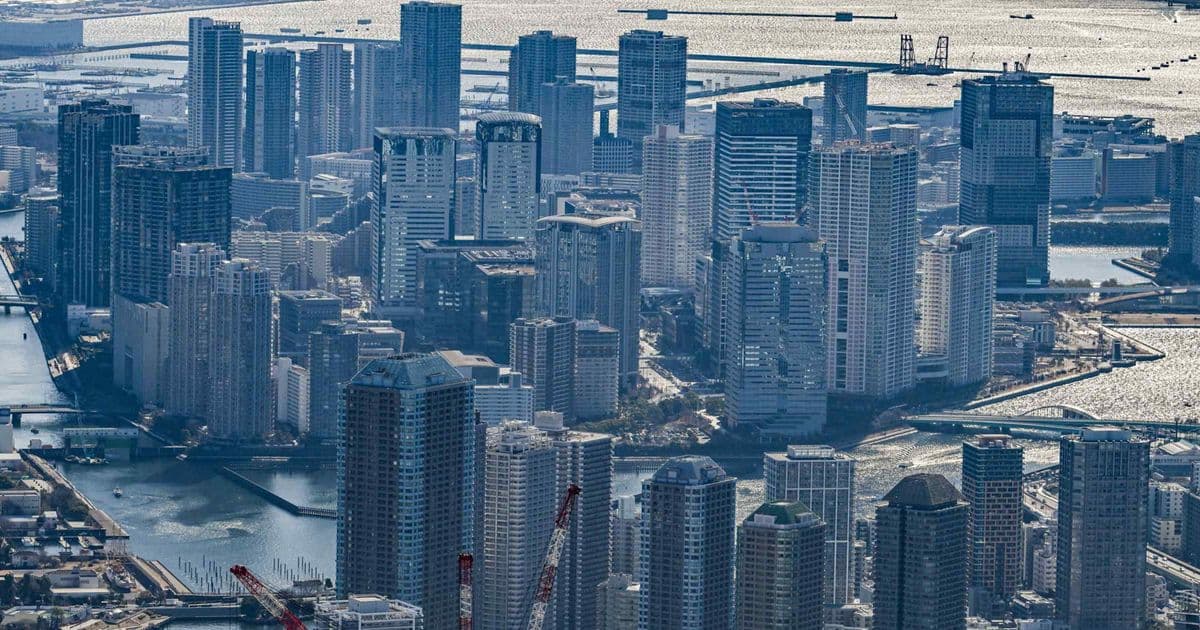
Corporate real estate transactions in Japan have climbed to their strongest level since 2008, driven by listed firms shedding non‑core assets to boost balance‑sheet health. The trend signals a shift toward asset‑light strategies and could reshape the commercial property market.
Japan’s Corporate Real Estate Sales Surge to 18‑Year High as Companies Prioritize Capital Efficiency
Business news
Tokyo – In the fiscal year ending March 2026, Japanese corporations sold ¥9.4 trillion of real‑estate assets, the highest total since the global financial crisis of 2008. The volume represents a 23 % year‑on‑year increase and a 41 % rise compared with the 2018 baseline, according to data compiled by the Real Estate Economic Institute (REEI).
The bulk of the activity came from listed companies, which accounted for ¥6.2 trillion of the sales. Major sellers included electronics giant Panasonic Corp., which disposed of three logistics parks for ¥1.1 trillion, and Mitsubishi UFJ Financial Group, which off‑loaded ¥820 billion of office space in Tokyo’s Marunouchi district.
Market context
A seller’s market emerges
The surge coincides with a tightening of credit conditions in Japan’s banking sector. The Bank of Japan’s shift away from ultra‑low rates in late 2025 raised the cost of borrowing by roughly 150 basis points, prompting firms to improve capital efficiency. At the same time, foreign investors have been net buyers of Japanese commercial property, with the Japan REIT (J‑REIT) sector attracting ¥3.5 trillion of inflows in the past 12 months, according to the Tokyo Stock Exchange.
Demand from logistics and data‑center operators
Demand for warehouse and data‑center space has outpaced traditional office demand. Rental rates for Class‑A warehouses in the Kanto region rose 7.4 % year‑on‑year, while data‑center lease rates climbed 5.2 %. This reflects e‑commerce growth (online sales now represent 23 % of total retail) and the expansion of cloud services by providers such as Amazon Web Services and Microsoft Azure.
Foreign buyer dynamics
Foreign institutional investors, particularly from the United States and Singapore, have increased their exposure to Japanese real estate, drawn by the relatively low yield gap versus U.S. REITs (Japan’s average cap rate of 4.3 % versus 5.5 % in the U.S.). The recent relaxation of restrictions on foreign ownership of condominiums—while still limiting purchases of land—has further opened the market.
What it means
Shift toward asset‑light models
Japanese corporations are re‑evaluating the strategic value of owning property versus leasing. By divesting surplus assets, firms can redeploy capital into higher‑margin activities such as R&D, digital transformation, and overseas expansion. For example, Panasonic’s proceeds are earmarked for a ¥2 trillion investment in battery technology, a sector projected to grow at a compound annual growth rate (CAGR) of 12 % through 2032.
Pressure on office‑space landlords
The wave of sales adds supply to a market already facing softening demand for traditional office space. Vacancy rates in Tokyo’s central business districts have risen to 9.8 %, up from 7.2 % a year earlier. Landlords may need to renegotiate lease terms, offer tenant‑improvement allowances, or convert office floors to mixed‑use formats to maintain occupancy.
Opportunities for REITs and foreign investors
The influx of high‑quality assets at attractive valuations creates a buying opportunity for J‑REITs and overseas funds. With the average price per square meter for prime office space falling 4.5 % year‑on‑year, yield‑seeking investors can acquire properties that were previously out of reach.
Potential policy implications
If the trend continues, regulators may revisit the recent moratorium on foreign condo purchases and consider broader reforms to encourage capital inflows while safeguarding domestic housing affordability. Policymakers will also need to monitor the impact on local government revenues, as property‑tax collections could decline with reduced ownership.
Data sources: Real Estate Economic Institute (REEI), Tokyo Stock Exchange, Bank of Japan monetary policy reports, corporate press releases (Panasonic, Mitsubishi UFJ).
Comments
Please log in or register to join the discussion