While social media influencers declare MCP dead in favor of CLIs, the Model Context Protocol continues to offer significant advantages for enterprise and organizational use cases, particularly when deployed over HTTP rather than stdio.
The tech community's discourse around Model Context Protocol (MCP) has shifted dramatically in just six months. What was once hailed as the future of AI agent integration is now being declared dead by many influencers, with CLI tools positioned as the new hotness. But beneath this hype cycle lies a more nuanced reality that organizations need to understand as they build their agentic engineering strategies.
The Influencer-Driven Hype Cycle
Just six months ago, MCP dominated industry conversations, with vendors rushing to build MCP-based offerings. Motion, where the author works, experienced this firsthand with vendors pitching MCP implementations at premium prices. The author's skepticism was palpable: "It's just an API; why do I need a wrapper around that when I can just call the API directly?"
This rapid shift from hype to dismissal reveals a pattern in the AI landscape where influencers constantly chase the next zeitgeist to maintain relevance. "So much of the AI landscape requires creating a sense of FOMO and hype," the author notes, drawing parallels to influencers promoting questionable health remedies. "These influencers constantly need some content to rant about to stay relevant and push themselves, their products, their companies, or their services."
Understanding the CLI vs. MCP Debate
The current debate centers primarily on token savings and efficiency claims. Proponents of CLI tools argue they offer significant advantages:
Training Dataset Benefits: CLI utilities like jq, curl, git, grep, psql, aws, s3, gcloud already exist in models' training datasets, allowing agents to use them without additional instruction or schemas.
Progressive Context Consumption: CLI tools allow agents to progressively discover usage through --help output, rather than loading entire schemas upfront.
However, the author points out critical limitations:
For bespoke CLI tools not in the training dataset, agents still require detailed instructions in files like AGENTS|CLAUDE.md or README.md. Without these, agents often struggle to use custom tools correctly.
The token savings argument collapses when agents need to understand complex OpenAPI schemas. "Any token savings are lost the moment the agent has to understand a bespoke OpenAPI schema to correctly call the API since the entire OpenAPI schema may need to be loaded into context," the author explains.
The Duality of MCP
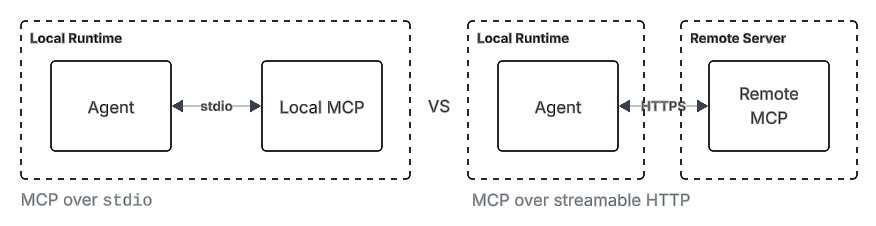
The author makes a crucial distinction that many influencers miss: the difference between MCP over stdio versus MCP over HTTP.
"In stdio mode, the MCP server runs locally with the agent and indeed, why bother with this over writing a simple CLI?" the author acknowledges. "But when accessed over streamable HTTP transport, it is possible to run that same logic in a centralized server and there are several unlocks."
Centralized MCP Benefits for Organizations
For enterprises and organizations, MCP deployed over HTTP offers several compelling advantages:
Richer Underlying Capabilities: Centralized servers can implement more complex capabilities that would be difficult to distribute locally, such as access to Postgres instances with Apache AGE for Cypher graph queries.
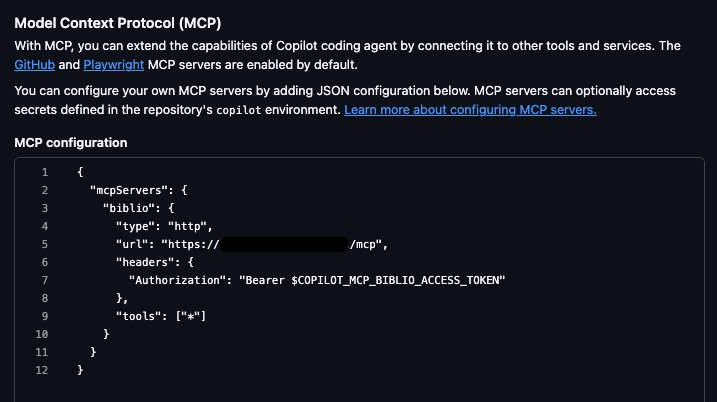
Ephemeral Agent Runtimes: Remote MCP servers enable tools requiring complex backends to be used in ephemeral environments like GitHub Actions without complex installations.
Auth and Security: Centralization improves security by allowing OAuth authentication to the MCP server while keeping sensitive API keys and secrets controlled behind the server. "An engineer leaves your team? Revoke their OAuth token and access to the MCP server; they never had access to other keys and secrets to start with."
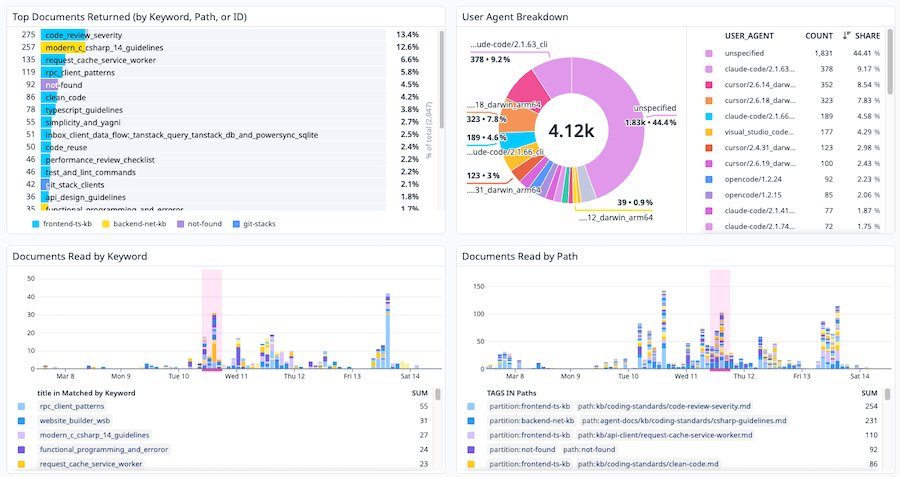
Telemetry and Observability: Centralized MCP servers enable standardized telemetry collection using OpenTelemetry, helping organizations understand which tools are effective and where failures occur.
Standardized, Instant Delivery: MCP's subscription and notification provisions allow servers to notify clients of updates, ensuring everyone has access to the latest capabilities without manual updates.
MCP Prompts and Resources: The Undervalued Components
While many are familiar with MCP tools, the author highlights that MCP prompts and resources are equally important for organizational use.
"MCP Prompts are effectively server-delivered SKILL.md and MCP Resources are effectively server-delivered /docs," the author explains. "The benefits are clear: dynamic content, automatic updates, and org-wide knowledge sharing without manual synchronization."
For organizations managing multiple services and teams, this capability eliminates the need to reproduce documentation in every repository or ensure all teams have the latest information. Instead, content is delivered dynamically and consistently through the MCP server.
Moving Beyond Vibe-Coding
The author argues that organizations need architectures that move beyond "cowboy, vibe-coding culture to organizationally aligned agentic engineering practices."
"We are still relatively in the early days of AI agents taking a leading role in software engineering, and because the field moves quickly, there is an emphasis on speed at all costs," the author observes. "But as we've seen with Amazon's recent challenges in their AWS division, teams eventually have to operationalize and maintain these software systems produced by AI agents."
For this operational reality, MCP's structured approach, telemetry capabilities, and centralized management offer advantages that CLI tools alone cannot match.
Conclusion
While the influencer-driven discourse has moved on from MCP, organizations evaluating agentic engineering approaches should look beyond the hype. For enterprise and organizational use cases, particularly when deployed over HTTP rather than stdio, MCP continues to offer significant advantages in security, observability, content management, and operational consistency.
As the author puts it: "In any scenario beyond a solo vibe-coder, MCP's telemetry, simplified considerations for managing security, automatic content synchronization, schema + standards based approach, and ease of observability mean that teams that buy into the current zeitgeist will make a mistake when selecting an approach for delivering the scaffolding that enables agentic engineering."
Long live MCP—at least for organizations serious about scaling agentic engineering beyond individual experiments.
Comments
Please log in or register to join the discussion