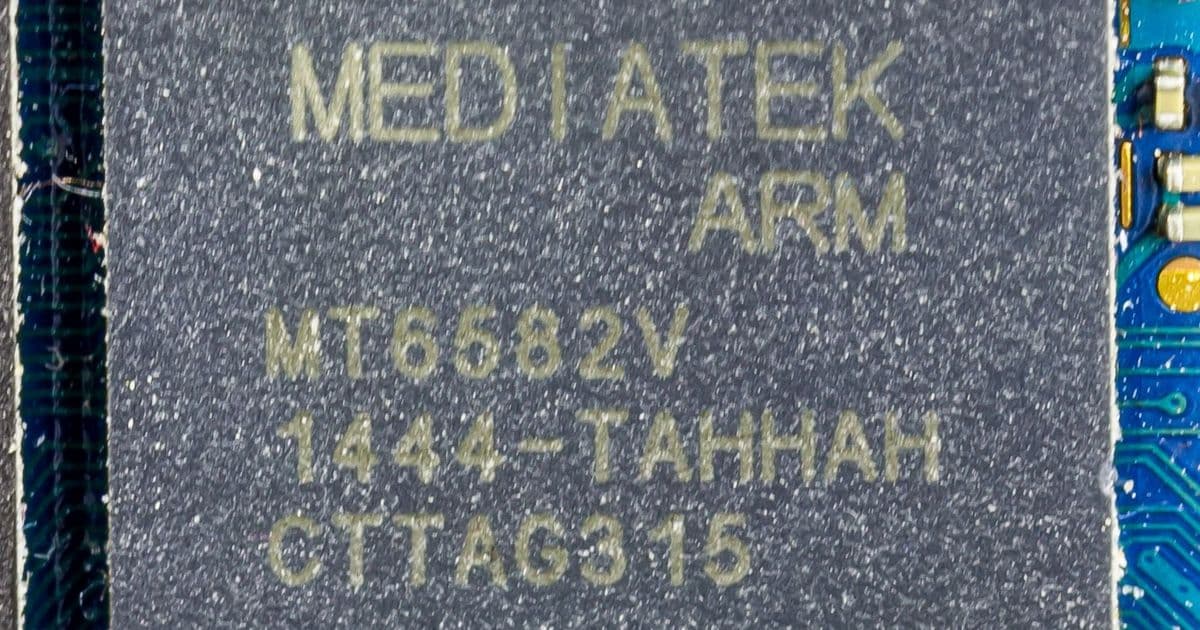
MediaTech positions its Dimensity chip platform as the foundation for smartphone AI agents amid explosive growth in autonomous AI task volume.
MediaTek's recent Dimensity Developer Conference highlights the company's strategic positioning of its chip platform as the backbone for emerging smartphone AI agent experiences. As the smartphone industry pivots toward on-device AI capabilities, MediaTek aims to address the technical challenges that have limited the realization of truly intelligent mobile assistants.
The context for this push is significant data: daily autonomous AI task volume reportedly surged from 120 million in 2025 to 870 million in 2026—a remarkable 7x year-over-year increase. This growth trajectory suggests that AI agents are transitioning from experimental features to mainstream functionality, placing new demands on mobile hardware.
Technical Challenges for On-Device AI Agents
Implementing effective AI agents on smartphones presents three core technical challenges:
Performance-Power Balance: AI inference requires substantial computational resources, but mobile devices operate under strict power constraints. Traditional approaches often compromise either responsiveness or battery life.
Proactive Sensing: Truly anticipatory behavior requires continuous environmental awareness without excessive power drain or privacy concerns.
Ecosystem Fragmentation: Current AI capabilities are scattered across individual applications rather than unified system-wide intelligence.
MediaTek's approach to these challenges involves deep co-optimization across hardware and software layers.
Dimensity Architecture for AI Agents
MediaTek's solution centers on three key technical components:
Dedicated AI Processing Units: Modern Dimensity chips incorporate specialized NPUs (Neural Processing Units) designed for efficient AI inference. These units use mixed-precision computing to balance performance and power efficiency, supporting both low-intensity background tasks and high-intensity active processing.
Advanced Process Nodes: MediaTek leverages cutting-edge semiconductor manufacturing processes to improve performance-per-watt ratios. The latest Dimensity chips are built on 4nm and 3nm processes, enabling higher transistor density without proportional increases in power consumption.
Dimensity AI Engine: This is the core innovation that coordinates AI processing across different compute units. The AI engine dynamically allocates workloads between CPU, GPU, and NPU based on task requirements, optimizing for both performance and power efficiency. It also handles model quantization and precision scaling to match computational resources to specific AI tasks.
Practical Implementation and Developer Support
For AI agents to become practical, MediaTek has developed several developer-facing technologies:
- NeuroPilot SDK: Provides tools for developers to optimize AI models for Dimensity hardware
- AI Model Zoo: Pre-optimized models common to AI agent applications
- Cross-hardware Abstraction Layer: Enables consistent performance across different Dimensity chip generations
These resources address the ecosystem fragmentation challenge by providing standardized interfaces for AI capabilities that can be accessed consistently across applications.
Competitive Landscape
MediaTek faces significant competition in the smartphone AI space:
- Qualcomm Snapdragon: Their Hexagon NPU and AI Engine have established market presence
- Apple Neural Engine: Tight integration with iOS provides advantages in power efficiency
- Samsung Exynos: Similar on-device AI focus with emphasis on image processing
MediaTek's differentiator appears to be their emphasis on system-level coordination of AI resources rather than isolated AI performance, aligning with their vision of anticipatory rather than reactive AI behavior.
Market Implications
The 7x growth in autonomous AI tasks suggests several market shifts:
- Beyond Voice Assistants: AI agents are evolving from command-based interfaces to proactive systems
- On-Device Dominance: Privacy and latency concerns are driving AI processing away from cloud dependency
- Vertical Integration: Hardware-software co-design is becoming essential for competitive AI capabilities
MediaTek's strategy positions them to capture value in this growing segment, though success will depend on actual implementation quality and developer adoption rather than architectural promises.
Limitations and Challenges
Despite the optimistic positioning, significant challenges remain:
- Power Constraints: Even advanced NPUs struggle with sustained high-intensity AI processing
- Memory Limitations: On-device models are constrained by mobile memory capacities
- Privacy Concerns: Continuous sensing raises significant user privacy questions
- Fragmented Ecosystem: Without industry-wide standards, true agent interoperability remains elusive
The Dimensity platform represents MediaTek's response to these challenges, but real-world effectiveness will depend on execution details that remain unspecified in current announcements.
For developers interested in exploring MediaTek's AI agent capabilities, the NeuroPilot SDK and related resources offer entry points into the Dimensity AI ecosystem. The company's success in this emerging market will be measured not by marketing claims but by tangible improvements in mobile AI user experiences and developer productivity.
Comments
Please log in or register to join the discussion