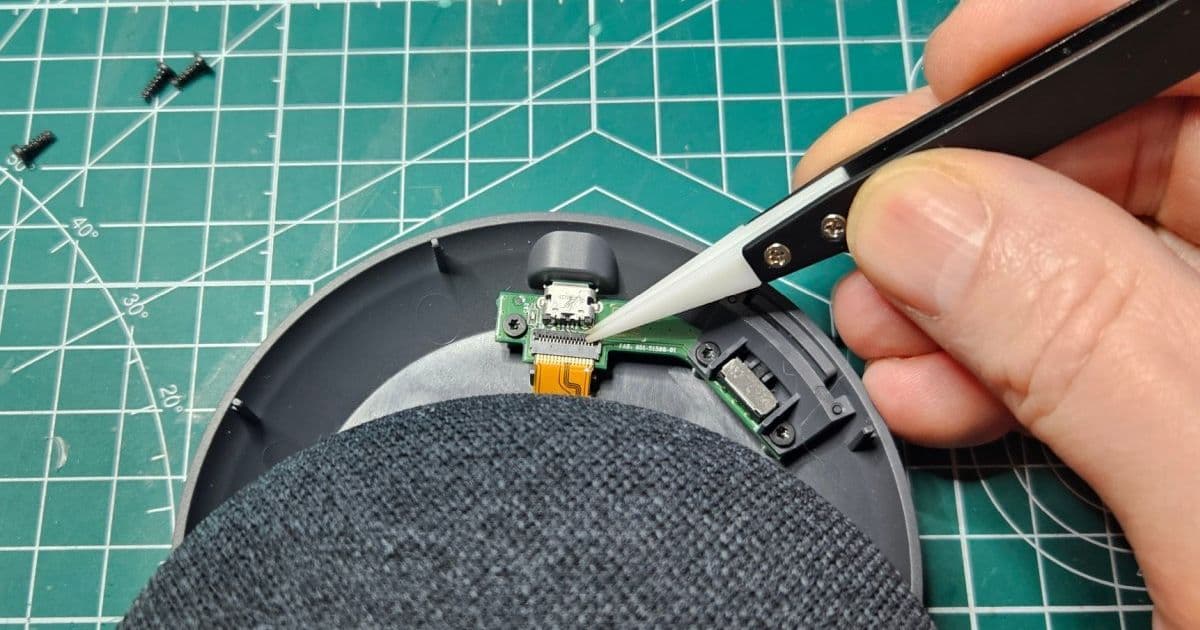
A new open-source hardware board allows developers to replace the Google Home Mini's proprietary PCB with an ESP32-S3-based solution running Home Assistant, offering privacy-focused smart speaker functionality for existing hardware.
The MiciMike Home Mini Drop-in Board represents an interesting development in the home automation space, particularly for developers working with both Android and iOS ecosystems who are increasingly concerned about privacy and data ownership. This open hardware solution allows for the complete replacement of the original Google Home Mini's printed circuit board with a custom design that runs Home Assistant locally rather than sending voice queries to Google's servers.
Platform Update: From Google Assistant to Home Assistant
The MiciMike board transforms existing Google Home Mini hardware into a privacy-focused smart speaker by replacing the original proprietary system with an open-source alternative. At its core, the board utilizes an ESP32-S3 processor with WiFi 4 (802.11n) and Bluetooth 5.0 connectivity, providing sufficient networking capabilities for most home automation scenarios. The inclusion of a XMOS XU316 dedicated audio processor is particularly noteworthy, as it handles audio processing tasks including noise suppression and echo cancellation - critical features for voice interaction.
For developers working with cross-platform home automation solutions, this board represents an interesting alternative to Google's ecosystem. While Google Assistant offers broad platform support and deep integration with Android devices, the MiciMike solution provides greater control over data processing and avoids potential privacy concerns associated with cloud-based voice assistants.
Developer Impact: Customization and Control
From a development perspective, the MiciMike board offers several advantages over the original Google Home Mini. The open-source nature of both the hardware design and the software stack (Home Assistant) allows developers to inspect, modify, and extend functionality in ways that would be impossible with Google's closed ecosystem.
The board comes with Home Assistant pre-installed, which is a significant advantage for developers familiar with this popular home automation platform. Home Assistant provides a comprehensive framework for integrating various smart home devices and services, with support for thousands of integrations through its official integration system. This makes it relatively straightforward for developers to extend the functionality of their modified Google Home Mini beyond basic voice commands.
For iOS and Android developers specifically, the MiciMike solution offers an interesting alternative to platform-specific voice assistant integrations. Rather than developing separate implementations for Siri (iOS) and Google Assistant (Android), developers can create a unified experience through Home Assistant's mobile apps, which provide consistent interfaces across both platforms.
Migration Considerations: Practical Implementation
Installing the MiciMike board is not a trivial process - it requires completely removing the original Google Home Mini PCB and replacing it with the new board. This means that developers considering this solution should weigh the costs and benefits carefully.
For those who already have a first-generation Google Home Mini gathering dust, the $85 price tag for the MiciMike board represents a cost-effective way to repurpose existing hardware. However, for developers starting from scratch, there are more economical alternatives. As noted in the original article, options like the HA Voice PE ($59) and Sattlite1 ($70) offer all-in-one solutions that might be more practical for new deployments.
The MiciMike board does support several key features that make it attractive for development purposes:
- On-device wake word detection
- Music Assistant for local music playback
- Snapcast and Sendspin integration for multi-room audio synchronization
These features make it suitable for developing custom multi-room audio systems or voice-controlled home automation projects that require local processing capabilities.
For developers working with both iOS and Android platforms, the MiciMike solution offers an interesting middle ground between platform-specific voice assistants and more complex home automation setups. By leveraging Home Assistant's cross-platform capabilities, developers can create consistent experiences across mobile devices while maintaining control over the underlying hardware and software stack.
The open-source nature of the MiciMike board also means that developers can contribute to its development, potentially adding new features or improving existing ones. This collaborative approach aligns well with the open-source ethos of many mobile developers who value transparency and community-driven development.
In conclusion, the MiciMike Home Mini Drop-in Board represents an innovative solution for developers looking to repurpose existing Google Home Mini hardware with greater privacy and control. While it may not be the optimal choice for all development scenarios, it offers a compelling alternative for those working with Home Assistant or seeking to create custom voice-controlled applications without relying on cloud-based voice assistants.
Comments
Please log in or register to join the discussion