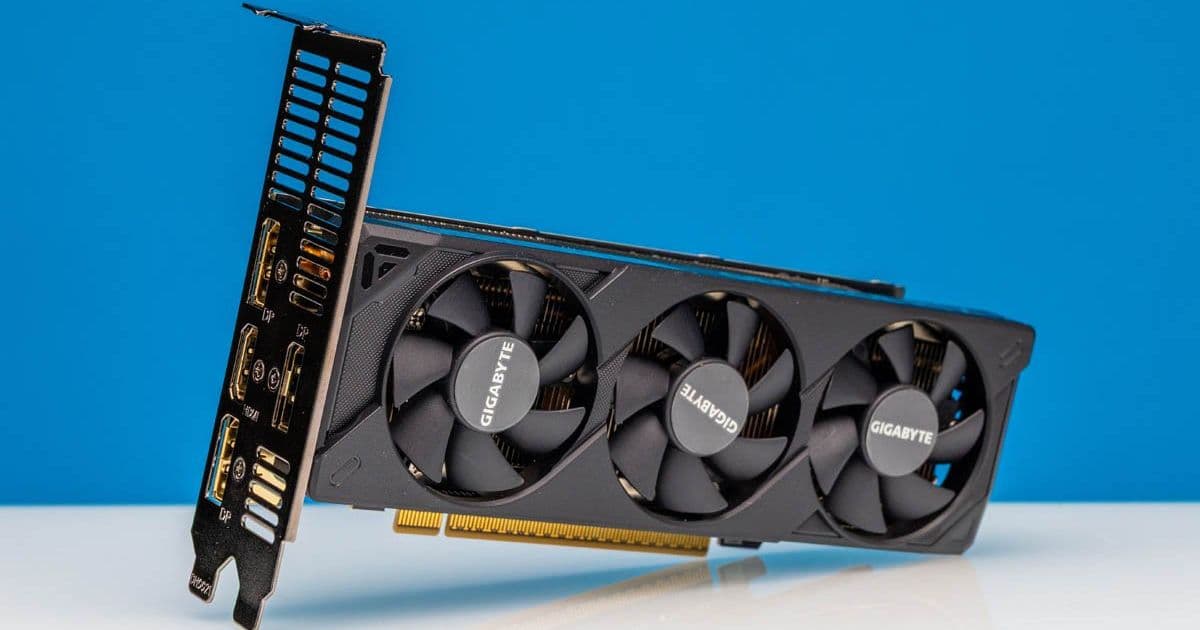
This article provides a technical review of Gigabyte's GeForce RTX 5060 OC Low Profile 8G, a compact graphics card designed for small form factor PCs. Despite the declining availability of low-profile cards in the market, Gigabyte has created a solution that maintains full performance while fitting into space-constrained systems. The review examines the card's specifications, cooling design, power requirements, and performance characteristics, highlighting its unique position in the SFF market.
Gigabyte GeForce RTX 5060 OC Low Profile 8G: Technical Analysis for Small Form Factor Systems
Introduction
The small form factor (SFF) PC market has experienced significant growth in recent years, yet an interesting paradox has emerged: despite increasing demand for compact systems, the availability of low-profile graphics cards has declined dramatically. This trend can be attributed to several factors, most notably the increasing thermal design power (TDP) requirements of modern graphics cards. NVIDIA's GeForce RTX 50 series, for example, starts at 130W TDP, making thermal management in compact form factors particularly challenging.
While dedicated professional visualization solutions like NVIDIA's RTX PRO 2000 Blackwell and RTX PRO 4000 Blackwell SFF Edition exist, they come with premium pricing (approximately $800 for the entry-level RTX PRO 2000 Blackwell), placing them out of reach for many enthusiasts and budget-conscious users. This market gap has created an opportunity for consumer-grade low-profile cards, and Gigabyte has responded with the GeForce RTX 5060 OC Low Profile 8G (RTX 5060 LP).
Key Specifications
The RTX 5060 LP is built around NVIDIA's GB206 Blackwell GPU, featuring:
- GPU Architecture: NVIDIA GB206 (Blackwell)
- CUDA Cores: 3840
- Tensor Cores: 120
- Boost Clock: 2512MHz (slightly overclocked compared to reference)
- Memory: 8GB GDDR7
- Memory Bandwidth: 448GB/sec (28Gbps x 128-bit interface)
- Tensor Throughput (FP8): 77.2 TFLOPS
- TDP: 145W (requiring 1x8-pin PCIe power connector)
- Dimensions: 182mm x 69mm x 36mm (7.2" x 2.7" x 1.4")
- Cooling Solution: Triple fan design with aluminum heatsink, copper base plates, and heat pipes
- Display Outputs: 3x DisplayPort 2.1, 1x HDMI 2.1
Hardware Design Analysis
Physical Dimensions and Compatibility
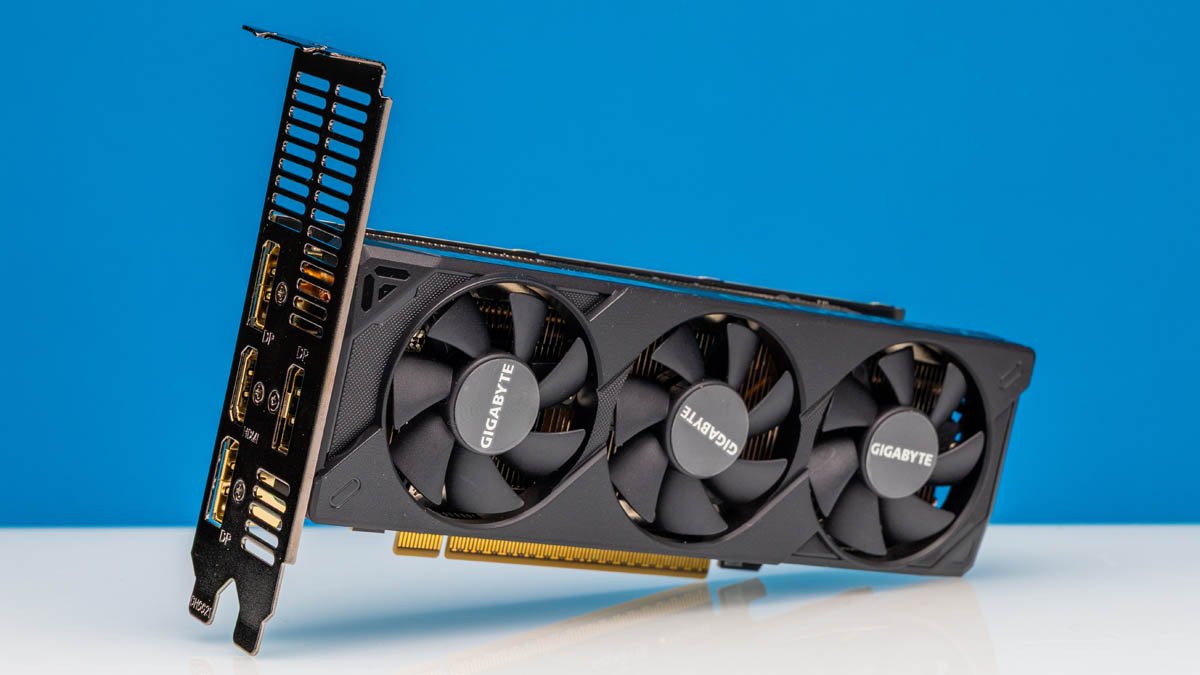
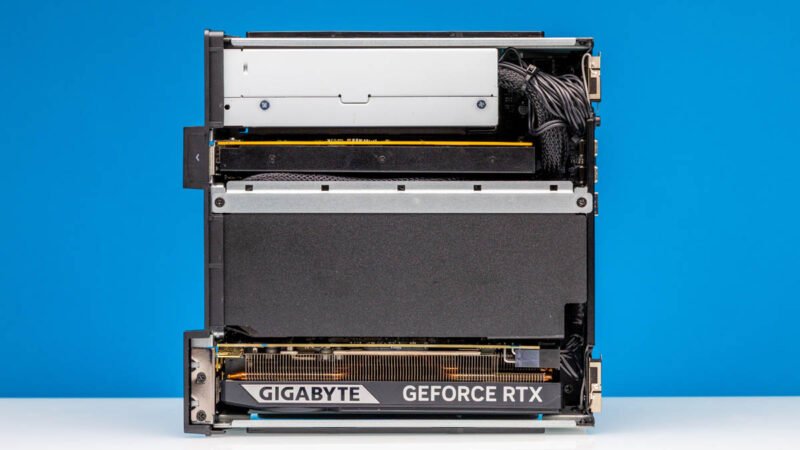
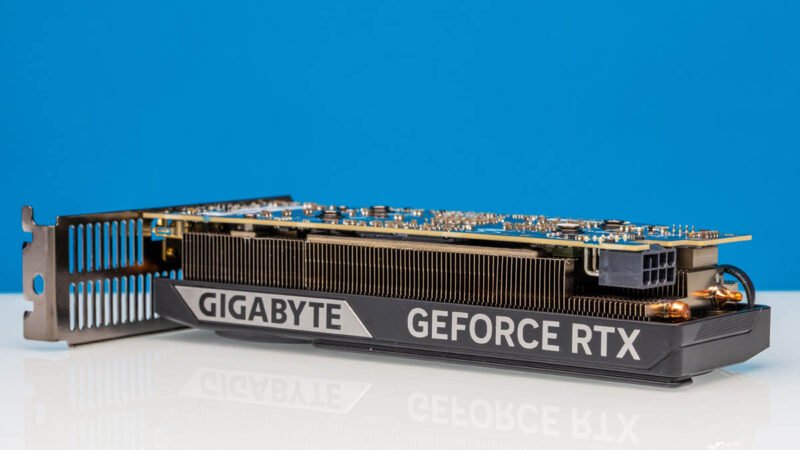
The most notable characteristic of the RTX 5060 LP is its compact form factor. While the GB206 GPU itself has a die size of just 181mm², accommodating it within a low-profile chassis while also housing GDDR7 memory presents significant engineering challenges. Gigabyte's solution measures a mere 182mm in length, making it one of the shortest RTX 5060 cards available.
This compact form factor enables compatibility with SFF systems that cannot accommodate full-size graphics cards, such as the Minisforum MS-02 Ultra. The card's height and width are standard for low-profile designs, ensuring broad compatibility across various SFF cases and motherboards.
Thermal Design and Cooling Solution
Despite its small size, the RTX 5060 LP does not compromise on performance specifications. It maintains the same 145W TDP as a standard RTX 5060 and even features a slight factory overclock with a boost clock of 2512MHz. This thermal output presents a significant challenge for a low-profile, dual-slot card.
Gigabyte addresses this challenge with a triple-fan cooling solution featuring:
- Heatsink Design: A full-length aluminum heatsink that maximizes surface area within the card's footprint
- Heat Transfer: Copper base plates covering both the GPU and memory modules, with two copper heat pipes distributing heat throughout the heatsink
- Fan Configuration: Three fans that Gigabyte claims provide adequate airflow despite the compact design
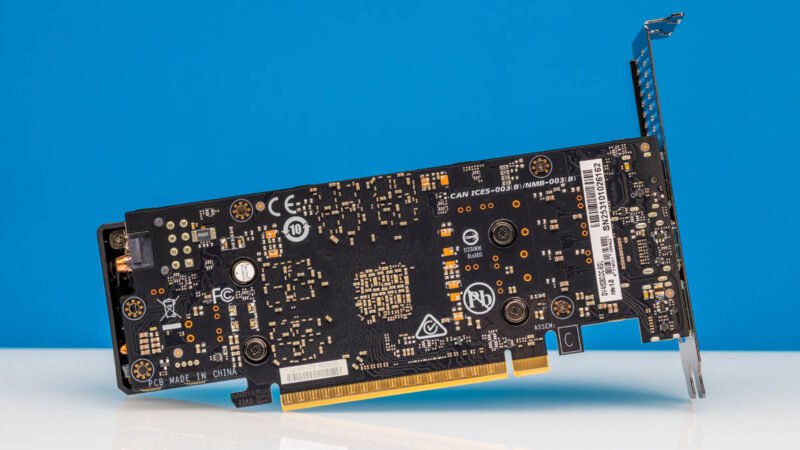
The thermal design is a traditional approach, relying on heat pipes to compensate for the smaller heatsink size. This proven method has been refined over many generations of graphics cards and represents a practical solution for the thermal constraints of a low-profile design.
Power Delivery and Connector Design
The RTX 5060 LP utilizes a single 8-pin PCIe power connector rather than the newer 12VHPWR (12V-2×6) connector found on many RTX 50 series cards. This decision offers several advantages:
- Compatibility: The 8-pin connector is universally supported across power supplies, including many older units
- Sufficiency: An 8-pin connection provides more than adequate power for an RTX 5060's 145W TDP
- SFF Considerations: The connector is positioned at the rear of the card, minimizing obstruction in tight SFF builds
Display Connectivity
The card maintains the standard RTX 5060 configuration of three DisplayPort 2.1 and one HDMI 2.1 port. To accommodate these outputs within the low-profile bracket, Gigabyte has arranged one DisplayPort on the second row, ensuring all connections remain accessible.
Interestingly, the card's cooler design minimizes hot air exhaust through the I/O bracket, allowing more space for display connections. This design choice reflects the understanding that SFF systems often have limited space for cables and connections.
Fan Behavior and Acoustics
One notable characteristic of the RTX 5060 LP is the absence of a zero-fan-speed idle mode. Unlike many modern graphics cards that can completely stop their fans during light workloads, this card maintains fan operation even at idle. While the card remains relatively quiet during idle operation, it does not achieve true silence, which may be a consideration for noise-sensitive users.
Performance Considerations
Performance Characteristics
The RTX 5060 LP maintains the same performance as a standard RTX 5060 despite its compact form factor. This is significant because many low-profile cards in the market have historically featured reduced clock speeds or memory bandwidth to accommodate thermal constraints. Gigabyte has avoided these compromises, ensuring users get the full RTX 5060 experience in a small package.
The card's 3840 CUDA cores and 8GB of GDDR7 memory provide adequate performance for 1080p gaming and light content creation tasks. The FP8 tensor throughput of 77.2 TFLOPS also ensures decent performance for AI acceleration tasks, though this will be limited by the card's smaller memory capacity compared to higher-end models.
Thermal Performance in SFF Systems
While the card's cooling solution is adequate for its thermal output, performance in SFF systems will be heavily influenced by the case's overall thermal characteristics. Compact systems often have reduced airflow and higher ambient temperatures, which can impact graphics card thermals.
Users should consider:
- Case airflow design and the placement of intake/exhaust fans
- The proximity of other heat-generating components
- Ambient operating temperatures
- Potential thermal throttling during extended gaming sessions
Power Efficiency
Despite its 145W TDP, the RTX 5060 LP is relatively power-efficient compared to previous generations. The GB206 architecture delivers good performance per watt, which is particularly important in SFF systems where power supply capacity may be limited.
Market Position and Target Audience
The RTX 5060 LP occupies a unique position in the graphics card market:
- SFF Enthusiasts: Users building compact systems who require discrete graphics acceleration
- Office Workstations: Professionals needing GPU acceleration for visualization or AI tasks in space-constrained environments
- Home Theater PCs: Users wanting gaming or media capabilities in living room entertainment systems
- Upgrade Seekers: Owners of older SFF systems looking to add modern GPU capabilities
The card's main competitors are:
- NVIDIA's RTX PRO SFF cards (significantly more expensive)
- AMD's Radeon RX 6600 Low Profile (older architecture, lower performance)
- Used or older generation low-profile cards
Installation and Configuration Considerations
Physical Installation
Installing the RTX 5060 LP follows standard procedures but with several SFF-specific considerations:
- Case Compatibility: Ensure the case has adequate clearance for the card's length and height
- Power Supply: Verify the PSU has both a PCIe slot connection and an available 8-pin PCIe power connector
- Bracket Selection: The card includes both full-height and low-profile brackets; install the appropriate one for your case
Driver Configuration
NVIDIA's standard drivers support the RTX 5060 LP without any special considerations. Users should:
- Download the latest drivers from NVIDIA's website
- Perform a clean installation if replacing an older graphics card
- Configure NVIDIA Control Panel settings for optimal performance and power management
Thermal Monitoring
Due to the challenges of SFF cooling, users should monitor card temperatures using tools like:
- NVIDIA GPU (Nvml)
- MSI Afterburner
- HWiNFO
This will help identify any thermal throttling or inadequate cooling conditions.
Conclusion
The Gigabyte GeForce RTX 5060 OC Low Profile 8G represents a significant achievement in compact graphics card design. By maintaining full RTX 5060 performance while fitting into a low-profile form factor, Gigabyte has addressed a growing need in the SFF market. The card's triple-fan cooling solution, while not revolutionary, provides adequate thermal management for its 145W TDP, and the inclusion of modern features like GDDR7 memory and DisplayPort 2.1 ensures compatibility with current display technologies.
While the card's lack of a zero-fan idle mode may be a drawback for noise-sensitive users, its overall performance and compatibility make it an excellent choice for SFF enthusiasts and professionals who need discrete graphics acceleration in space-constrained systems. As low-profile cards become increasingly rare, the RTX 5060 LP stands out as a well-executed solution that fills an important gap in the market.
For users building or upgrading SFF systems, the Gigabyte RTX 5060 LP offers a compelling balance of performance, size, and price that few alternatives can match.
Comments
Please log in or register to join the discussion