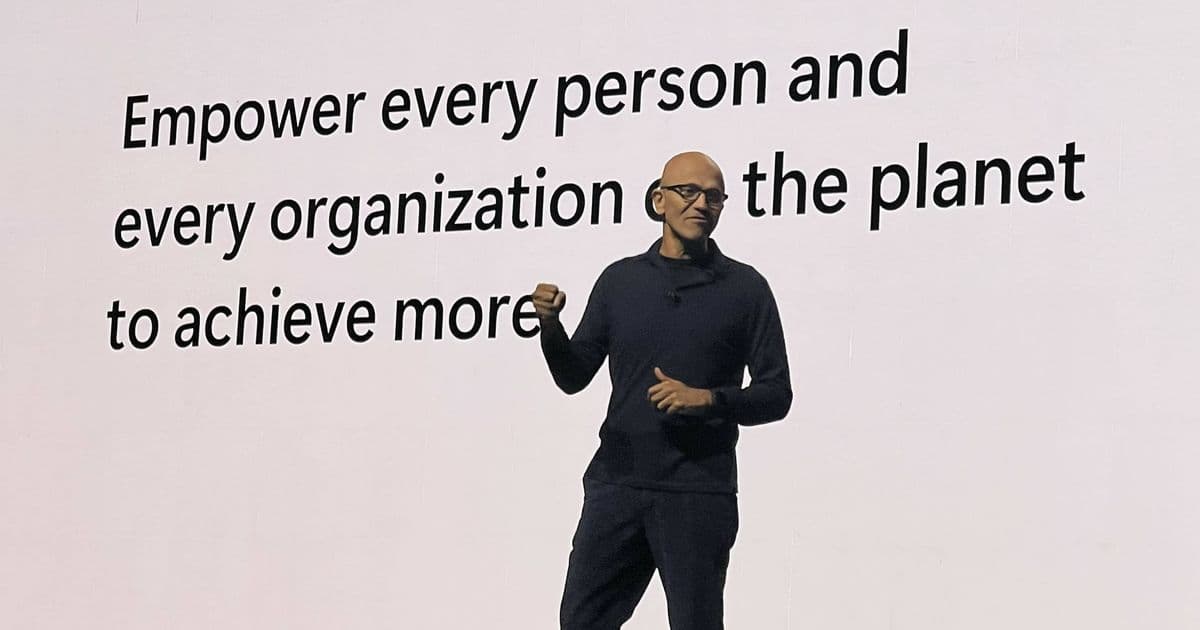
Microsoft CEO Satya Nadella criticized low-quality AI-generated content as 'sloppy' during the company's London AI tour, despite previously asking people to move beyond the term 'slop.' His comments highlight the ongoing tension between Microsoft's aggressive AI promotion and the reality that AI outputs cannot be fully trusted without human verification.
Microsoft CEO Satya Nadella delivered a somewhat contradictory message during the London leg of the company's AI tour, criticizing low-quality AI-generated content as "sloppy" while simultaneously promoting Microsoft's AI tools and agents.
Speaking on stage, Nadella emphasized that "nobody wants anything that is sloppy in terms of AI creation," addressing concerns about the reliability and quality of AI-generated outputs. His comments came as something of a surprise given his previous public statements asking people to move beyond using the term "slop" to describe AI-generated content.
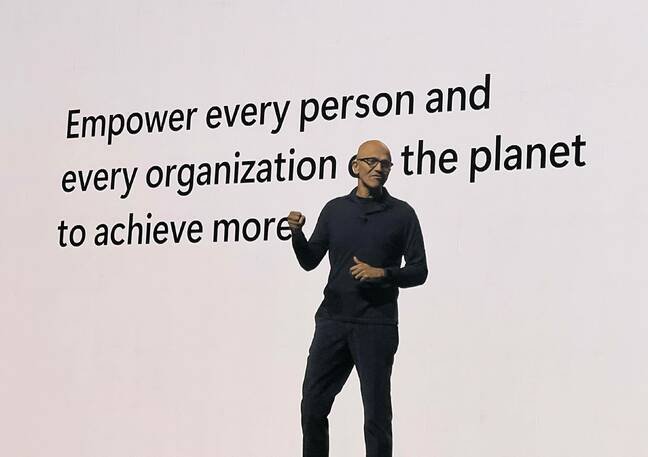
The AI tour, held at London's Excel center, showcased Microsoft's ambitions for AI integration across its product ecosystem. Copilot, Microsoft's AI assistant, featured prominently alongside discussions of "agentic AI" and the concept of an "infinite set of minds" provided by AI-powered agents. However, the demonstrations were consistently accompanied by warnings about AI's limitations.
Throughout the presentations, on-screen messages repeatedly cautioned attendees that AI outputs require human verification. Even during a command-line demonstration, the warning "Copilot uses AI. Check for mistakes" appeared prominently. This juxtaposition of enthusiastic AI promotion with constant reminders about its fallibility highlighted the current state of AI technology.
The conference leaned heavily into UK-specific AI use cases, including testimonials from a doctor describing time savings in patient interactions and references to civil servants saving an average of 26 minutes per day through AI tools. However, Microsoft notably avoided mentioning recent high-profile incidents involving its AI tools.
One such incident involved West Midlands Police, which experienced a Copilot hallucination that fabricated details about a football match. The force's Chief Constable, Craig Guildford, subsequently took early retirement following the mishap. This case exemplifies the very real consequences of AI "slop" in critical applications like law enforcement.
The tension between Microsoft's AI evangelism and the practical limitations of the technology reflects a broader industry challenge. While companies race to integrate AI capabilities into their products and services, the technology's tendency to produce inaccurate or fabricated information remains a significant hurdle.
Nadella's comments about avoiding "sloppy" AI output underscore the importance of quality control and human oversight in AI deployment. As organizations increasingly rely on AI tools for decision-making and content creation, ensuring the reliability and accuracy of AI-generated outputs becomes paramount.
The Microsoft AI tour's scalability issues at the Excel center served as an ironic parallel to the AI reliability concerns. Just as the company struggled to accurately calculate conference capacity, AI tools can similarly fail when tasked with critical calculations or decision-making processes.
As AI continues to evolve and integrate into various sectors, the industry faces a critical challenge: balancing the enthusiasm for AI's potential with the practical realities of its current limitations. Nadella's acknowledgment of the problem, even while promoting AI solutions, suggests that Microsoft recognizes this challenge and the need for continued improvement in AI reliability and quality control.
The incident also highlights the delicate balance that tech leaders must strike when discussing AI. On one hand, they need to promote their AI products and vision to maintain market position and investor confidence. On the other hand, they must acknowledge the technology's limitations to maintain credibility and manage user expectations.
As AI tools become increasingly prevalent in professional and personal contexts, the quality of their outputs will likely become an even more significant differentiator. Companies that can deliver reliable, accurate AI assistance while minimizing "sloppy" outputs will have a competitive advantage in the rapidly evolving AI landscape.
For now, Nadella's comments serve as a reminder that despite the hype surrounding AI, human oversight and verification remain essential components of responsible AI deployment. The path forward likely involves not just technological advancement, but also the development of robust quality control mechanisms and user education about AI's capabilities and limitations.
Comments
Please log in or register to join the discussion