
Microsoft Entra Internet Access and Private Access gain general availability for AI-specific protections like prompt injection blocking and shadow AI discovery, while new public preview features extend Zero Trust to BYOD devices and legacy systems, addressing the core challenge of securing generative AI use without hindering productivity.
The rapid adoption of generative AI has created a dual challenge for security teams: enabling productivity-boosting tools while preventing data leaks, unauthorized usage, and AI-specific attacks like prompt injection. Traditional network security models, built for on-premises environments, struggle to keep pace with today’s distributed work patterns and SaaS/AI applications operating outside the corporate perimeter. Microsoft’s latest updates to its Entra Internet Access and Private Access solutions—part of the Global Secure Access platform—aim to close these gaps by shifting security controls from network location to identity context.

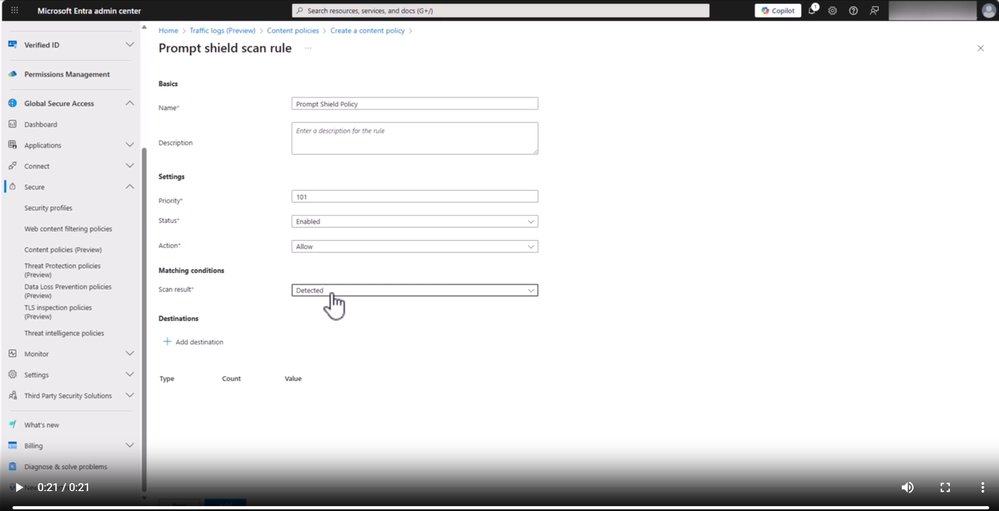
The most significant general availability additions focus squarely on AI risk mitigation. Shadow AI discovery now provides visibility into unsanctioned AI tools and SaaS applications employees might be using, turning hidden risks into actionable intelligence before policy enforcement. Complementing this, Prompt Injection Protection actively blocks malicious inputs designed to manipulate AI models into revealing sensitive data—a critical defense as organizations experiment with custom GPTs and third-party AI services. These capabilities work alongside network content filtering, which prevents sensitive file uploads to unsanctioned AI services, and URL filtering with threat intelligence to enforce acceptable use policies. Notably, Microsoft has extended iOS support and remote network connectivity to ensure these protections follow users wherever they work, addressing a common blind spot in mobile-first environments.
For organizations still reliant on legacy VPNs for private app access, the public preview features offer pragmatic paths to modernization. BYOD support in Entra Private Access allows Zero Trust enforcement on unmanaged devices—critical for contractor and partner scenarios—without requiring full device management. Meanwhile, Explicit Forward Proxy for Entra Internet Access extends secure web access to agentless or legacy devices via PAC file configuration, a necessary bridge for environments not yet ready for full client deployment. The Secure Browser Integration takes this further by routing Intune-managed Microsoft Edge traffic through the Entra Internet Access gateway with TLS termination, enabling deep inspection and policy enforcement for web traffic that would otherwise bypass traditional proxies.
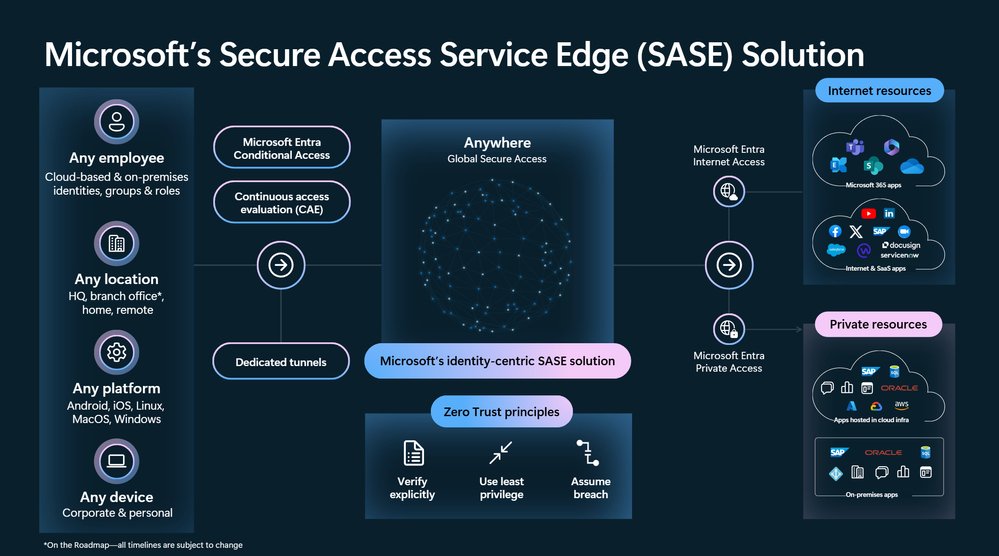
A particularly forward-looking addition is Shadow MCP visibility in public preview. As the Model Context Protocol (MCP) gains traction as a standard for connecting AI models to data sources and tools, unauthorized or misconfigured MCP servers represent an emerging risk vector. This feature surfaces MCP data paths, logs, and observability details, giving security teams the ability to monitor and manage AI-related infrastructure risks before they escalate—a proactive stance aligned with the identity-centric Zero Trust philosophy underpinning the entire Global Secure Access platform.
On the private app access side, general availability enhancements focus on user experience and operational efficiency. External User Access applies Zero Trust principles to partners and contractors, simplifying secure onboarding while maintaining strict access controls. Intelligent Local Access optimizes traffic routing to reduce latency by avoiding unnecessary backhauling to corporate data centers—a meaningful improvement for users accessing geographically distributed private applications. Together, these capabilities position Entra Private Access as a viable replacement for legacy VPNs, eliminating the performance and management friction that often drives users to bypass security controls.
The strategic shift here is clear: security must move beyond static network perimeters to dynamic, identity-driven controls that adapt to user context, device posture, and data sensitivity. For security leaders, this means gaining the visibility needed to sanction beneficial AI use while blocking genuine threats—without creating usability workarounds that undermine protection. The general availability of these AI-specific controls, combined with preview features targeting real-world deployment complexities (BYOD, legacy devices, mobile), provides a tangible path toward securing the AI era. Organizations can evaluate these capabilities through the Entra Suite trial or explore detailed mechanics in the Microsoft Entra Mechanics video.
Comments
Please log in or register to join the discussion