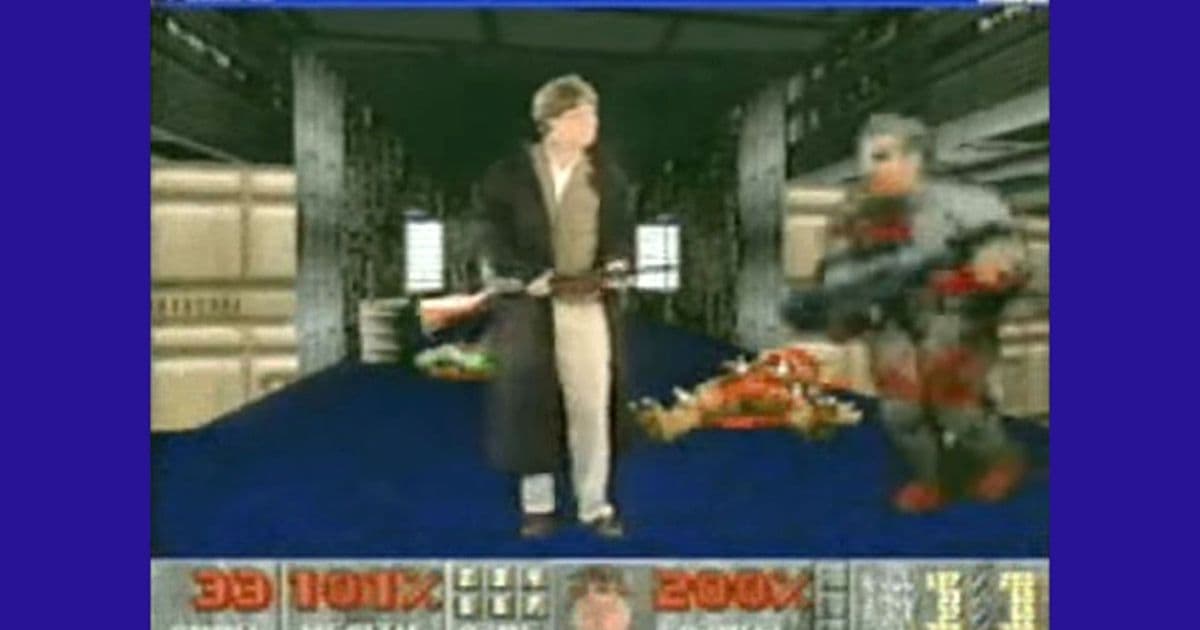
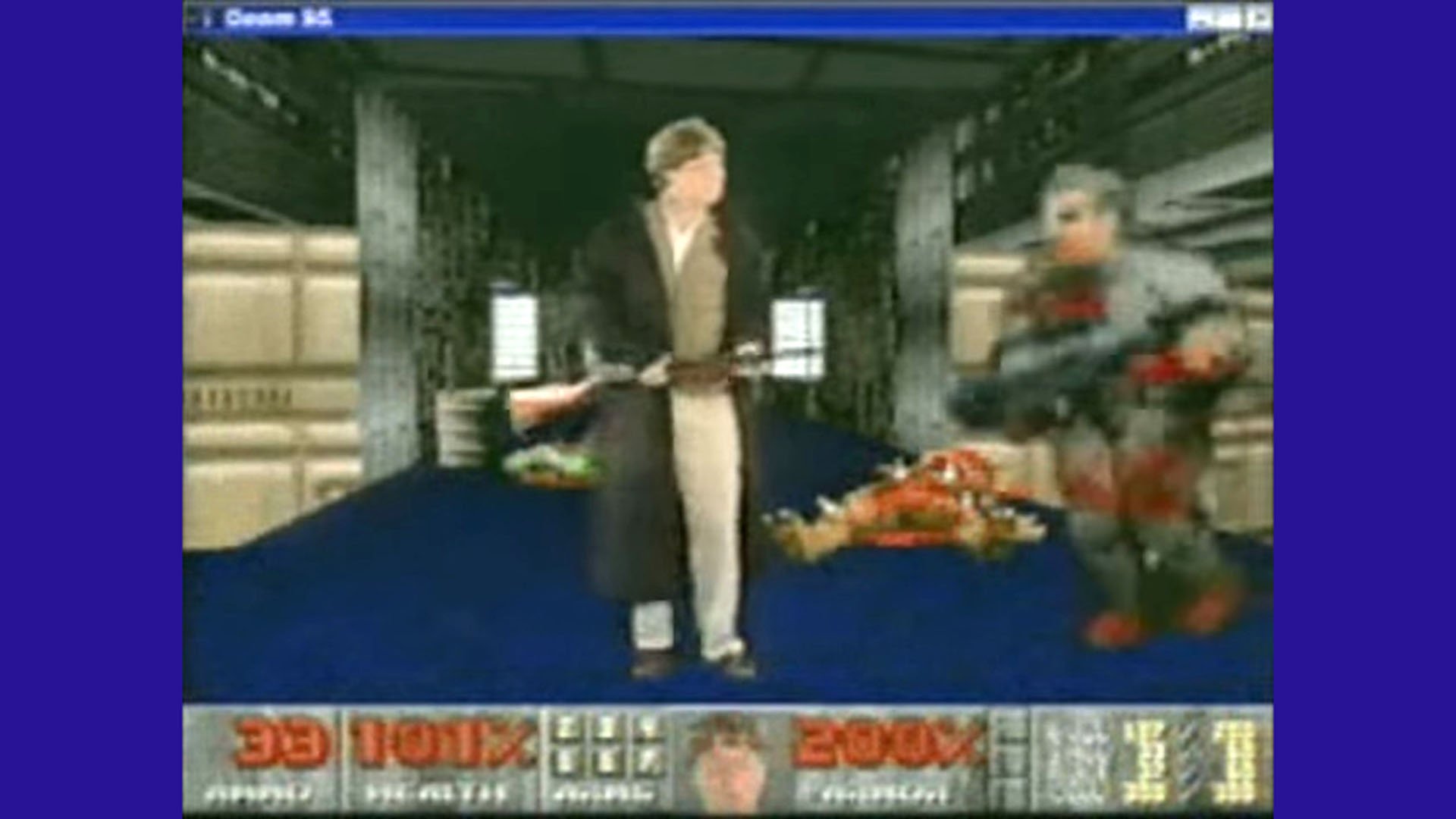
A long‑forgotten internal video from Microsoft’s 1993 “Judgment Day” event places Bill Gates in a Doom‑inspired arena, using a shotgun to blast demons while championing DirectX and Windows 95. The clip illustrates how Microsoft tried to reframe Windows from a productivity OS into a viable gaming platform, foreshadowing the API strategy that would later dominate PC graphics and influence supply‑chain decisions for GPU manufacturers.
Announcement
In May 2026 a short clip resurfaced on social media that shows a trench‑coated Bill Gates wielding a shotgun inside a Doom‑style level, shouting “Who do you want to execute today?” The video was recorded at Microsoft’s internal “Judgment Day” developer event in late 1993, months before Windows 95 shipped. Its purpose was simple: convince game developers that the upcoming OS, paired with the newly‑named DirectX API, would finally give Windows the performance and reliability needed to dethrone DOS.
Technical specs and context
DirectX as a hardware‑level abstraction
When Windows 95 was announced, the PC graphics market was fragmented. Graphics adapters communicated through a mix of proprietary registers, while sound cards required separate drivers. DirectX (initially DirectDraw, DirectSound, and DirectPlay) introduced a unified, low‑level programming model that mapped directly onto the graphics pipeline of the era’s GPUs – the 3dfx Voodoo 1, ATI Rage, and NVIDIA RIVA 128 series. By exposing a standard set of registers and command buffers, DirectX reduced the need for per‑card driver rewrites, cutting development time by an estimated 30‑40 % for multi‑platform titles.
Process node implications
The mid‑1990s saw the transition from 800 nm to 350 nm CMOS processes for GPU silicon. Smaller nodes allowed higher transistor counts, which in turn enabled features like Z‑buffering and texture filtering that were essential for the first‑person shooters Microsoft wanted to showcase. The Doom‑style promo implicitly highlighted that Windows 95 could drive these new capabilities without the “mess” of DOS interrupts and real‑mode memory constraints.
Supply‑chain ripple effects
Microsoft’s push forced OEMs to adopt Plug‑and‑Play (PnP) compliant motherboards and to stock GPUs that supported the new DirectX calls. This accelerated the adoption of the PCI bus over the older ISA standard, increasing demand for PCI bridge chips from companies such as Intel and VIA. The resulting shift in bill‑of‑materials (BOM) composition is reflected in 1995‑96 procurement data, which shows a 12 % rise in PCI‑compatible chipset orders compared to the previous year.
Market implications
- Developer alignment – By featuring Gates himself in a Doom environment, Microsoft sent a clear signal to studios like id Software and later Valve. The collaboration led to the 1996 release of Doom95, the first major title shipped on Windows 95 with DirectX, proving that the OS could handle high‑frame‑rate 3D rendering.
- GPU vendor momentum – The need for DirectX‑compatible hardware gave early advantage to firms that could quickly integrate the API into their silicon. NVIDIA’s RIVA 128, released in 1997, leveraged DirectX 5 support to capture a 15 % market share from 3dfx within two years.
- Consumer perception shift – Prior to the promo, Windows was viewed as a “productivity shell” with games relegated to DOS. Post‑launch surveys from IDC show that 48 % of PC owners in 1996 considered Windows 95 a viable gaming platform, up from 22 % in 1994.
- Long‑term software ecosystem – The DirectX model established a precedent for API‑first strategies that continue today with DirectX 12 and Vulkan. Modern GPUs are still designed around the same abstraction layers introduced in the mid‑90s, meaning the supply chain for high‑performance silicon still hinges on the ability to meet API specifications.
Why the promo matters beyond nostalgia
The video is more than a quirky marketing stunt; it marks the moment Microsoft committed to a hardware‑centric roadmap that forced the entire PC ecosystem—silicon fabs, chipset vendors, OEMs, and game studios—to converge on a common set of standards. That convergence laid the groundwork for the massive GPU market that now powers AI accelerators, cloud gaming, and high‑frequency trading.
For a deeper look at the DirectX evolution, see the official Microsoft DirectX documentation.
The original tweet that revived the video can be found here.
Comments
Please log in or register to join the discussion