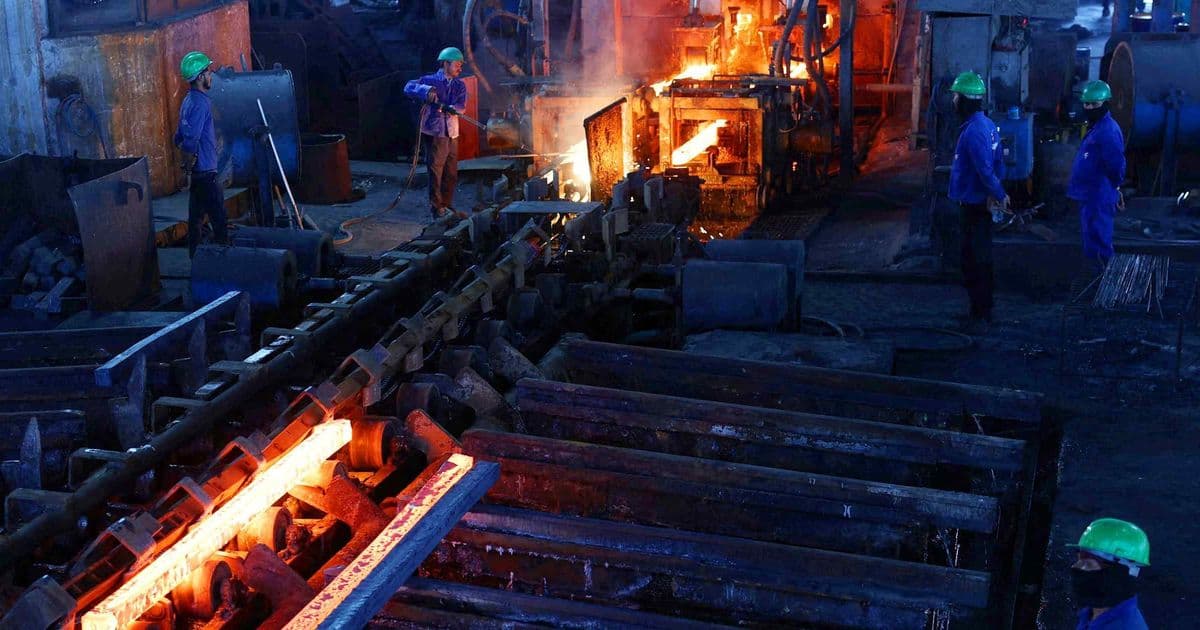
Japanese giants JFE, Nippon Steel and Sumitomo are deepening JV ties with Indian firms, aiming to localise high‑grade steel production for the country’s energy transition, automotive and infrastructure boom, while reducing dependence on imports.
Business news
Japanese steel producers are stepping up investment in India. JFE Steel, Nippon Steel and Sumitomo have announced expanded joint‑venture agreements with Indian partners, targeting the local manufacture of high‑end steel grades that have traditionally been imported from Europe and the United States. The moves come as India’s steel consumption is projected to grow at a compound annual rate of 5.4% through 2030, outpacing the global average.
Market context
India’s steel market is the world’s fourth largest by volume, but it still imports roughly 30% of its specialty steel needs, according to the Ministry of Steel. The import share is particularly high for alloyed grades used in automotive bodies, renewable‑energy turbines and high‑speed rail. Recent tariff hikes on imported steel – a 15% duty introduced in 2025 – have squeezed margins for domestic producers and heightened the strategic imperative to localise supply.
Japanese firms bring two competitive advantages:
- Advanced processing technology – both Nippon Steel and JFE operate world‑class continuous casting lines capable of producing ultra‑high‑strength steels with tensile strengths above 2,000 MPa. These capabilities are scarce in India, where most mills still rely on older slab‑casting equipment.
- Capital depth – each group has a balance‑sheet capacity exceeding ¥10 trillion, allowing them to fund multi‑billion‑rupee plant upgrades without over‑leveraging Indian partners.
The joint‑venture structure varies. In the JFE‑Tata Steel partnership, JFE will hold a 40% stake and supply its proprietary “Super‑High‑Strength” (SHS) steel process, while Tata will provide existing rolling facilities and a local sales network. Nippon Steel’s tie‑up with Steel Authority of India (SAIL) focuses on a green‑hydrogen‑based direct‑reduction plant slated for commissioning in 2028, aligning with India’s target of 450 GW renewable capacity by 2030.
What it means
- Import substitution – By producing 70% of the specialty grades domestically within five years, India could cut its steel import bill by an estimated $4 billion annually, improving the current account balance.
- Supply‑chain resilience – Local production reduces exposure to geopolitical shocks, such as recent export controls on alloying elements from the EU.
- Energy transition support – High‑strength, low‑weight steels are critical for wind‑turbine towers and offshore platforms. The Japanese‑backed green‑hydrogen plant will also create a low‑carbon steel feedstock, helping India meet its pledged 2070 net‑zero target.
- Competitive pressure on domestic players – Existing Indian mills will need to upgrade their technology or risk losing market share in premium segments. Consolidation may accelerate as smaller firms seek JV partners to stay viable.
- Capital flow implications – The deals are expected to channel roughly ¥500 billion ($3.2 billion) of Japanese investment into India over the next three years, reinforcing the broader trend of Japanese manufacturing capital flowing into the country’s high‑value sectors.
Overall, the intensified collaboration between Japanese steelmakers and Indian firms signals a strategic shift from commodity‑grade production toward a value‑added, technology‑intensive steel ecosystem. If the projects stay on schedule, India could emerge as a regional hub for advanced steel, feeding its own infrastructure ambitions while reducing reliance on volatile import markets.
Comments
Please log in or register to join the discussion