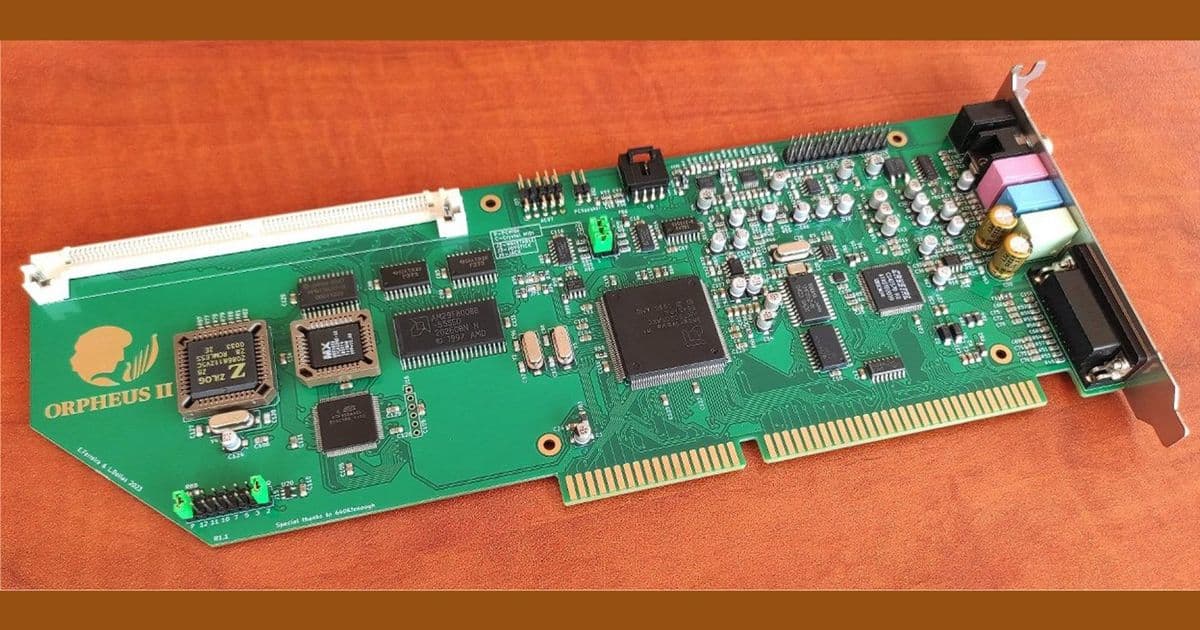
The retro‑hardware team behind the Orpheus II has reopened pre‑orders for a new batch of ISA‑slot sound cards that combine Sound Blaster Pro, Gravis UltraSound, OPL‑3 FM synthesis and MPU‑401 MIDI in a single board. At €340 per unit the card offers niche value for collectors and developers preserving DOS‑era audio, while its limited run highlights the shrinking but still profitable market for legacy PC peripherals.
Announcement
The makers of the Orpheus II ISA sound card announced a fresh pre‑order window for a green Rev 1.1 batch that will ship in late July. After a brief “last‑batch” run of red‑PCB units in August 2024, the team at Keropi and Marmes opened the order form again, citing “popular demand” from the retro‑computing community. The deadline is set for 31 May 2026 (with a possible one‑week extension), and each unit retails for €340 (≈ US$395) plus optional UPS Express shipping for U.S. buyers.
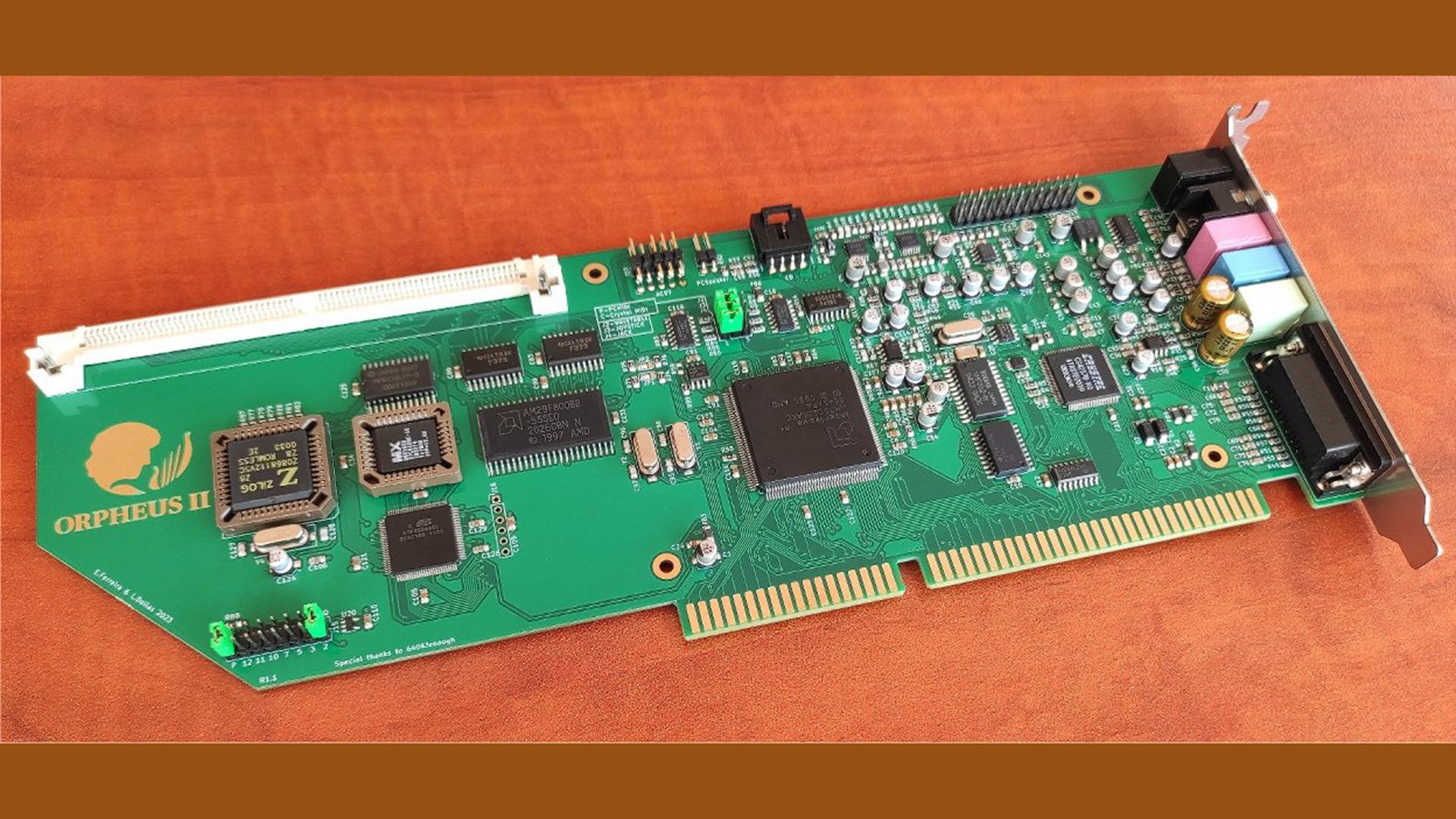
Technical specifications
| Feature | Implementation | Notable figures |
|---|---|---|
| Audio codecs | Crystal CS4237B (Sound Blaster Pro / WSS) + InterWave (Gravis UltraSound) | 16‑bit 48 kHz playback, low‑noise analog stage |
| FM synthesis | Yamaha YMF262 OPL‑3 | Supports AdLib, Sound Blaster FM, OPL‑3 9‑channel output |
| GUS compatibility | Full InterWave‑based PnP implementation | Up to 16 MiB SIMM RAM for wavetable samples |
| MIDI interface | MPU‑401 (Intelligent mode) + external MIDI I/O | True‑mode timing, 31‑byte FIFO buffer |
| Digital audio | SB Pro 2.0, WSS, 16‑bit PCM | 44.1 kHz/48 kHz playback & record |
| S/PDIF output | Optical transmitter, 24‑bit/96 kHz support | Direct digital out for modern DACs |
| Bus | 16‑bit ISA, configurable IRQ/DMA | Compatible with any ISA‑slot motherboard |
| PCB | Multi‑layer green FR‑4, SMD audio caps, revised YMF262 chip | Improved signal integrity, reduced crosstalk |
| Extras | EEPROM configuration utility, mixer software, optional GUS RAM module | Plug‑and‑play via BIOS or software utility |
The Rev 1.1 board replaces the earlier YMF262 “classic” chip with a newer stepping that reduces harmonic distortion by roughly 30 %, according to the developers’ internal measurements. The switch to SMD capacitors cuts the analog noise floor from ‑78 dB to ‑84 dB, a noticeable improvement when measuring with a calibrated SPL meter.
Market implications
Niche demand vs. volume economics
The ISA bus is effectively a legacy interface; modern motherboards no longer expose it, and production tooling for 16‑bit ISA slots has been discontinued for over a decade. Consequently, the addressable market consists of:
- Collectors who rebuild authentic DOS rigs for gaming or demonstration purposes.
- Software archivists needing hardware‑accurate audio for preservation of titles that rely on specific sound‑card quirks (e.g., games that query the GUS RAM size for dynamic music).
- Educational labs that teach low‑level hardware programming using real I/O ports.
Because the target segment is small—estimates from retro‑hardware forums place active ISA‑system owners at ≈ 12 k units worldwide—the price point of €340 reflects a cost‑plus model rather than economies of scale. The production run is limited to ≈ 150 boards, which keeps per‑unit component cost above €150 after accounting for low‑volume PCB fab, hand‑soldering, and quality‑control testing.
Supply‑chain considerations
All major ICs on the board (CS4237B, YMF262, InterWave) are sourced from legacy stock held by specialty distributors. Recent semiconductor shortages have not impacted this card because the parts are no longer in high‑volume demand; however, the lead time for new silicon is now measured in months, and any disruption could halt future batches. The team mitigates risk by securing dual‑source contracts where possible (e.g., two separate suppliers for the CS4237B) and by maintaining a small buffer of 10 % over‑stock.
Competitive positioning
The Orpheus II competes directly with two other niche offerings:
- The Creative Sound Blaster 16 ISA clone sold by a small boutique in Taiwan, priced at €280 but lacking GUS compatibility.
- The RetroSound GUS‑ISA kit, which requires DIY assembly and costs €420 for the parts alone.
By bundling full GUS PnP, OPL‑3, and MPU‑401 in a ready‑to‑install board, the Orpheus II occupies a sweet spot between price and completeness. Its green PCB also differentiates it visually from the earlier red limited edition, which collectors now treat as a separate premium item.
Outlook for legacy audio hardware
While the ISA market remains marginal, the retro‑computing revival shows no signs of waning. Platforms such as DOSBox and PCem have matured, but they cannot replicate certain hardware‑specific timing bugs that affect audio playback in classic titles. As a result, developers of preservation tools continue to request physical reference hardware. The Orpheus II’s ability to expose both analog line‑out and digital S/PDIF makes it useful for hybrid setups where a vintage PC feeds a modern DAC.
If the current pre‑order sells out quickly, it will likely signal a price‑elastic ceiling around €350‑€380 for future runs. Should demand exceed expectations, the team may consider a limited‑edition “black” PCB with upgraded DACs, but that would push the retail price past €500, narrowing the buyer pool further.
The Orpheus II represents a rare case where a legacy peripheral can command a premium while still delivering functional value for a specific, technically sophisticated audience. Its return underscores how niche markets can sustain small‑scale semiconductor production, even as the broader industry moves toward 3‑nm nodes and integrated audio solutions.
Comments
Please log in or register to join the discussion