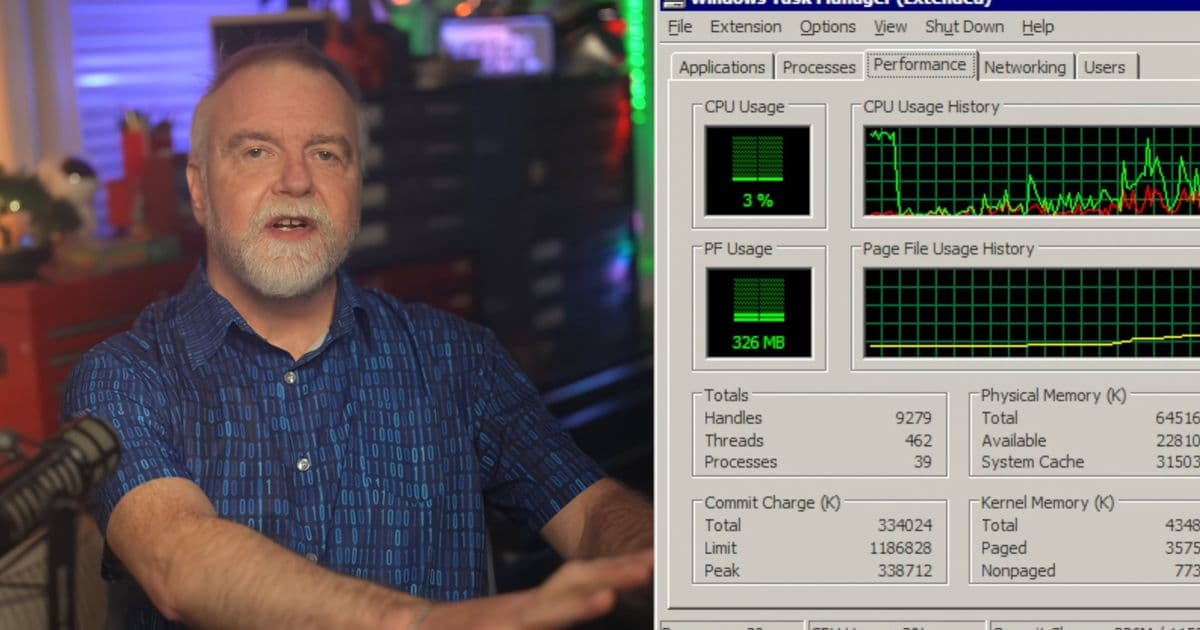
Dave Plummer reveals how the original Windows Task Manager was built to run on limited hardware, using clever techniques to stay under 80KB while remaining responsive even when systems were failing.
When Dave Plummer built the original Windows Task Manager in the 1990s, he faced a fundamental challenge: create a tool that could diagnose and rescue failing systems while using minimal resources on hardware that was already struggling. The result was a utility that weighed in at just 80KB—a fraction of the 4MB that the modern Task Manager occupies today.
Plummer, who also created Windows' ZIP file support, approached the Task Manager with a philosophy that seems almost foreign in today's era of abundant computing power. "Every line has a cost; every allocation can leave footprints. Every dependency is a roommate that eats your food and never pays rent," he explained in a recent YouTube video. This mindset led to a ruthlessly efficient piece of software that could run smoothly even when other applications had frozen.
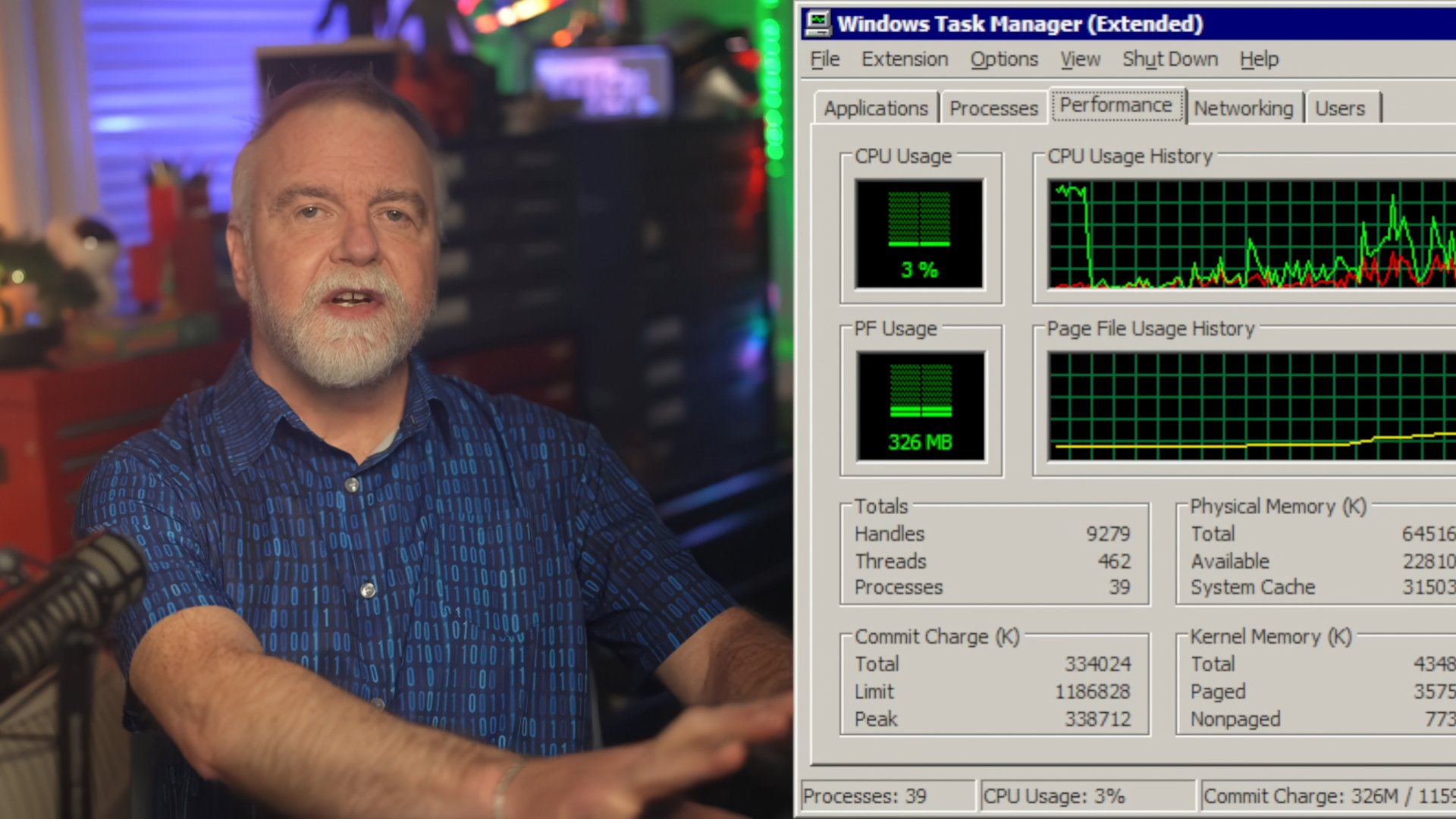
The startup sequence reveals one of Plummer's cleverest innovations. While most applications simply check if another instance is running and activate it, the Task Manager goes further. It sends a private message to any existing instance and waits for a reply. If it receives a response, the other instance is healthy and can be activated. If there's only silence, the Task Manager assumes the other instance is also frozen and launches a new one to help rescue the system. This subtle but important distinction ensures that when you need Task Manager most—when your system is unresponsive—it will actually launch and provide assistance.
Resource optimization was woven into every aspect of the design. Frequently used strings were loaded into global variables once during initialization rather than being fetched repeatedly. Rare functionalities, like ejecting a docked PC, were only loaded when specifically needed. The process tree, which displays running applications and their relationships, uses a particularly efficient technique: instead of querying each program individually, it asks the Windows kernel for the entire process table in one request. If the buffer isn't large enough to hold all the data, it simply resizes and tries again—avoiding the overhead of multiple API calls.
This approach to software development reflected the constraints of 90s computing, where memory was measured in megabytes and every kilobyte mattered. "Task Manager came from a very different mindset," Plummer noted. "It came from a world where a page fault was something you felt, where low memory conditions had a weird smell, where if you made the wrong thing redraw too often, you could practically hear the guys in the offices moaning."
The original Task Manager's efficiency wasn't just about saving memory—it was about reliability when systems were failing. By keeping the utility lean and responsive, Plummer ensured that users could always access it as a last resort when everything else had hung. The tool needed to feel "crisp and responsive, even if everything else had hung," as Plummer put it.
Looking back, Plummer expresses a mix of nostalgia and regret about how software development has evolved. "While I absolutely do not want to go back to that old hardware, I do wish we had carried more of that taste," he said. "Not the suffering, the taste, the instinct to batch work, to cache the right things, to skip invisible work, to diff before repainting, to ask the kernel once instead of a hundred times, to load rare data rarely, to be suspicious of convenience when convenience sends a bill to the user."
The story of the original Task Manager serves as a reminder that constraints can drive innovation. When hardware was limited, developers like Plummer had to be creative, finding elegant solutions that balanced functionality with efficiency. Today's software, with its abundance of resources, often lacks this discipline—resulting in applications that consume hundreds of megabytes for tasks that once required mere kilobytes.
As modern systems continue to grow more powerful, the lessons from the original Task Manager remain relevant: efficiency matters, resource consciousness is valuable, and sometimes the best solution is the one that does exactly what's needed with minimal overhead. In an era where software bloat is common, the 80KB Task Manager stands as a testament to what's possible when developers prioritize performance and user experience over convenience and feature creep.
Comments
Please log in or register to join the discussion