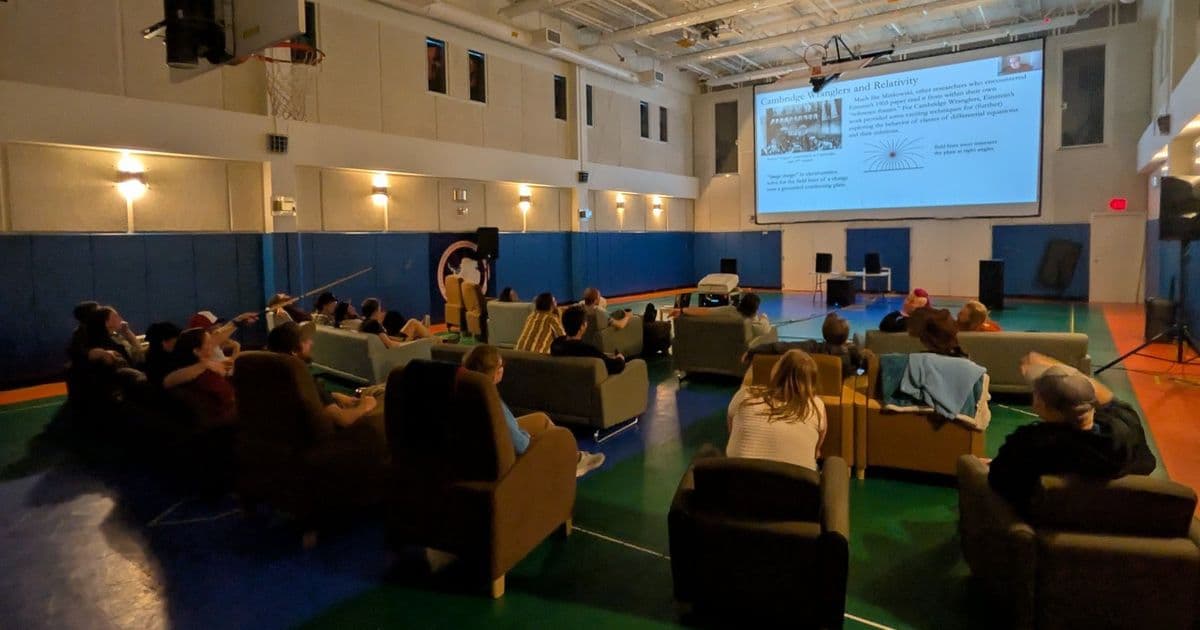
John Della Costa downloaded MIT OpenCourseWare physics courses before a year in Antarctica. His Friday lecture series gives 45 South Pole winterovers a way to study cosmology, run experiments, and keep a small station community engaged through months without flights.
John Della Costa, a researcher on the Background Imaging of Cosmic Extragalactic Polarization project, has turned MIT OpenCourseWare into a Friday physics program at the South Pole.
Della Costa works with BICEP, a collaboration that uses radio telescopes in Antarctica to study the cosmic microwave background. That light dates to about 380,000 years after the start of the universe. Researchers use it to search for signs of primordial gravitational waves, a signal that could support MIT Professor Alan Guth's theory of cosmic inflation.
Before Della Costa left for a year at the South Pole, from November 2025 to December 2026, he downloaded several MIT Open Learning courses. The station has limited internet access, and planes stop flying in during the coldest months. The team faces months of isolation, darkness, and close quarters.
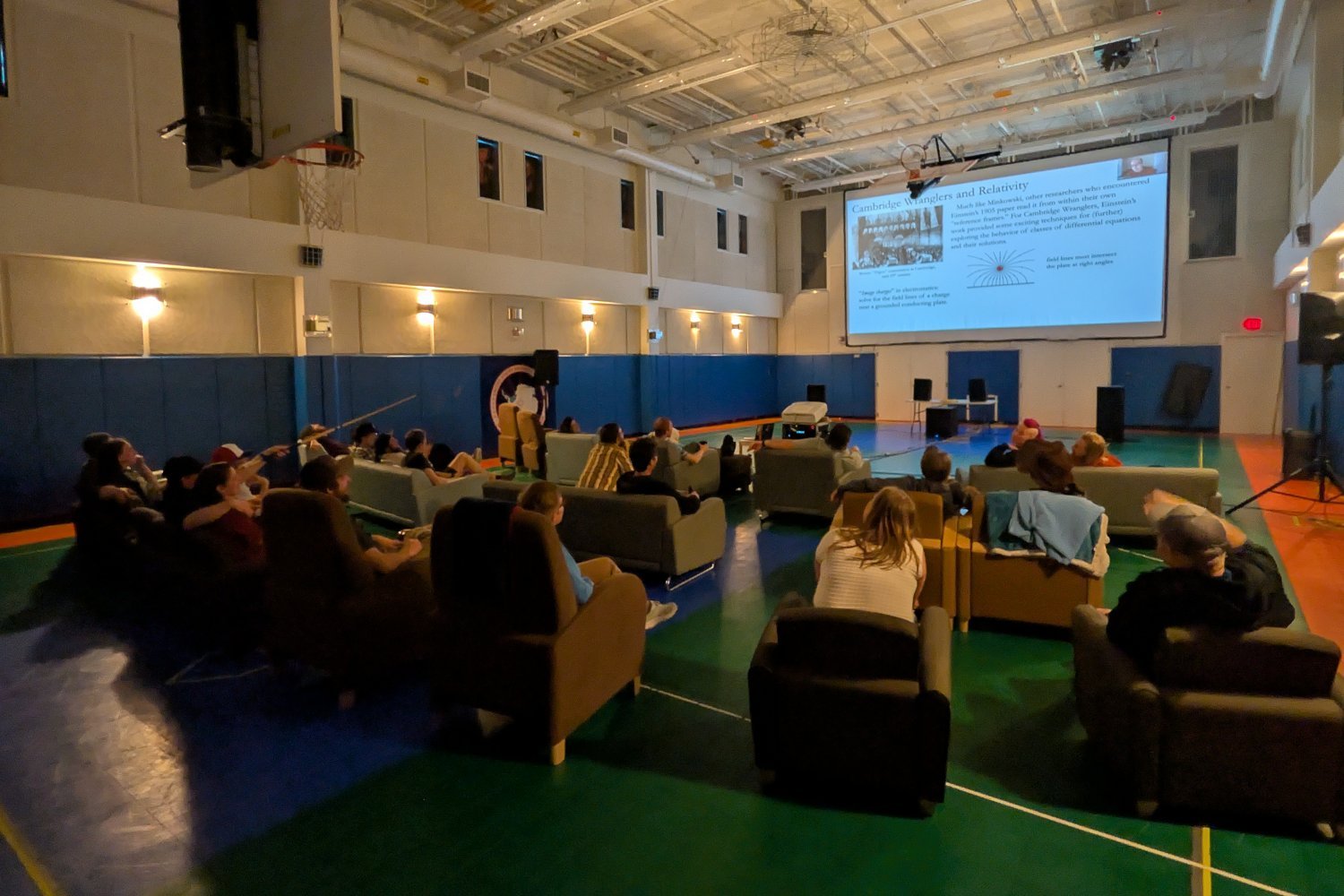
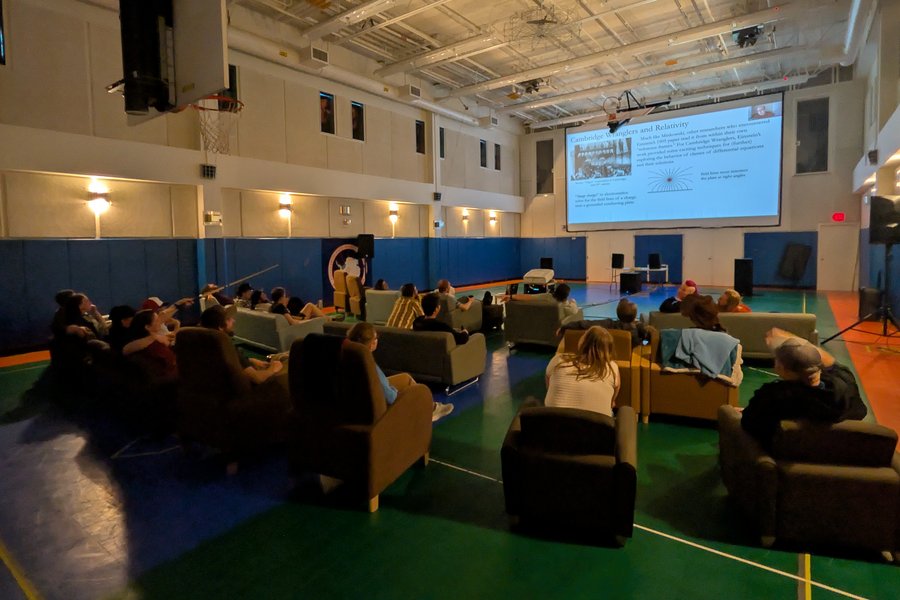
Della Costa used that constraint as a design requirement. He built “Fysics Fridays,” a Friday gathering where station residents watch physics lectures and documentaries, then connect the material to tabletop experiments.
The centerpiece has become STS.042/8.225, “Einstein, Oppenheimer, Feynman: Physics in the 20th Century,” taught by MIT Professor David Kaiser. Kaiser teaches the history and ideas behind relativity, quantum theory, nuclear physics, particle physics, cosmology, and the Big Bang. The course suits a mixed audience because it pairs technical physics with readings from historians, philosophers, and sociologists.
Della Costa also downloaded 8.02, “Physics II: Electricity and Magnetism”; 8.03, “Physics III: Vibrations and Waves”; and Guth's 8.286, “The Early Universe.” That mix gives the group a path from classical electromagnetism through wave behavior and into early-universe cosmology.
The technical fit matters. BICEP researchers seek patterns in polarization, which require care with signals, noise, instruments, and theory. OpenCourseWare gives the team and other station residents a shared vocabulary for the physics behind the work. A lecture on quantum theory can lead into a double-slit experiment. A cosmology lecture can connect to the telescopes outside.
Della Costa first found OpenCourseWare while studying astrophysics at San Diego State University during the COVID-19 pandemic. He took a nuclear physics course in his graduate program and wanted more depth, so he found 22.01, “Introduction to Nuclear Engineering and Ionizing Radiation,” taught by MIT Professor Michael Short.
Kaiser said Della Costa's note about the South Pole group stood out among messages from remote learners. Kaiser, who co-directs a research group on early-universe cosmology with Guth, plans to give the station community a Zoom colloquium.
The South Pole setting also shows a practical use case for open education. Online courses often assume constant connectivity. Della Costa treated the course files as infrastructure that had to work offline, under bandwidth limits, and for a group with different levels of physics training.
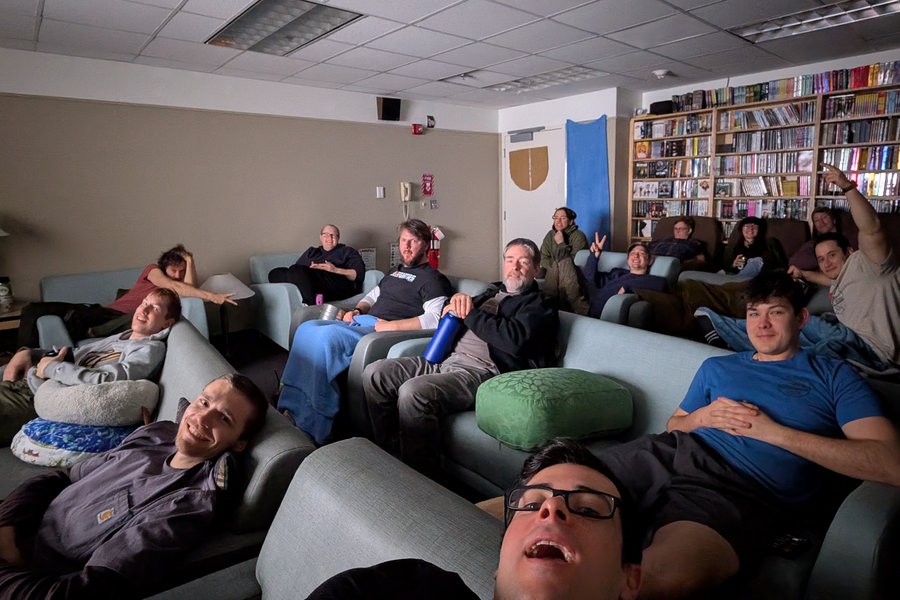
That makes the program more than downtime entertainment. A 45-person winterover community has to manage research work, station operations, and mental strain through a closed season. A recurring physics night gives the group a shared routine, a reason to gather, and a way to turn the station's scientific mission into a community activity.
The model has limits. OpenCourseWare can provide lectures, readings, and structure, but learners at the South Pole still need someone on site to organize sessions, frame the material, and adapt experiments to available tools. Della Costa fills that role. Without that local effort, the downloaded courses would sit on a drive.
MIT has spent more than two decades building open course materials for learners far from Cambridge. The South Pole program shows how those materials can support researchers in one of the hardest places to study, work, and live. Della Costa and his colleagues use MIT Learn and OpenCourseWare content to connect classroom physics with instruments aimed at the oldest light in the universe.
Comments
Please log in or register to join the discussion