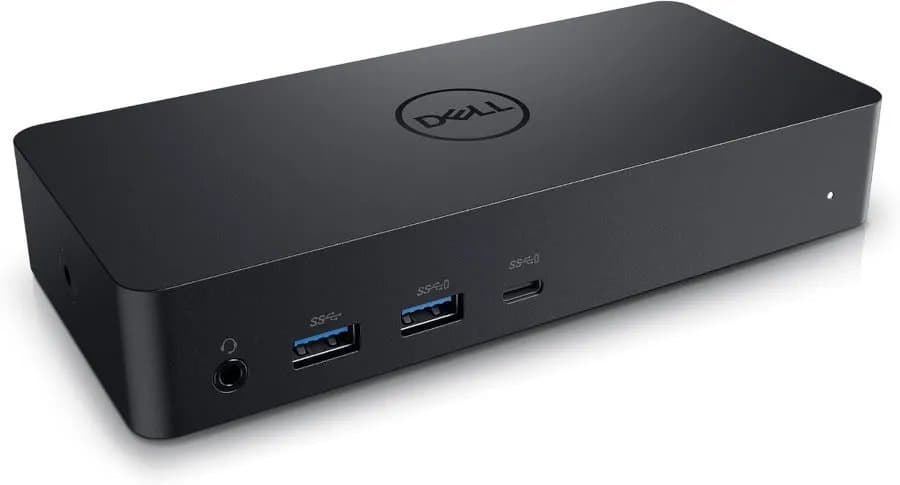
Mike Lothian’s Vino driver gives Linux users an early Rust DRM path for DisplayLink DL3 docks, starting with Dell’s D6000.
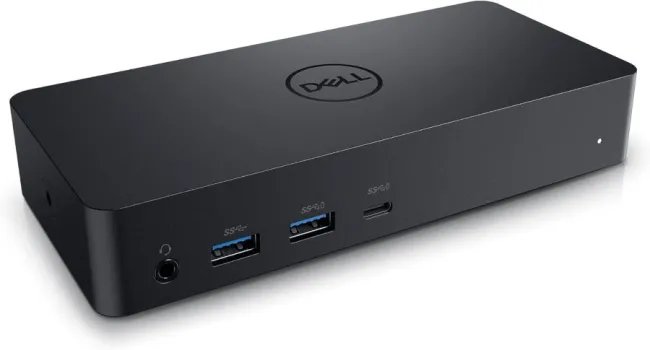
Mike Lothian posted Vino on June 17, 2026, as an experimental Rust DRM driver for newer DisplayLink USB display hardware.
Vino targets DL3 USB docks, including the Dell Universal Dock D6000. Lothian wrote the driver as a clean-room, reverse-engineered Linux kernel driver. He also used Claude Code with the Opus 4.8 model during development.
The driver gives Linux users a possible kernel-side path around DisplayLink’s current out-of-tree kernel driver and proprietary user-space daemon. That matters for homelab desks, hot-desk fleets, and laptop workstations that use USB display docks because driver packaging can decide whether a dock survives a kernel upgrade.
Product
The first target device, Dell’s D6000, sits in a class of USB docks that many Linux users own because it can drive several displays from one cable. Older DisplayLink adapters had better open-source support upstream. Newer DisplayLink hardware pushed users toward vendor code outside the mainline kernel.
Vino tries to move that support into the Linux DRM stack. The DRM subsystem gives Linux one graphics framework for display devices, modesetting, buffers, and connectors. A kernel DRM driver also fits the model that distributions can build, sign, ship, and update through normal kernel packages.
That path still carries risk. Vino needs Rust support in the kernel tree, and the Linux graphics maintainers will examine the code, hardware behavior, ABI choices, and maintenance plan before any upstream discussion can mature.
Performance data
The first public report names one confirmed test target: Dell Universal Dock D6000. Larabel reported that Lothian tested the driver with that dock.
| Item | Current state |
|---|---|
| Driver | Vino |
| Language | Rust |
| Kernel subsystem | DRM |
| Development method | Clean-room reverse engineering |
| AI assistance | Claude Code with Opus 4.8 |
| Tested hardware | Dell Universal Dock D6000 |
| Upstream status | Posted to the dri-devel mailing list |
| Vendor stack replaced | Out-of-tree kernel driver plus proprietary daemon |
The public note does not give frame-rate, latency, CPU load, USB bandwidth, or power figures. Builders should treat Vino as a bring-up driver until Lothian or testers publish repeatable measurements.
For a dock like the D6000, the first useful benchmark set should measure these points:
| Test | Reason |
|---|---|
| 1080p60 single display | Baseline modeset and scanout check |
| Dual 1440p or mixed-display setup | Bandwidth and connector handling |
| 4K output modes | Compression, USB load, and timing pressure |
| CPU use during desktop movement | Host overhead under normal work |
| Suspend and resume | Laptop dock reliability |
| Hotplug loops | Desk use and failure recovery |
| Kernel upgrade test | Packaging and ABI pressure |
Power data also needs attention. USB display docks sit between host, displays, Ethernet, and peripherals. A driver that burns extra CPU on the host can cost battery life even if the dock has its own power brick. Laptop users should log package power with tools such as powerstat, turbostat, or vendor telemetry while they move windows, play video, and idle on attached displays.
Compatibility
Vino names DisplayLink DL3 USB docks as its target. The Dell Universal Dock D6000 gives developers a concrete test unit, but that result does not prove that the driver handles each DL3 dock, each monitor mode, or each USB controller.
Linux users should check four compatibility layers before they test Vino:
| Layer | Check |
|---|---|
| Kernel | Rust support and DRM prerequisites |
| USB controller | Dock detection, bandwidth, and stability |
| Display modes | EDID parsing and modeset coverage |
| Desktop stack | Wayland or X11 behavior through DRM |
Rust raises another upstream question. The Rust for Linux effort has grown inside the kernel, but graphics drivers still need the right bindings and subsystem patterns. Vino can help expose missing DRM Rust abstractions because real hardware forces concrete API needs.
The clean-room claim also matters. Reverse-engineered drivers have reached Linux before, but maintainers care about how developers learned hardware behavior. A clean-room design helps reduce legal and review risk if contributors can explain their process and avoid vendor code contamination.
Build recommendations
Test Vino on spare hardware first. Use a kernel tree that matches the driver’s Rust requirements, keep a rescue boot entry, and record the exact dock model, firmware, monitor modes, USB topology, and desktop session.
A useful test log should include:
| Data point | Example format |
|---|---|
| Kernel | uname -a output |
| Dock | Dell Universal Dock D6000 plus firmware if available |
| Host | Laptop model and USB controller |
| Displays | Resolution, refresh rate, connector path |
| Session | Wayland compositor or X11 desktop |
| Failures | dmesg excerpt and reproduction steps |
Homelab users who measure everything should add power and CPU data before they report success. A dock that lights a display can still cost too much CPU during scroll, video playback, or multi-monitor movement.
For most production desktops, DisplayLink’s vendor stack remains the safer choice today. Vino suits developers, kernel testers, and users who can recover from a black screen without losing work.
The project’s next useful milestone will come from broader testing across DL3 devices and public benchmark logs. If Vino proves stable across common docks, it could give Linux distributions a cleaner answer for USB display docking than vendor modules and closed daemons.
Developers can follow the work through the dri-devel mailing list, where Linux graphics contributors review DRM driver patches.
Comments
Please log in or register to join the discussion