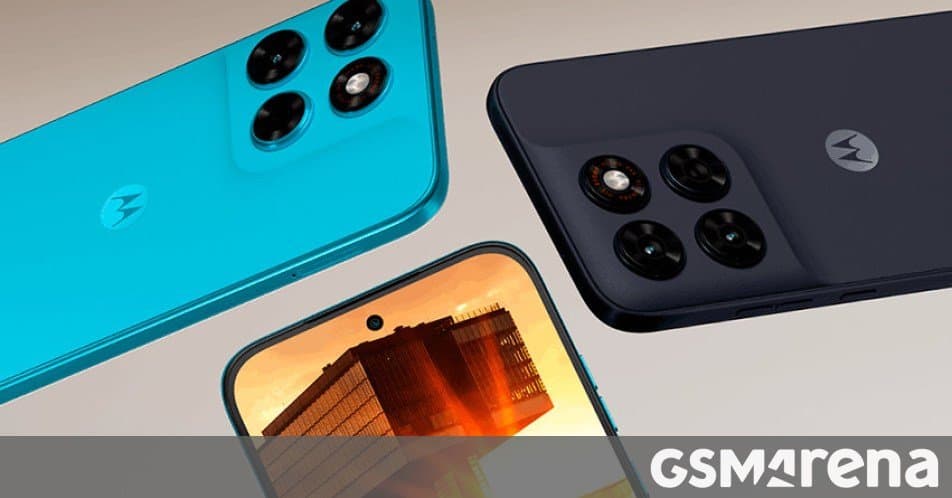
Motorola took the Moto G87 it launched in late April, gave it a new name, and released it again in Brazil as the Moto G Max. Same hardware, different badge, and a familiar industry trick that says a lot about how phone makers handle regional markets.
Motorola has a habit of recycling phone names across regions, and the latest example landed quietly in Brazil. The company just launched the Moto G Max, a device that is, spec for spec, the same Moto G87 it released back in late April. No new silicon, no redesigned camera array, no software differences worth mentioning. Just a fresh name for the Brazilian market.
The Moto G Max sells through Motorola's Brazilian online store for BRL 2,519.10, which works out to roughly $488 at current exchange rates. That price puts it squarely in upper-midrange territory, and the spec sheet mostly justifies the position.
What you actually get
The headline component is the display. Motorola fitted a 6.8-inch AMOLED panel with what it markets as "1.5K" resolution, a 120Hz refresh rate, and a claimed 5,000-nit peak brightness. That brightness figure is the kind of number manufacturers quote for small HDR highlight regions rather than sustained full-screen output, so don't expect your entire display to blast 5,000 nits in direct sunlight. Still, peak figures like this generally translate to genuinely usable outdoor visibility. Gorilla Glass 7i covers the front, giving the panel a reasonable level of scratch and drop protection for a phone in this bracket.
Under the hood sits the MediaTek Dimensity 6400, paired with 8GB of RAM and 256GB of storage. The Dimensity 6400 is a modest 6nm chip aimed at the midrange, so this is not a phone built for heavy gaming or sustained high-end workloads. For everyday use, social apps, streaming, and light multitasking, the combination holds up fine, and 256GB of base storage is generous at this price.
The camera setup leans on a 200MP main sensor with an f/1.8 aperture and optical image stabilization. High-megapixel sensors like this one rely on pixel binning, combining many small pixels into larger virtual ones, to pull in more light and produce cleaner shots than the raw resolution would suggest. The result is a 12.5MP image in most conditions, with the full 200MP mode reserved for bright scenes where detail matters. Alongside it sits an 8MP ultrawide, and a 32MP front camera handles selfies. The ultrawide is the weak link here, a common pattern in this segment where budgets get spent on the primary sensor.
Battery, durability, and software
A 5,200 mAh battery keeps the phone running, with support for 33W wired charging. That charging speed is middle of the road in 2026, faster than the old 18W and 25W standards but well behind the 80W and 100W rates some competitors push. The larger battery capacity should offset the slower charging for most users, comfortably covering a full day.
Durability is where the Moto G Max punches above its weight. It carries IP66, IP68, and IP69 ratings, meaning it resists dust ingress completely, survives submersion, and can handle high-pressure water jets. On top of that, it meets the MIL-STD-810H standard for resistance to drops, vibration, and temperature extremes. That trio of ratings is unusual at this price and makes the phone a sensible pick for anyone hard on their hardware.
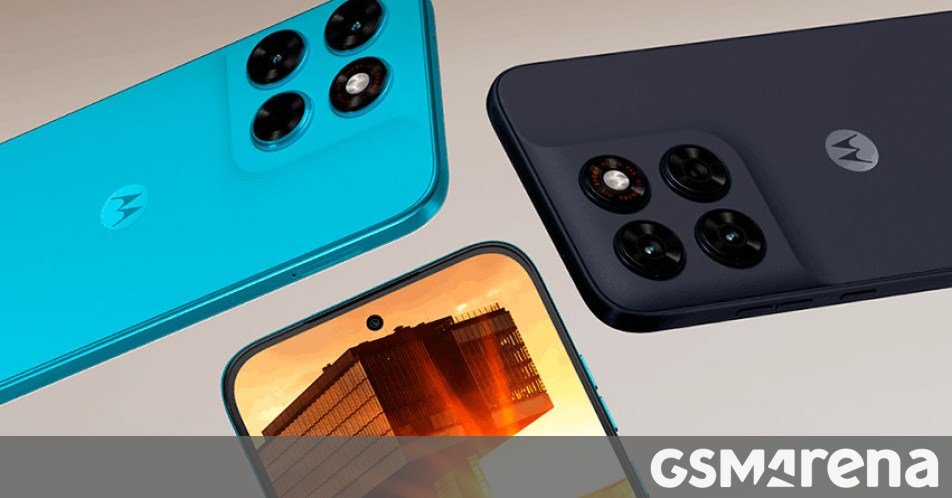
The rest of the package rounds out nicely: stereo speakers with Dolby Atmos, an in-display fingerprint sensor, and Android 16 out of the box. The body measures 164.58 x 77.37 x 7.38 mm and weighs 183g, keeping it slim and light despite the big battery. Motorola offers it in Graphite and a blue finish.
Why one phone has two names
The rebranding raises an obvious question, and Motorola has not given a clear answer. The practice itself is common across the industry. Manufacturers routinely ship identical hardware under different names depending on the region, carrier relationships, or local marketing strategy. Samsung, Xiaomi, and Realme all do versions of this, sometimes to align with regional naming conventions, sometimes to avoid trademark conflicts, and sometimes simply because a name resonates better in one market than another.
For buyers, the takeaway is straightforward. If you see a Moto G Max in Brazil and a Moto G87 elsewhere, you are looking at the same phone. Reviews, accessories, and software updates for one should apply to the other. Motorola has not said whether it plans to extend the G Max name to additional markets or keep it confined to Brazil while the G87 branding holds everywhere else.
The broader pattern here is worth keeping in mind when shopping across regions. A phone that looks like a new release on a local storefront may already have months of reviews and real-world feedback under a different name. Checking the spec sheet against existing models often reveals exactly what you are buying, regardless of what the box says.
Comments
Please log in or register to join the discussion