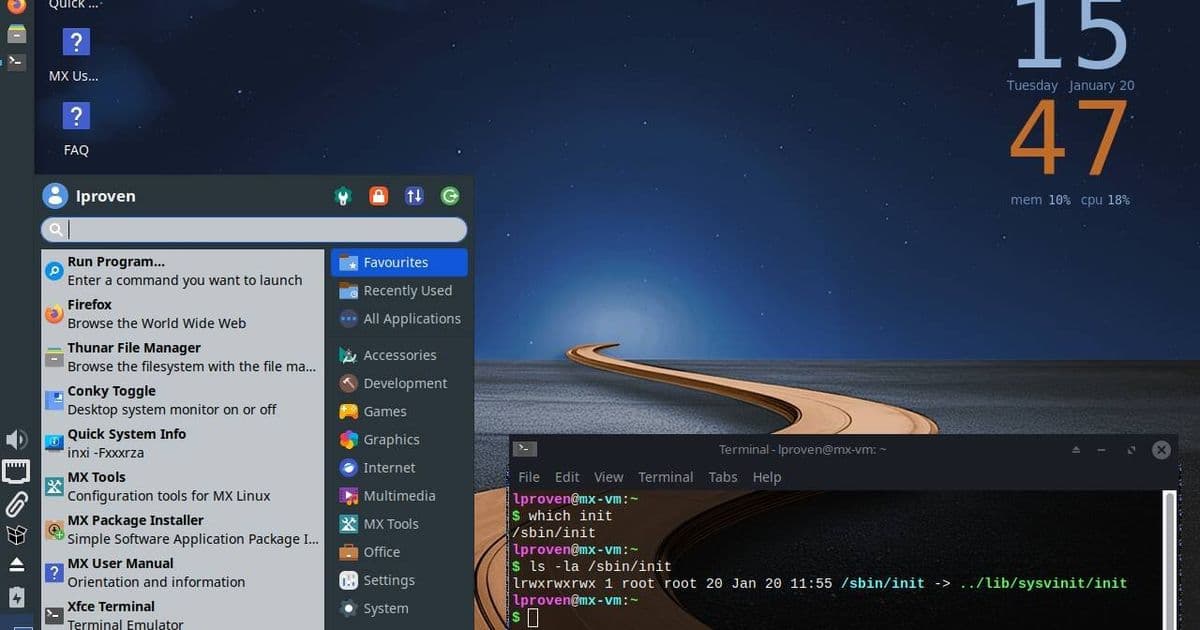
The latest point release of MX Linux brings back its signature dual-init capability, allowing users to choose between sysvinit and systemd at boot time through a new init-diversity system derived from antiX Linux.
MX Linux 25.1 has restored one of its most distinctive features: the ability to choose between different init systems at boot time. This capability, which was a hallmark of earlier MX Linux versions, had been removed in the initial 25.0 release, forcing users to select their preferred init system during installation. The return of this feature comes through a new init-diversity framework that provides a cleaner implementation than the previous systemd-shim tool.
The decision to remove dual-init support in MX Linux 25.0 was driven by practical considerations. The project faced an "unavoidable proliferation" of editions, requiring no fewer than seven different builds to accommodate various combinations of desktop environments and init systems. This created significant maintenance overhead and complicated the release process. The KDE Plasma edition, for instance, was only available with systemd, limiting user choice for those who preferred alternative init systems like sysvinit.
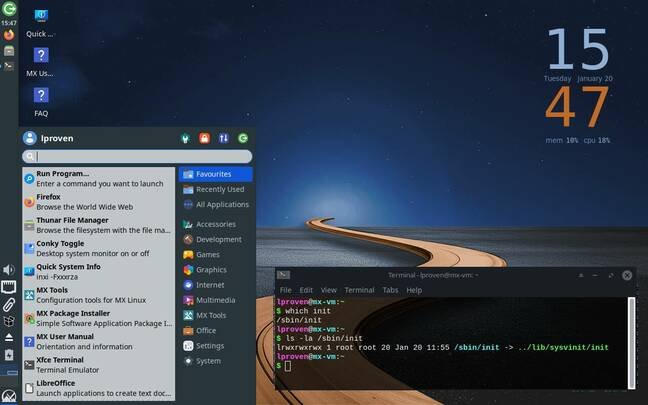
The new init-diversity system represents a significant architectural improvement over the previous approach. Rather than maintaining separate builds for each init system combination, MX Linux 25.1 includes both systemd and sysvinit on a single ISO. This dramatically reduces the number of builds required while restoring the flexibility that made MX Linux unique among mainstream distributions. The implementation draws from antiX Linux, a progenitor distribution that has long championed init system choice.
antiX Linux, which serves as an upstream source for MX Linux, has been developing its init-diversity framework for several versions. The most recent antiX-23.2 "init-diversity" remaster edition demonstrates the potential of this approach, offering users a choice of six different init systems: sysvinit, s6-rc, s6-66, OpenRC, dinit, and runit. MX Linux 25.1 currently implements a more conservative subset, providing just the two most commonly requested options: the classic sysvinit and the increasingly ubiquitous systemd.
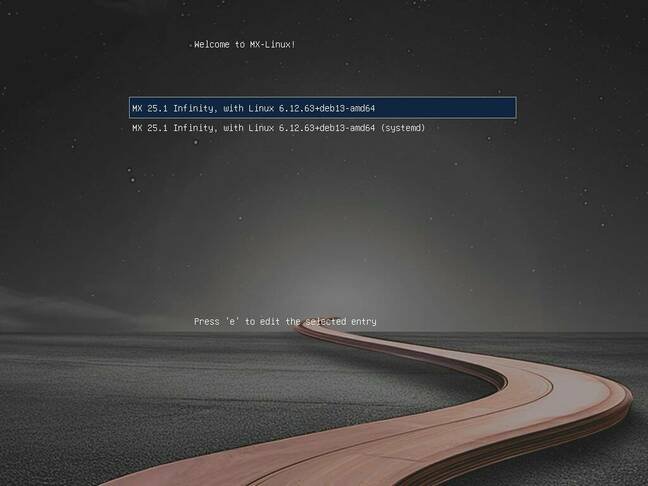
The implementation appears in the GRUB bootloader menu, where users can select their preferred init system through an "Advanced" menu option. This approach provides the flexibility of choice without complicating the default installation experience. For users who want to maintain a consistent init system across reboots, the selection can be made permanent through standard GRUB configuration tools.
However, the transition to the new init-diversity system requires manual intervention for existing MX Linux 25 installations. The developers have taken a cautious approach to the upgrade process: updating from MX Linux 25 to 25.1 will not automatically install the init-diversity tools. This deliberate choice reflects the critical nature of init system management and the potential for system instability if the transition is mishandled.
Users who want to enable init switching on an existing installation must follow the detailed instructions provided on the MX Linux project page. The documentation includes comprehensive guidance for both enabling and disabling the init-diversity functionality, ensuring users can revert changes if needed. This careful approach acknowledges that while init system choice is valuable, system stability remains paramount.
The restoration of dual-init support addresses several practical concerns that emerged after the MX Linux 25.0 release. Some software packages and hardware drivers have better compatibility with systemd, while others work more reliably with sysvinit. Certain legacy applications and specialized workflows may require specific init system behaviors. By providing both options on the same system, MX Linux 25.1 allows users to select the most appropriate init system for their specific use case without reinstalling the operating system.
This development also reflects broader trends in the Linux ecosystem around init system diversity. While systemd has become the default for most major distributions, there remains significant interest in alternative init systems, particularly among users who value simplicity, transparency, or specific technical characteristics. Projects like antiX Linux, Void Linux, and Gentoo continue to maintain and develop non-systemd options, creating a diverse landscape of init system implementations.
The MX Linux project's approach demonstrates a pragmatic middle ground. Rather than taking an ideological stance for or against systemd, the distribution provides practical choice. Users who need systemd compatibility for specific software can enable it, while those who prefer the simplicity of sysvinit can continue using it. This flexibility is particularly valuable for users transitioning from older systems or those with specific technical requirements.
For new users considering MX Linux 25.1, the init system choice adds another layer of customization to an already flexible distribution. MX Linux combines the stability of Debian with user-friendly tools and multiple desktop environment options. The restoration of init system choice reinforces the distribution's philosophy of providing practical solutions for real-world computing needs.
The project's careful handling of the upgrade process, with manual intervention required for existing installations, reflects the mature approach of the MX Linux development team. By prioritizing system stability and providing clear documentation, they ensure that users can make informed decisions about their init system configuration without risking their system's functionality.
As the Linux ecosystem continues to evolve, initiatives like MX Linux's init-diversity framework demonstrate that choice and flexibility remain important values for many users. The ability to switch between init systems without reinstalling represents a practical solution to a complex technical challenge, one that balances the benefits of standardization with the needs of diverse user communities.
Comments
Please log in or register to join the discussion